Latest News
January 1, WNBA Star Makes SHOCKING Admission About White Privilege in Sports Marketing

Wyatt’s Take
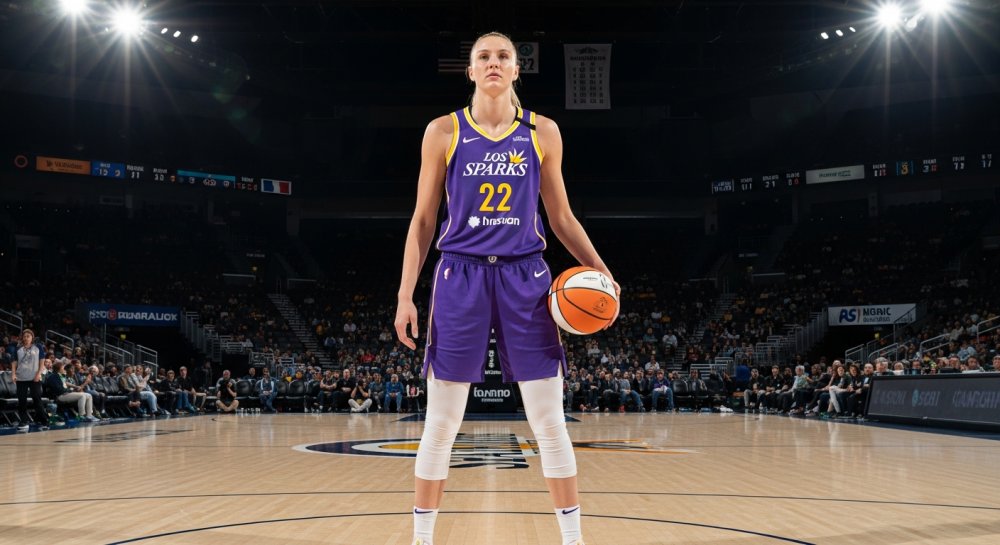
- Los Angeles Sparks forward Cameron Brink openly admits being white and blonde gives her massive marketing advantages over other WNBA players — finally saying what everyone already knows
- Despite historic pay raises in the new collective bargaining agreement, WNBA players still struggle to make ends meet in expensive markets like LA and New York on rookie contracts
- The league has delivered top-tier basketball for nearly three decades, yet financial recognition and brand opportunities remain wildly unequal across the roster
Cameron Brink is gearing up for her third WNBA season with the Los Angeles Sparks, and while her basketball skills earned her the No. 2 overall pick in the 2024 draft, it’s her off-court profile that’s making waves. The 6-foot-4 forward has become a fashion darling and social media influencer, racking up endorsement deals that most of her teammates can only dream about.
But in a rare moment of transparency, Brink isn’t just celebrating her success — she’s calling out the uncomfortable truth behind it.
In a recent sit-down with Interview magazine, Brink pulled no punches about why she’s landing these lucrative opportunities while other players with better stats get left in the dust.
“I’ve tried to be vocal about this and acknowledge there’s such a privilege, marketing-wise, being white and blonde,” Brink said. “It does really bother me seeing athletes and players who are consistently putting up crazy stat lines and not being rewarded by brands.”
It’s a stunning admission that cuts to the heart of a problem the sports world rarely wants to address head-on. While Brink has appeared in Sports Illustrated Swimsuit and launched her own podcast “Straight to Cam” with co-host Sydel Curry-Lee, plenty of her fellow players are grinding just as hard on the court without seeing a fraction of the brand attention.
The financial reality for WNBA players remains brutal, even after the league’s new collective bargaining agreement promised historic raises. Brink didn’t sugarcoat the struggle.
“It’s really hard as a female basketball player to make money outside of our contracts. That’s what we’re fighting for right now. It’s really hard to live a lifestyle, especially in an expensive market like L.A. or New York, on a rookie contract,” Brink said.
The former Stanford standout, who suffered a devastating injury during her rookie season and appeared in just 15 games, has been documenting her rehab journey on social media — another avenue that’s helped build her personal brand.
When asked what people most often overlook about the WNBA, Brink didn’t hesitate.
“How consistently good our product has been,” Brink replied. “It’s still a really young league, and obviously we’re going through our whole battle with the CBA [Collective Bargaining Agreement]. We’re just trying to get paid what we’re worth. I think people are seeing the W as this new and shiny thing, but for two decades the level of play has been so high. I look up to so many women, like Sheryl Swoopes and Lisa Leslie. They’re famous now, but I wish they had that recognition while they were playing.”
The WNBA’s recent surge in popularity has brought new eyeballs to the league, but Brink’s pointing out that the quality of play has been elite for nearly 30 years — it’s the marketing machine and financial structure that’s been lagging behind.
Her willingness to acknowledge her own advantages in the endorsement game is noteworthy, especially in an era where most athletes stick to carefully scripted talking points. Whether brands will actually change their approach based on her comments remains to be seen.
Wyatt Matters
This isn’t about politics — it’s about basic fairness in the marketplace. When athletes who deliver on the court get passed over for endorsement dollars because of how they look rather than how they play, that’s a problem worth addressing. Brink deserves credit for speaking honestly about advantages she didn’t ask for but clearly benefits from. Working Americans understand that the system doesn’t always reward merit the way it should, whether you’re clocking in at a factory or suiting up for a professional basketball game. The best players should get the best opportunities — that’s the American way.


-
 Entertainment3 years ago
Whoopi Goldberg’s “Wildly Inappropriate” Commentary Forces “The View” into Unscheduled Commercial Break
-

 Entertainment3 years ago
‘He’s A Pr*ck And F*cking Hates Republicans’: Megyn Kelly Goes Off on Don Lemon
-

 Featured3 years ago
US Advises Citizens to Leave This Country ASAP
-
 Featured3 years ago
Benghazi Hero: Hillary Clinton is “One of the Most Disgusting Humans on Earth”
-

 Latest News3 years ago
Nude Woman Wields Spiked Club in Daylight Venice Beach Brawl
-
 Featured3 years ago
Fox News Calls Security on Donald Trump Jr. at GOP Debate [Video]
-

 Entertainment3 years ago
Comedy Mourns Legend Richard Lewis: A Heartfelt Farewell
-

 Latest News3 years ago
Supreme Court Gift: Trump’s Trial Delayed, Election Interference Allegations Linger
Bee
May 6, 2026 at 6:50 pm
Pretty sells- Tall sells- Thin sells-Blonde sells- and Marketing is about selling. Nothing new- think about what brands you gravitate towards- don’t fault companies for trying to sell more-It’s nothing new. Its societal preferences-
Todd Oesterreich
May 6, 2026 at 7:02 pm
“top-tier basketball” Very few people actually believe this. Is it the best that women’s basketball has to offer? Sure. The truth is though that a women’s all-star team would struggle against your average high school boy’s team. The NBA has carried the WNBA from the get-go, the reason WNBA players don’t get paid big $ is because the league does not generate big $.
Bill Fitch
May 6, 2026 at 7:39 pm
Yeah and 6’8″ black guys get better contracts in the NBA. It’s called market driven capitalism. The average WNBA player makes six figures to bounce a ball. Sounds like more victim mentality.
jdalabama
May 6, 2026 at 8:28 pm
“The league has delivered top-tier basketball for nearly three decades”….nonsense. No one is willing to pay to watch it, hence no big bucks. As it should be
Mark Hendricks
May 7, 2026 at 1:30 am
Real BS article. Marketing is business. Do you want a person that is a member of a race representing 13% of the population or a gorgeous blond from 55% of the population? It doesn’t matter if you score 25ppg if you can’t speak well and dress like you’re making a rap album. Do you want that person repping your company?
Will
May 10, 2026 at 11:20 am
WTH are you talking about? Sounds pretty Racist to me , making assumptions that a black BB Player can’t speak well or makes rap music.
How dare you, speaking well according to whom?and what does rap have to do with BB , that’s the topic and you went way off course which shows your bigotry.
James Watts
May 7, 2026 at 7:06 pm
Wyatt you’re way off the mark. They are getting paid according to the number of butts they put in the seats. It shouldn’t be done any other way. Feminism seems to have convinced them and you of some injustice that doesn’t exist. Stop making excuses for them.