Latest News
January 1, SHOCKING: Woman Reveals What China Did to Her for 7 Years Behind Bars

Wyatt’s Take
- A 70-year-old woman spent seven years in Chinese Communist prison for her religious beliefs — they took her business, her home, and she believes the persecution killed her husband.
- She describes systematic torture, forced labor, sleep deprivation, and mysterious medical examinations that survivors now fear were connected to alleged organ harvesting operations.
- As Trump prepares to meet with Xi Jinping, this survivor’s story exposes the brutal reality of what happens when governments crush religious freedom and individual liberty.
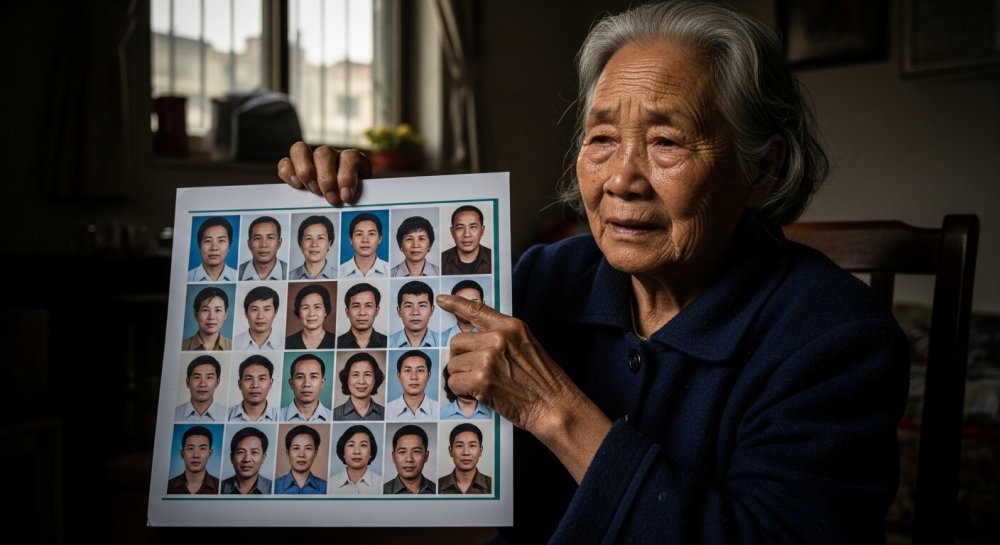
Wang Chunyan held a photograph toward the camera, her hands trembling as she pointed to 21 smiling faces. A husband and wife. A university lecturer. A young engineer. Friends she met in prison.
Some died in detention, she said. Others after years of abuse. Others disappeared into China’s vast security system and never returned the same.
“More than 25 of my friends have died in this persecution. I only have photos of 21 of them,” Chunyan said, her voice breaking.
For more than two decades, the 70-year-old Falun Gong practitioner said, the Chinese Communist Party systematically dismantled her life. They stripped away the business she had built. The home she once shared with her family. Eventually, seven years of her life in prison.
But the hardest thing for her is that she believes the persecution took her husband too.
“My beloved husband died due to the persecution,” Chunyan said.
Her account comes as President Donald Trump prepares to travel to China next week for meetings with Chinese leader Xi Jinping. Trade, security and regional tensions are expected to dominate the agenda. Yet behind the geopolitical rivalry lies another conflict — Beijing’s decades-long campaign against religious and spiritual groups the Communist Party views as threats to its authority.
Former U.S. Ambassador-at-Large for International Religious Freedom Sam Brownback believes Wang’s story reflects a much broader struggle unfolding inside China.
“Either the world changes China or China will change the world,” Brownback said.
Brownback recently chronicled Chunyan’s story and the experiences of other survivors in his book China’s War on Faith. He argues that personal testimony can reveal the reality of persecution more powerfully than statistics alone.
“Stories are more powerful than data,” he said.
The book examines what Brownback describes as an increasingly sophisticated system of surveillance and repression. Christians, Uyghur Muslims, Tibetan Buddhists and Falun Gong practitioners all face targeting. He argues the Chinese Communist Party views independent faith communities as a direct threat to its authority.
“They fear religious freedom more than anything else. More than our aircraft carriers, more than our nuclear weapons, more than anything else because they think it is the biggest threat to the regime.”
Chunyan’s story started in the late 1990s, when she suffered from severe insomnia, sometimes sleeping only two or three hours a night. Then her older sister introduced her to Falun Gong, also known as Falun Dafa. She says the spiritual practice centers on meditation exercises and teachings rooted in “truthfulness, compassion and tolerance.”
The movement spread rapidly across China during the 1990s, attracting tens of millions of followers before Beijing banned it in 1999. The regime portrayed it as a threat to Communist Party control.
Chunyan says Falun Gong helped improve her physical condition.
“My business was booming. My family was happy. My life was perfect.”
She owned a successful company selling chemical production equipment and had become wealthy by Chinese standards. But after the crackdown began, she felt compelled to publicly defend Falun Gong against what she believed were government lies.
She bought a printing press and began distributing leaflets. Soon afterward, she said, surveillance followed everywhere.
“The buildings where I worked were under constant surveillance,” Chunyan recalled. “I left to escape and was afraid to come home.”
For years, she lived in hiding. She used prepaid calling cards and public telephones to secretly arrange meetings with her husband, Yu Yefu, in restaurants, coffee shops and hotels across the city. The two tried, briefly, to maintain some sense of normalcy.
Yu himself never practiced Falun Gong, but police repeatedly pressured him to reveal where his wife was hiding. He never did. Then, in 2002, Wang stopped hearing from him.
When she finally returned home, she found him unconscious. Doctors could not save him.
“He protected me,” she said in tears.
He was 49 years old when he died. Their daughter was still in college.
The devastation spread through the family afterward, Chunyan said. Her mother-in-law stopped eating and later became paralyzed. Her father-in-law died from grief. Her sisters were also imprisoned and tortured.
Then came Chunyan’s own imprisonment.
She described years of forced labor, sleep deprivation and physical abuse. At one point, she said, the torture became so severe that she fainted three times in a single day.
One memory still haunts her most. Shortly before her release from prison, Wang said authorities conducted unexplained blood tests and medical examinations. At the time, fellow inmates told her the government was simply checking on Falun Gong prisoners before release.
Only later, after learning about allegations of forced organ harvesting involving detained Falun Gong practitioners, did she begin to fear why the testing may have happened.
“I was horrified,” Chunyan said.
Today, Chunyan lives in the United States. She left China in 2013 and eventually made her way through Thailand before arriving in America in 2015.
Yet decades later, the losses remain immediate to her.
“There are millions of families in China like ours,” Chunyan wants the world to know. “Persecuted by the CCP.”
In a statement, Chinese Embassy spokesperson Liu Pengyu rejected the allegations and defended Beijing’s actions against Falun Gong.
“The aforementioned remarks are nothing but malicious fabrications and sensational lies,” Liu said. “Falun Gong is a cult organization that is anti-humanity, anti-science and anti-society. It is hostile toward religion, endangers the public, and serves as a malignant tumor within society.”
Liu argued that “the Chinese government outlawed the Falun Gong cult in accordance with the law, thereby safeguarding the fundamental human rights and freedoms of the vast majority of the Chinese people.”
Wyatt Matters
This is what happens when governments decide your faith is a threat to their power. Communist China destroyed this woman’s family, tortured her for years, and now claims they did it to protect “human rights.” As Trump meets with Xi next week, Americans need to remember what’s really at stake — not just trade deals, but whether the free world will stand up to regimes that crush the most basic liberties we hold dear. Religious freedom isn’t just a right. It’s the foundation of everything else.


-
 Entertainment3 years ago
Whoopi Goldberg’s “Wildly Inappropriate” Commentary Forces “The View” into Unscheduled Commercial Break
-

 Entertainment3 years ago
‘He’s A Pr*ck And F*cking Hates Republicans’: Megyn Kelly Goes Off on Don Lemon
-
 Featured3 years ago
US Advises Citizens to Leave This Country ASAP
-
 Featured3 years ago
Benghazi Hero: Hillary Clinton is “One of the Most Disgusting Humans on Earth”
-

 Latest News3 years ago
Nude Woman Wields Spiked Club in Daylight Venice Beach Brawl
-
 Featured3 years ago
Fox News Calls Security on Donald Trump Jr. at GOP Debate [Video]
-

 Entertainment3 years ago
Comedy Mourns Legend Richard Lewis: A Heartfelt Farewell
-

 Latest News3 years ago
Supreme Court Gift: Trump’s Trial Delayed, Election Interference Allegations Linger
William Murphy
May 11, 2026 at 1:14 pm
Having spent years traveling to China for business, have no doubts as to the veracity of her story.
America had better wake up and be ready to deal with China, it is not going away.