Latest News
January 1, RIGGED: Four Massive Court Battles Exposing Big Tech’s AI Theft Scheme

Wyatt’s Take
- Silicon Valley’s ‘move fast and break things’ culture is now facing a reckoning in courtrooms across America as artists, writers, and everyday creators fight back against AI companies that stole their work without permission or payment.
- Four landmark lawsuits are exposing how tech giants built billion-dollar AI empires by scraping copyrighted content, from New York Times articles to Hollywood blockbusters, betting they could get away with it before anyone noticed.
- These cases will determine whether America remains a country where hard work and creativity are protected, or whether Big Tech’s bottomless pockets can steamroll property rights and steal from regular Americans with impunity.
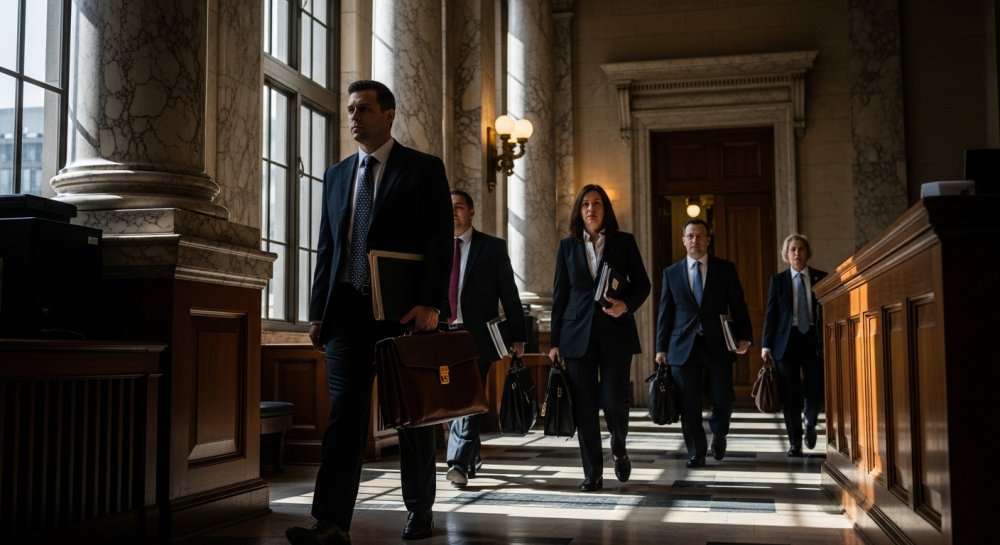
A wave of major lawsuits is redefining how artificial intelligence companies operate, forcing Silicon Valley to answer tough questions about copyright theft and intellectual property rights that they’d rather ignore.
The legal battles pit some of America’s most powerful tech corporations against artists, journalists, and content creators who say their life’s work was stolen to train AI systems worth billions. Here are the four lawsuits shaking up the AI industry.
The New York Times vs. OpenAI and Microsoft
The Gray Lady fired the first major shot in December 2023, suing OpenAI and Microsoft for copyright infringement. The Times claims these companies used millions of its articles to train ChatGPT without permission or compensation.
The lawsuit alleges OpenAI’s AI chatbot can reproduce Times content almost word-for-word, essentially creating a competitor that undermines the newspaper’s subscription business. Microsoft, as OpenAI’s primary investor and partner, got dragged into the legal crossfire.
“The Times has invested billions of dollars in its journalism, and OpenAI and Microsoft are reaping the rewards of that investment by using the Times’s content without authorization to build products that compete with the Times,”
the lawsuit states.
OpenAI fired back claiming “fair use” protections, arguing that training AI models on publicly available content doesn’t violate copyright law. The case is still working its way through federal court, and legal experts say it could set the standard for how AI companies handle copyrighted material going forward.
Sarah Silverman and Authors vs. OpenAI and Meta
Comedian Sarah Silverman and several authors filed lawsuits against both OpenAI and Meta in 2023, claiming the tech giants illegally used their copyrighted books to train AI models. The authors say companies like OpenAI scraped pirated copies of their books from shadow libraries on the internet.
In Silverman’s case against Meta, a federal judge dismissed most claims but allowed the direct copyright infringement claim to proceed. The judge ruled that while AI-generated outputs might not infringe copyright, the original act of copying books to train the AI could still be illegal.
The OpenAI case faces similar arguments. Authors claim ChatGPT can produce accurate summaries of their books, proving the AI was trained on full copies of their copyrighted works without permission or payment.
These cases highlight a fundamental tension: AI companies insist they need massive amounts of data to build useful products, while creators say that doesn’t give tech billionaires the right to steal their intellectual property.
Getty Images vs. Stability AI
Getty Images, one of the world’s largest stock photo agencies, sued Stability AI in both U.S. and UK courts in 2023. Getty claims Stability scraped over 12 million copyrighted images from its website to train the Stable Diffusion image generator.
The lawsuit includes examples of AI-generated images that still show mangled versions of Getty’s watermark, providing smoking-gun evidence that Stability used Getty’s proprietary images without authorization. Getty is seeking billions in damages.
“Stability AI unlawfully copied and processed millions of images protected by copyright and the associated metadata owned or represented by Getty Images absent a license,”
the company stated in its complaint.
Stability AI argued its use of the images constituted fair use and that training AI doesn’t require licensing every individual image. But Getty’s case has gained traction, and similar lawsuits from individual photographers and artists have followed.
Universal Music Group vs. Anthropic
The music industry entered the AI copyright fight when Universal Music Group, ABKCO Music, and Concord Music sued Anthropic (maker of the Claude AI assistant) in October 2023. The labels claim Anthropic’s AI was trained on copyrighted song lyrics without permission.
The lawsuit alleges that Claude can reproduce substantial portions of copyrighted lyrics when prompted, including songs from artists like the Rolling Stones, Beyoncé, and Katy Perry. Music publishers argue this proves Anthropic illegally copied their intellectual property.
“Anthropic has made hundreds of copies of Plaintiffs’ copyrighted lyrics without permission or compensation,”
the complaint states.
Anthropic, like other AI companies, is mounting a fair use defense. But the music industry has a long history of aggressively defending copyrights, and these labels have deep pockets to fund a protracted legal battle.
The Broader Battle
These four cases represent just the tip of the iceberg. Dozens of similar lawsuits have been filed against AI companies by visual artists, software developers, and other content creators.
The outcomes will determine whether AI companies can continue scraping vast amounts of content from the internet to train their models, or whether they’ll need to negotiate licensing deals and pay creators for using their work. Silicon Valley is betting that courts will side with “innovation” and let them keep building AI systems the way they have been.
But creators and traditional media companies smell blood in the water. They see an opportunity to force tech giants to finally respect intellectual property rights after years of the “move fast and break things” mentality that put growth above everything else.
For ordinary Americans, these cases matter because they’ll shape how AI develops and who benefits from it. Will AI create a new frontier where Big Tech steals from everyone while making billions, or will the legal system force these companies to play by the same rules as everyone else?
Why It Matters
This isn’t just about billion-dollar corporations fighting in court. It’s about whether America still protects the little guy — the songwriter, the photographer, the writer — or whether we’re building a future where Silicon Valley elites can steal your life’s work, feed it into a machine, and get rich while you get nothing. Our courts need to send a clear message: property rights matter, even when Big Tech doesn’t want them to.


-
 Entertainment3 years ago
Whoopi Goldberg’s “Wildly Inappropriate” Commentary Forces “The View” into Unscheduled Commercial Break
-

 Entertainment3 years ago
‘He’s A Pr*ck And F*cking Hates Republicans’: Megyn Kelly Goes Off on Don Lemon
-

 Featured3 years ago
US Advises Citizens to Leave This Country ASAP
-
 Featured3 years ago
Benghazi Hero: Hillary Clinton is “One of the Most Disgusting Humans on Earth”
-

 Latest News3 years ago
Nude Woman Wields Spiked Club in Daylight Venice Beach Brawl
-
 Featured3 years ago
Fox News Calls Security on Donald Trump Jr. at GOP Debate [Video]
-

 Entertainment3 years ago
Comedy Mourns Legend Richard Lewis: A Heartfelt Farewell
-

 Latest News3 years ago
Supreme Court Gift: Trump’s Trial Delayed, Election Interference Allegations Linger