Entertainment
January 1, Why Modern Stories Are Stealing Happily Ever After From Our Kids

Wyatt’s Take
- Today’s entertainment is ditching traditional marriage endings for self-focused stories that leave young people disconnected
- Strong families built on real love and commitment are being replaced by lonely individualism pushed by Hollywood
- Bringing back wholesome romance in media could help restore the American family values that made this country great
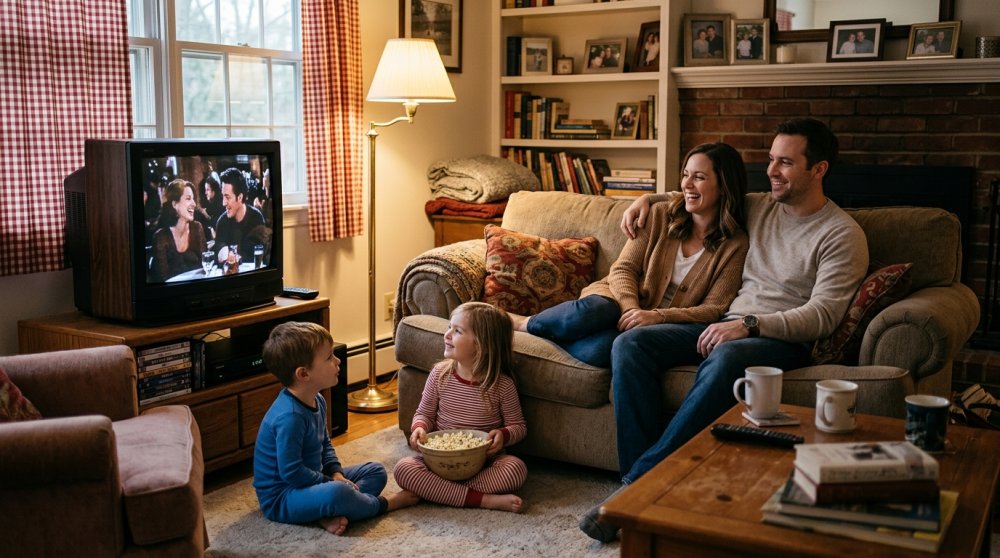
When my children return to school each fall, I have a few rituals. Among the least fun: Deep-clean the mudroom. Among the most fun: Watch “You’ve Got Mail,” the movie equivalent of a pumpkin spice latte when it comes to cozy autumnal cheer.
Its dated, AOL-centered plot notwithstanding, “You’ve Got Mail” is a timeless rom-com in the way that matters most: Both main characters have to grow and change in order to make “happily ever after” happen.
Today, that kind of romance-centered ending itself can seem like a relic of an earlier time. Romance is on the downswing, both on screen and in real life. Could making “happily ever after” great again help to re-enchant our love-starved culture?
I think it’s past time to find out. Movies and television shows — for both kids and adults — should bring back the fairy tale ending.
How coupling up became cringe
In some ways, it’s understandable that girls’ and women’s media have moved away from the dominance of the marriage plot. Many such stories revolved around less than compelling leading ladies, whose own character formation — to the extent it was depicted at all — remained secondary to the romantic finale. The popular culture of my own 1990s and 2000s childhood and adolescence centered on depictions of alleged female empowerment that looked in practice like vapid boy-craziness.
“The Little Mermaid” was my favorite movie when I was in preschool, but I would be hard-pressed to make a case that Ariel’s infatuation with Eric is interesting, instructive, or aspirational. Her character chases some random guy against all common sense and contra paternal admonition — and eventually gets him to marry her without ever learning anything of substance or evincing any mature regard for others.
A similarly facile arc was at work in “Sex and the City,” which remains the iconic depiction of upper-middle-class women’s lives and loves at the turn of the 21st century. Protagonist Carrie Bradshaw sleeps around to fill the time, ditches a good guy to chase a bad one, yet eventually lands her elusive prince charming (and even eventually marries him in the 2008 film).
In the 2010s, media for girls and women moved away from these kinds of “girl gets boy, which is all she cares about” narratives — and rightfully so. But instead of portraying female characters who mature as whole people and find love along the way, contemporary stories about girls and women have largely moved away from the love plot altogether.
Unfortunately, this leaves kids’ protagonists such as Mirabel from “Encanto” and the titular heroine of “Moana” chasing self-actualization rooted in their ancestors’ troubled past rather than pursuing self-development that looks toward a brighter future. The same can be said of many more recent protagonists written for women, such as Hannah in “Girls” and Jo and Raissa in the forthcoming “Forgotten Island.”
Ideals that inspire
Is this what we want for our daughters — or ourselves? To be obsessed with some aspect of a collectivist yesterday rather than focusing on one’s own tomorrows? To remain indefinitely uncoupled? I hope not. It’s not what I want for my sons, either.
Yes, it’s good to broaden women’s media beyond the marriage plot. Girls and women deserve and warrant depictions that reflect and inspire womanhood in its wholeness, which surely includes more than marriage.
But womanhood in its wholeness includes marriage, too. We’ve been so busy making sure that girls are consuming more than “just” a marriage plot that we’ve abandoned the centrality of marriage altogether, both in cinema and in life. Today, only 61% of 12th grade girls in the U.S. say they are likely to get married someday. While it’s true that marriage rates are dropping and that the young men in their cohort have all kinds of problems, these girls are also reflecting the norms (or lack thereof) of the media they consume.
Obviously, “happily ever after” was never a universal guarantee. But it was, not so long ago, a near-universal aspiration. When we decided to make women’s media about something other than “just” marriage, we threw the proverbial baby out with the bath water.
If our art reflects our ideals, it should depict and celebrate women who pursue both individual formation and ultimate coupledom — rather than adopting a facile, trendy indifference to the irreplaceable institution of marriage. Once upon a time — and not all that long ago — we understood as much.
“Happily ever after” done right
There are plenty of women’s stories that put “happily ever after” in its proper context, from Jane Austen’s “Emma” to Louisa May Alcott’s “Little Women” to Disney’s “The Princess and the Frog.” These narratives take female formation seriously in the context of what does not begin as, but ultimately becomes, a love plot.
An emphasis on female protagonists’ formation that ends with marriage is not sexist or reductive, but holistic and aspirational. We need to return to the idea of a suitable marriage as the most important thing, but not the only thing, that young women (and young men!) should typically aim for — both on screen and in life.
In other words, character development and romantic success are not opposites, but complements. The fact that we produced a lot of ditzy, uneven marriage plots for a while does not mean that we can’t do better and produce worthier, more egalitarian ones.
And then, we can hope that life really does imitate art.
Wyatt Matters
Strong families built on real commitment between a man and a woman are the backbone of America. When our stories stop celebrating marriage as something worth working toward, we lose the very thing that holds communities together. Heartland families know that finding someone to build a life with is not some old-fashioned idea — it’s the foundation that gave us strong neighborhoods, stable kids, and the values that made this country worth fighting for.


-
 Entertainment3 years ago
Whoopi Goldberg’s “Wildly Inappropriate” Commentary Forces “The View” into Unscheduled Commercial Break
-

 Entertainment3 years ago
‘He’s A Pr*ck And F*cking Hates Republicans’: Megyn Kelly Goes Off on Don Lemon
-

 Featured3 years ago
US Advises Citizens to Leave This Country ASAP
-
 Featured3 years ago
Benghazi Hero: Hillary Clinton is “One of the Most Disgusting Humans on Earth”
-

 Latest News3 years ago
Nude Woman Wields Spiked Club in Daylight Venice Beach Brawl
-
 Featured3 years ago
Fox News Calls Security on Donald Trump Jr. at GOP Debate [Video]
-

 Entertainment3 years ago
Comedy Mourns Legend Richard Lewis: A Heartfelt Farewell
-

 Latest News3 years ago
Supreme Court Gift: Trump’s Trial Delayed, Election Interference Allegations Linger
Gregory Lula
September 24, 2026 at 12:36 pm
I highly recommend “The Princess bride” for both children and adults”
LC
September 25, 2026 at 3:57 am
Princess bride is one of my favorites and I’m 60 years old. Something people don’t realize that it’s part of the communist plan to break the family and control each person individually. The devil is working overtime and he has the democrats in his pocket. Democrats are evil people and they want to destroy our country. The devil knows his time is short so he wants to inflict as much pain and suffering on mankind as he can before Jesus comes back and kicks his ass out.
S Zinser
September 25, 2026 at 5:52 am
No kidding? When the media feels it necessary to lie and sensationalize all aspects of what they print, and to chose solely societal ills to write about, what positivity does anyone have to look forward to. Doom, gloom, gay, transsexual, supporting murderers, and the list goes on. There is absolutely nothing innocent, joyful, or positive about anything that the media bludgeons society with, today. Divisiveness and hate, are what drive ALL media sources, today