Breaking News
January 1, Trump’s Iran Deal EXPOSED: What the 300 Billion Dollar Agreement Really Says

Wyatt’s Take
- Trump just signed a historic deal with Iran after decades of failed diplomacy from the Washington establishment — ending a war, reopening the Strait of Hormuz, and getting Iran to commit to no nuclear weapons.
- The full text reveals immediate ceasefire, removal of naval blockades within 30 days, termination of all sanctions, and a massive $300 billion reconstruction plan funded by regional partners — not American taxpayers.
- Critics are already attacking the deal, but Trump delivered what Obama and Biden couldn’t: peace through strength and a framework that protects American interests while ending endless Middle East conflicts.
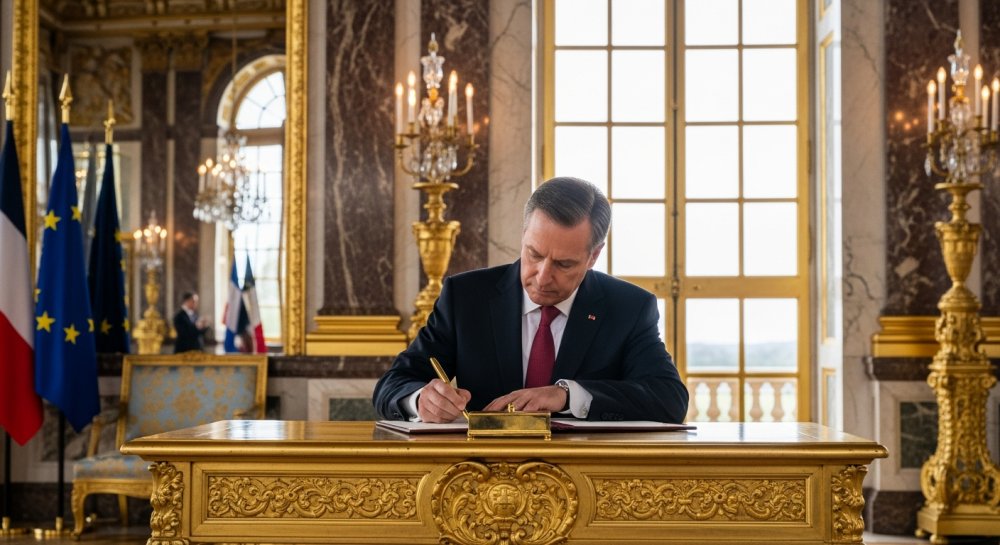
The memorandum of understanding with Iran dropped Wednesday, and it lays out exactly what President Trump negotiated after the G7 summit wrapped at the Palace of Versailles. His signature launched a 60-day ceasefire and negotiation framework that could reshape the entire Middle East.
Trump signed the deal Wednesday with a formal ceremony scheduled for Friday. Here’s what’s actually in it.
The agreement kicks off with an immediate and permanent end to military operations on all fronts, including Lebanon. Both the United States and Iran commit to respecting each other’s sovereignty and territorial integrity — no interference in internal affairs.
They’ve got 60 days to nail down a final deal, extendable if both sides agree.
Within 30 days of signing, the U.S. will completely remove its naval blockade against Iran. During that time, ship traffic gets restored gradually to pre-war levels.
After the final deal, U.S. forces pull back from proximity to Iran within another 30 days.
Iran’s side of the bargain? They’re making arrangements for safe passage of commercial vessels through the Persian Gulf and Strait of Hormuz at no charge for 60 days.
Traffic starts immediately, with full restoration within 30 days after Iran clears technical obstacles and completes demining operations. Iran will work with Oman and other Persian Gulf states to figure out future administration of the strait.
Here’s the big number everyone’s talking about: the U.S. and regional partners are developing a plan with at least $300 billion for reconstruction and economic development of Iran. Critics went ballistic over this, but the deal specifies regional partners are footing the bill — not American taxpayers alone.
The mechanism gets finalized within 60 days as part of the comprehensive deal.
The United States commits to terminating all sanctions against Iran — UN Security Council resolutions, IAEA Board of Governors resolutions, and all unilateral U.S. sanctions, both primary and secondary. The schedule gets hammered out in the final deal.
Both sides call this sanctions termination issue critical and promise to address it immediately in negotiations.
On the nuclear front, Iran reaffirms it will not procure or develop nuclear weapons. Period.
The deal addresses Iran’s stockpile of enriched material through a mutually agreed mechanism, with downblending on site under IAEA supervision as the minimum approach. They’ll discuss enrichment levels and Iran’s nuclear energy needs based on a framework in the final deal.
Again, both sides acknowledge these nuclear issues are critical and intend to tackle them right away.
Until the final deal drops, both countries agreed to maintain the status quo. Iran keeps its nuclear program where it is, and the U.S. won’t impose new sanctions or deploy additional forces to the region.
Immediately upon signing, the U.S. Treasury will issue waivers for export of Iranian crude oil, petroleum products and derivatives, plus all associated services — banking, insurance, transportation, the works.
The United States also commits to making frozen or restricted Iranian funds and assets fully available once the MOU goes into effect. Procedures for releasing these funds get worked out during negotiations.
Those funds can be transferred or kept in original accounts, fully usable for any beneficiary the Central Bank of Iran designates. The U.S. will issue all necessary licenses and authorizations.
An executive mechanism will monitor successful implementation of this MOU and future compliance with the final deal.
Once paragraphs 1, 4, 5, 10, and 11 start getting implemented — ceasefire, blockade removal, Hormuz passage, oil waivers, and unfreezing assets — negotiations on the final deal begin, focusing exclusively on the remaining paragraphs.
The final deal gets endorsed by a binding UN Security Council resolution.
Wyatt Matters
This is what real dealmaking looks like — not endless wars that drain our treasury and send our young people to die in desert hellholes. Trump’s getting Iran to give up nukes, reopen critical shipping lanes, and commit to peace while making regional partners pay for reconstruction instead of American workers. The Washington establishment spent decades failing at this, burning trillions on regime change fantasies. Trump’s approach puts America first and brings our troops home. That’s the peace through strength our families have been waiting for.


-
 Entertainment3 years ago
Whoopi Goldberg’s “Wildly Inappropriate” Commentary Forces “The View” into Unscheduled Commercial Break
-

 Entertainment3 years ago
‘He’s A Pr*ck And F*cking Hates Republicans’: Megyn Kelly Goes Off on Don Lemon
-
 Featured3 years ago
US Advises Citizens to Leave This Country ASAP
-
 Featured3 years ago
Benghazi Hero: Hillary Clinton is “One of the Most Disgusting Humans on Earth”
-

 Latest News3 years ago
Nude Woman Wields Spiked Club in Daylight Venice Beach Brawl
-
 Featured3 years ago
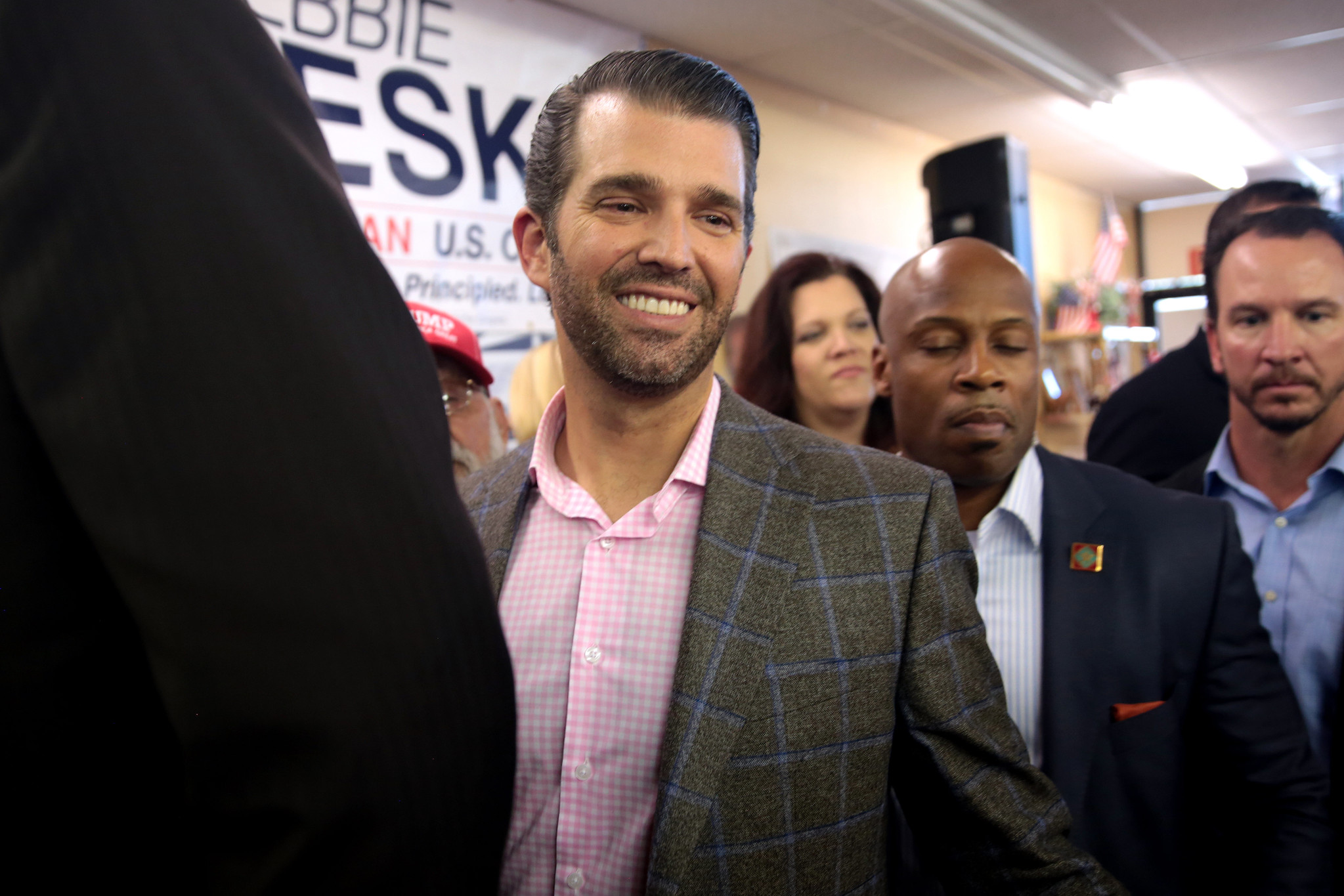
Fox News Calls Security on Donald Trump Jr. at GOP Debate [Video]
-

 Entertainment3 years ago
Comedy Mourns Legend Richard Lewis: A Heartfelt Farewell
-

 Latest News3 years ago
Supreme Court Gift: Trump’s Trial Delayed, Election Interference Allegations Linger