Latest News
January 1, SHOCKING Security Revolution: Hardline Outsider Promises Total War on Cartels

Wyatt’s Take
- Colombian voters are done with soft-on-crime leftist policies that let cartels run wild — they want law and order restored with an iron fist
- A hardline businessman nicknamed ‘The Tiger’ is channeling Trump-style border security and offering mega-prisons and military force instead of negotiating with narco-terrorists
- This election could either restore Colombia as America’s security partner or double down on the failed leftist experiment that’s flooded our streets with cocaine
While Americans battle a fentanyl crisis at home, Colombia — the world’s largest cocaine producer — is voting Sunday on whether to get serious about crushing drug cartels or continue coddling them with failed leftist policies. And the outcome matters more than most voters realize.
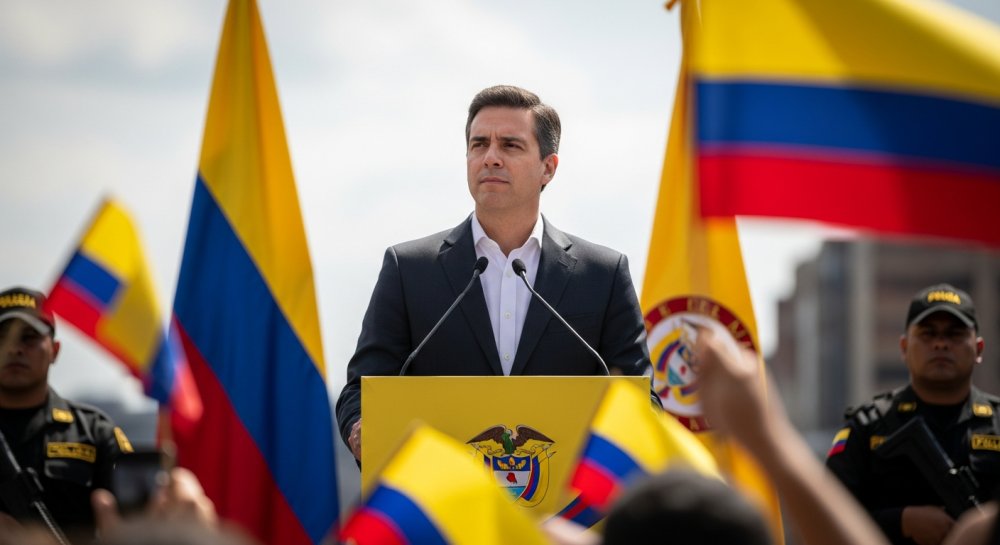
Abelardo De La Espriella, a 47-year-old businessman and defense attorney, has surged to frontrunner status by promising what current leftist President Gustavo Petro refuses to deliver: total war on the narco-terrorists poisoning both countries.
As a long-standing U.S. security partner, Colombia’s internal policies directly affect narcotics flows, migration dynamics and regional stability. A shift in Bogotá’s leadership could reshape cooperation with Washington on drug interdiction, intelligence sharing and counter-cartel operations — issues that remain central to U.S. domestic and foreign policy.
De La Espriella — nicknamed ‘The Tiger’ — isn’t mincing words about his approach.
“The only peace process I believe in is one imposed by the force of arms and the laws of the republic. Under my government, any bandit who resists will be eliminated as appropriate, and if he submits, we will imprison him in a mega prison so he can pay his debt to justice as they should.”
That’s the kind of straight talk working Americans understand. No therapy sessions with cartel bosses. No negotiated settlements with terrorists. Just the rule of law backed by overwhelming force.
His platform focuses on aggressive counternarcotics enforcement, institutional reform and a decisive break from Petro’s negotiation-based approach with armed rebel groups. Sound familiar? It should — because it’s the same tough-on-crime, America-first approach Trump championed at our southern border.
The Tiger’s rise mirrors a regional pattern seen with leaders like Javier Milei in Argentina, Nayib Bukele in El Salvador and José Antonio Kast in Chile — figures who’ve built political momentum around security-first agendas and voter frustration with crime and economic instability.
Polls show De La Espriella is likely to face off against leftist candidate Iván Cepeda, who’s from the same party as President Petro, and center-right candidate Paloma Valencia. There are 14 candidates on the ballot, but the real choice is between continuing the leftist disaster or restoring law and order.
Valencia’s campaign is backed by most of the nation’s traditional parties and by economists who are concerned about the growing levels of debt under the Petro administration and want Colombia to return to more orthodox policies.
Valencia understands what’s at stake for U.S.-Colombia relations.
“As president of Colombia, we will restore a strategic, close, and trustworthy relationship with the United States, based on mutual respect and the defense of our national interests. We will strengthen cooperation in security, intelligence, military training, and the fight against transnational crime; areas in which the alliance between our two countries has been essential to Colombia’s stability. We will also work to ensure that Colombia plays an active role in the Shield of the Americas and contributes to regional leadership in defense and security.”
She’s promising to be a key partner for economic growth, investment and job creation, as well as a vital ally for the millions of Colombians who live in America. Colombia would also stand alongside the United States in defending freedom and democracy across the hemisphere, supporting efforts to restore liberty in Cuba and to help Venezuela return to a democratic path.
Compare that to Cepeda, who represents a continuation and potential expansion of the leftist policies that got Colombia into this mess. Cepeda supports dialogue with armed groups, rural reform and a reform of Colombia’s traditional security framework, placing greater emphasis on social investment — which is code for going soft on criminals while hardworking citizens suffer.
Camilo Guzmán, executive director of Libertank, explained why De La Espriella connected with voters.
“Abelardo earned that ticket by reading the room better than anyone else in the opposition. He offered catharsis, speaking directly to Colombian voters’ indignation toward the traditional political class and the establishment.”
Where center-right Senator Valencia offered competence and continuity, De La Espriella’s message is built on a hard line on security. Ending Petro’s failed ‘total peace’ policy that emboldened guerrillas and cartels, going after narco-trafficking with full force, and rebuilding the counter-narcotics alliance with Washington that Petro spent four years dismantling.
The outcome for America carries significant strategic weight. A De La Espriella administration could align more closely with Washington’s traditional counternarcotics priorities, potentially strengthening bilateral cooperation at a time when synthetic drug flows and organized crime networks are expanding across the hemisphere.
Beyond bilateral relations, the election is being closely watched as a potential inflection point for Latin America. A De La Espriella or Valencia win would reinforce the momentum of security-focused leadership seen in parts of the region, while a Cepeda presidency would signal continuity for Petro’s failed policies.
José Manuel Restrepo, De La Espriella’s running mate for vice president, outlined their vision for U.S.-Colombia relations.
“The relationship between Colombia and the United States needs to be recovered and rebuilt, and this starts with a sound security policy to combat drug trafficking. It will be crucial to move beyond the current deteriorated relationship, in which we lost the historic bilateral, bicameral, bipartisan, and multisectoral relationship with our primary trading and investment partner.”
Restrepo sees opportunity beyond just security cooperation. Colombia could become the United States’ best possible ally in the restoration of democracy in Venezuela, playing a major role in investing in food, hygiene products and basic needs from Colombia to Venezuela. This would create new opportunities that benefit Colombia while advancing American strategic interests.
But there’s a catch that conservatives need to understand. De La Espriella’s anti-establishment posture isn’t a libertarian agenda. His economic program leans on price controls, interest-rate subsidies and import substitution — closer to old-school Latin American populism than to Bukele’s pro-investment turn, and a world away from Milei’s free-market project. Whether the economic program creates new instability south of the border remains an open question.
Analyst and entrepreneur Jerónimo Uribe — son of a former president — framed the stakes in stark terms.
“The elections in Colombia are not between the left and the right. They are between a communist model propped up by drug traffickers and a model that defends democracy and freedom.”
That’s the bottom line. Colombia can choose law and order or it can choose chaos. It can rebuild its partnership with America or it can align with narco-terrorists and socialist dictators. There’s no middle ground.
Wyatt Matters
When Colombia’s cartels thrive, Americans die from overdoses in Omaha and Appalachia. When Colombia chooses weak leadership that coddles criminals, the poison flows north and our border crisis gets worse. This election isn’t just about Colombian politics — it’s about whether America will have a real partner in the drug war or another failed state on our doorstep. Working families in the heartland deserve leaders everywhere who put security and the rule of law first, not social experiments that empower the worst people on Earth.


-
 Entertainment3 years ago
Whoopi Goldberg’s “Wildly Inappropriate” Commentary Forces “The View” into Unscheduled Commercial Break
-

 Entertainment3 years ago
‘He’s A Pr*ck And F*cking Hates Republicans’: Megyn Kelly Goes Off on Don Lemon
-

 Featured3 years ago
US Advises Citizens to Leave This Country ASAP
-
 Featured3 years ago
Benghazi Hero: Hillary Clinton is “One of the Most Disgusting Humans on Earth”
-

 Latest News3 years ago
Nude Woman Wields Spiked Club in Daylight Venice Beach Brawl
-
 Featured3 years ago
Fox News Calls Security on Donald Trump Jr. at GOP Debate [Video]
-

 Entertainment3 years ago
Comedy Mourns Legend Richard Lewis: A Heartfelt Farewell
-

 Latest News3 years ago
Supreme Court Gift: Trump’s Trial Delayed, Election Interference Allegations Linger