Latest News
January 1, Trump’s Iran Strategy Just Changed Everything — Tehran Can’t Hide From What’s Coming

Wyatt’s Take
- Trump just shifted the entire Iran strategy from dismantling nukes to dismantling the regime itself — targeting the infrastructure that keeps the mullahs in power
- Tehran’s been playing us for decades with fake negotiations while Moscow and Beijing prop them up, but Trump’s done playing games
- The only path to peace is regime collapse — anything less just kicks the can down the road while Iran keeps funding terrorism
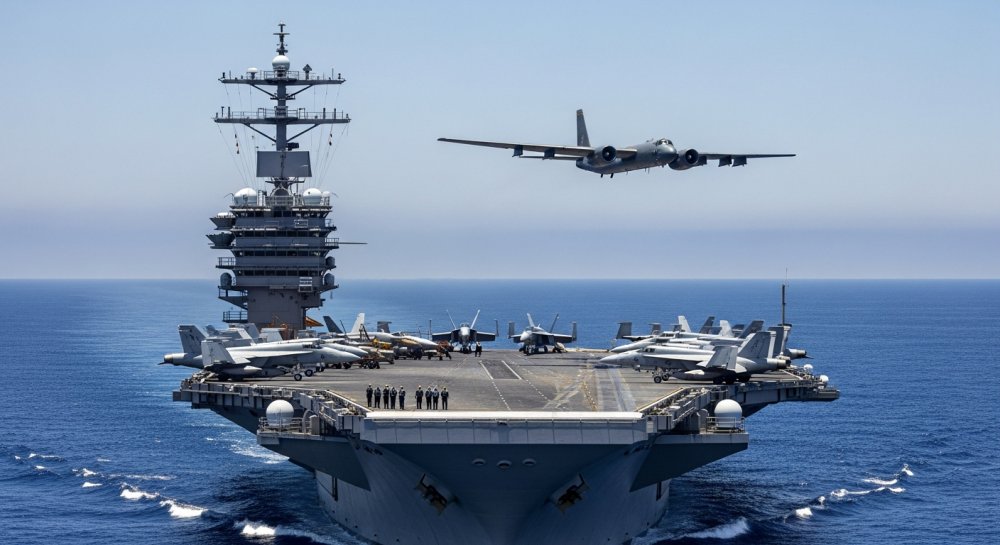
President Donald Trump just signaled at Camp David that we’re done messing around with Iran. The objective isn’t just stopping their nuclear program anymore — it’s breaking the Islamic Republic’s ability to survive as a regime.
For the first time in decades, America’s Iran strategy is fundamentally shifting. Trump made it crystal clear: we’re prepared to “hit them very hard” until the regime reaches a breaking point where it “can’t go on anymore.”
While Trump has canceled some large-scale strikes — raising questions about our credibility — Tehran is exploiting that hesitation with backing from Moscow and Beijing. The mullahs think they can outlast us again.
Many Iranians would welcome their oppressive government’s defeat and collapse. Though hitting critical infrastructure would create temporary hardships, opponents of the Islamic Republic see this as necessary pain — the difficult transition that could finally bring freedom.
Tehran’s propaganda machine is threatening massive retaliation, warning that infrastructure attacks will trigger severe responses. These statements reveal the regime is preparing for wider confrontation with America and Israel.
They’re also hinting they could activate dormant terrorist cells across the United States and the West — something these radicals have spent decades preparing for.
The Iranian people face even deeper hardship as the regime loses control over large parts of the country. It could collapse into chaos at any moment.
If the regime falls without proper leadership — like Crown Prince Reza Pahlavi leading a transitional government — Iran could descend into bloodshed. The Islamic Republic’s remnants would regroup through mosques and underground terrorist networks, continuing their jihad by other means.
The current White House hasn’t shown serious commitment to regime change. Defeating Islamist terrorism requires political resolve and strategic clarity — things Washington has lacked for over two decades.
We’ve failed to defeat a regime that serves Moscow and Beijing’s interests while Europe sits on the sidelines detached from reality. Israel alone recognizes that regional security depends on regime change in Iran.
Trump’s objective appears to be forcing Tehran back to negotiations. But the fanatical Shiite clerical establishment would rather see Iran destroyed than abandon their revolutionary ideology.
This isn’t conventional military warfare anymore — it’s system warfare where the regime’s real vulnerability isn’t the IRGC or nuclear facilities, but the infrastructure keeping it alive.
The regime’s critical weakness lies in its electricity grid, oil refineries, fuel distribution networks, command-and-control systems, communications infrastructure, and government institutions. Disrupting these systems goes far beyond physical destruction.
The IRGC would struggle to coordinate nationwide operations, provincial control would weaken, and pressure on the already bankrupt government would intensify. This is why targeting infrastructure makes strategic sense.
For forty-eight years, the Shiite clerical establishment has turned Iran into a military garrison. In pursuit of revolutionary ideology, they’ve devastated the economy, plundered national wealth, and sacrificed Iran’s development for ideological expansion.
For decades, the world ignored Israel’s warnings about the Islamic Republic. Only now is the international community recognizing the security threat posed by Tehran’s state-sponsored terrorism.
America’s years of negotiating with Iran’s clerical regime have produced nothing except delay, allowing Tehran to buy time while advancing strategic objectives. Diplomacy with a regime built on terrorism has repeatedly failed.
Rather than seeking compromise, Tehran has used negotiations to outlast successive U.S. administrations. The result is a Middle East that continues paying the price for Washington’s hesitation.
The Tehran regime and its military and intelligence institutions have repeatedly threatened operations against America and Israel. Within their ideological worldview, mass-casualty attacks like September 11 and October 7 are instruments of political intimidation.
Khomeini and Khamenei may be gone, but the ideology they institutionalized endures. To preserve the regime, its leaders have repeatedly shown willingness to commit violence and repression.
As long as Tehran continues serving as a strategic partner of Moscow and Beijing, this challenge extends far beyond Iran itself. Israel has long recognized that lasting regional security depends on ending the Islamic Republic’s rule.
The path forward is clear: dismantling the infrastructure sustaining the Islamic Republic is the only way America and allies can force strategic recalibration in Tehran — or hasten the regime’s collapse. Anything less allows the mullahs to continue their campaign of terrorism, instability, and ideological expansion.
The next phase of this conflict will determine whether the Middle East remains hostage to a dying dictatorship — or finally breaks free.
CENTCOM’s strategic objectives may require reassessment. Rather than focusing primarily on military facilities, strategy should target the pillars sustaining the regime: cutting off the IRGC’s financial networks and proxies, disrupting command-and-control capabilities, exposing leadership corruption and hidden assets, denying access to surveillance technologies, and expanding secure communications for the Iranian people.
Lower-ranking military and security personnel should be told that those who refuse to repress civilians will have a future in post-Islamic Republic Iran. External pressure without a credible transition plan risks producing chaos rather than change.
The objective should be dismantling the machinery of repression while preserving the Iranian people’s ability to determine their own future.
Limited U.S. support could help spark a new popular uprising, accelerating the regime’s collapse. As Iran’s leaders remain hidden in tunnels and the security apparatus grows fragmented, Washington should prioritize coordinated covert operations, stronger protection for opposition figures, and long-term transition strategy over election-driven diplomacy.
Closer strategic coordination between the CIA and Mossad may be essential to better understand and confront the ideological and operational roots of radical Islamist threat that has spread since 1979 — a challenge successive U.S. administrations have too often underestimated.
The people of Iran and Israel are already paying the price for a prolonged war of attrition. Unless Washington recognizes that the regime’s ideology leaves little room for compromise, the consequences will extend far beyond Iran.
The next phase of this conflict will determine not only Iran’s future, but the future balance of power across the Middle East.
Wyatt Matters
For too long, Washington has treated Iran like a normal country we can negotiate with — but they’re not. They’re a radical theocracy that would rather burn their own country to the ground than give up their death-to-America ideology. Trump understands what every working American knows instinctively: you can’t negotiate with fanatics. You have to defeat them. The Iranian people deserve freedom from these mullahs, and America deserves security from their terrorism. It’s time to finish what we should have done decades ago.


-
 Entertainment3 years ago
Whoopi Goldberg’s “Wildly Inappropriate” Commentary Forces “The View” into Unscheduled Commercial Break
-

 Entertainment3 years ago
‘He’s A Pr*ck And F*cking Hates Republicans’: Megyn Kelly Goes Off on Don Lemon
-

 Featured3 years ago
US Advises Citizens to Leave This Country ASAP
-
 Featured3 years ago
Benghazi Hero: Hillary Clinton is “One of the Most Disgusting Humans on Earth”
-

 Latest News2 years ago
Nude Woman Wields Spiked Club in Daylight Venice Beach Brawl
-

 Entertainment2 years ago
Comedy Mourns Legend Richard Lewis: A Heartfelt Farewell
-
 Featured3 years ago
Fox News Calls Security on Donald Trump Jr. at GOP Debate [Video]
-

 Latest News2 years ago
Supreme Court Gift: Trump’s Trial Delayed, Election Interference Allegations Linger