Breaking News
January 1, Trump REFUSES Signature as Senate Betrays Voter ID — But Housing Bill Becomes Law Anyway

Wyatt’s Take
- Trump took a stand against a bipartisan housing bill by refusing to sign it — all because Senate Republicans failed to deliver on voter ID requirements that would protect election integrity.
- Despite the President’s refusal to put pen to paper, the housing legislation became law anyway through constitutional loopholes — a reminder that the D.C. swamp has ways around even the most principled presidential resistance.
- This showdown exposes the real fight: Trump demanding basic election security while establishment politicians on both sides cave to pressure and abandon the SAVE Act that working Americans desperately need.
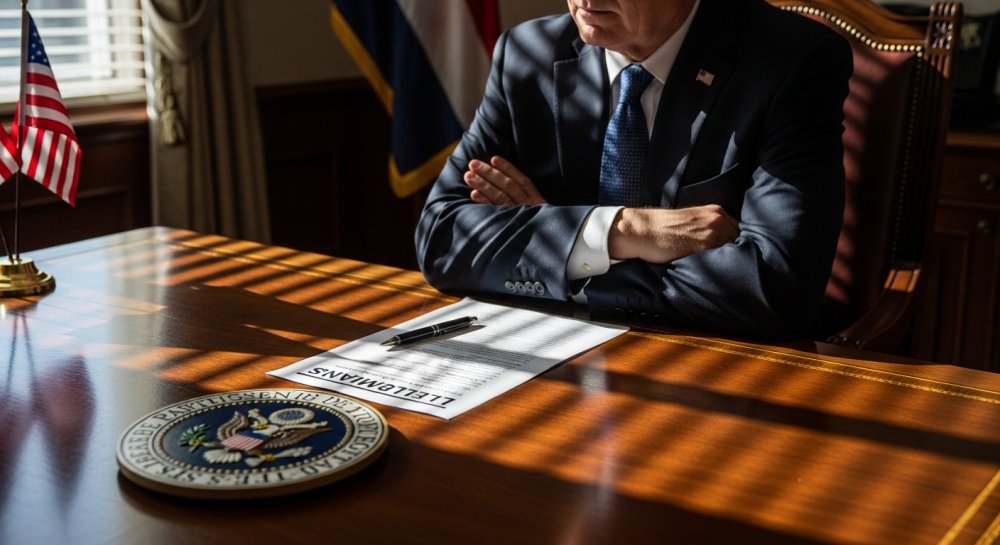
A bipartisan housing bill officially became federal law this week, but not because President Donald Trump signed it. The Commander-in-Chief deliberately withheld his signature as a direct protest against Senate failure to pass critical voter identification legislation.
The housing measure passed through Congress with support from lawmakers on both sides of the aisle. But Trump made clear his signature would not grace the document until the Senate delivered on election integrity.
I will not sign the Housing Bill, which has been fully approved by Congress and sent to the White House, in PROTEST over the fact that the United States Senate is not capable of passing THE SAVE AMERICA ACT, which is polling at 97% with the Republican Party, and very high with… pic.twitter.com/T2GbTOu48o
— Commentary Donald J. Trump Truth Social Posts On X (@TrumpTruthOnX) July 10, 2026
The President’s refusal centered on the Senate’s inability to advance the SAVE Act — legislation requiring proof of citizenship to vote in federal elections. For Trump and millions of conservatives nationwide, voter ID isn’t a partisan wedge issue — it’s common sense protection against fraud that every other developed nation already requires.
Despite Trump’s principled stand, the housing bill became law through constitutional provisions that allow legislation to take effect without a presidential signature after a certain timeframe. The pocket maneuver underscores how the administrative state operates even when a president plants his feet.
Senate Republicans faced blistering criticism from the MAGA base for failing to unite behind the SAVE Act. Conservative grassroots groups have been sounding alarms for months about election security vulnerabilities, pointing to states that mail ballots to voter rolls packed with non-citizens and deceased individuals.
The housing legislation itself addresses affordability and zoning reform — issues both parties claim to prioritize. But Trump’s message rings clear: no business-as-usual in Washington while fundamental election safeguards remain unaddressed.
For working-class Americans watching from kitchen tables across the heartland, the episode reveals familiar D.C. dysfunction. Politicians talk tough on the campaign trail about election integrity, then fold when it’s time to actually pass the laws that would secure the ballot box.
Trump’s refusal to sign wasn’t just symbolic theatrics. It was a public rebuke of Senate leadership and a signal to his base that he won’t rubber-stamp the establishment’s priorities while they ignore his.
The SAVE Act remains stalled, caught in procedural quicksand and facing opposition from Democrats who label common-sense voter ID requirements as “suppression.” Republicans who promised their constituents they’d fight for election security now face accountability questions heading into the next election cycle.
Trump’s willingness to leverage every available tool — including withholding his signature — demonstrates the ongoing battle between populist conservative leadership and the entrenched political class that resists disruption at every turn.
Why This Matters
When your president refuses to sign a bill because the Senate won’t protect your vote, that’s not obstruction — that’s standing up for you. Middle America knows the difference between politicians who talk and leaders who fight. Trump just reminded everyone which one he is, even when the system finds ways around him.


-
 Entertainment3 years ago
Whoopi Goldberg’s “Wildly Inappropriate” Commentary Forces “The View” into Unscheduled Commercial Break
-

 Entertainment3 years ago
‘He’s A Pr*ck And F*cking Hates Republicans’: Megyn Kelly Goes Off on Don Lemon
-

 Featured3 years ago
US Advises Citizens to Leave This Country ASAP
-
 Featured3 years ago
Benghazi Hero: Hillary Clinton is “One of the Most Disgusting Humans on Earth”
-

 Latest News3 years ago
Nude Woman Wields Spiked Club in Daylight Venice Beach Brawl
-
 Featured3 years ago
Fox News Calls Security on Donald Trump Jr. at GOP Debate [Video]
-

 Entertainment3 years ago
Comedy Mourns Legend Richard Lewis: A Heartfelt Farewell
-
 Latest News3 years ago
Supreme Court Gift: Trump’s Trial Delayed, Election Interference Allegations Linger
Denise Lawandus
July 11, 2026 at 8:59 pm
Worthless Assholes
Frank Starks
July 11, 2026 at 9:21 pm
Citizens of the USA, there are no Federal elections. Per the US Constitution, all elections are conducted at the state level and are under the purview of the states — The Federal Government is not involved. Each state sets the rules for voter registration and for mail-in voting in their state. The SAVE Act, if passed, would be in violation of the US Constitution.
Steve
July 12, 2026 at 11:43 am
Veto that bullshit Trump. We’re sick of the fuckin democrats carrying more about illegal shitbags in this country than the American people. We need to rise up against these tyrannical pieces of shit before its too late. Thomas Jefferson said:
When tyranny becomes law,
Rebellion becomes duty.
Lis
July 14, 2026 at 10:21 pm
Trump cannot endorse a bill that violates the Constitution. Read the Constitution, Steve. And watch your filthy language: your language is an example of the problems in our country. Please use the English language correctly.