Health
January 1, BOMBSHELL: Billion-Dollar AI Takeover of American Hospitals Just Beginning

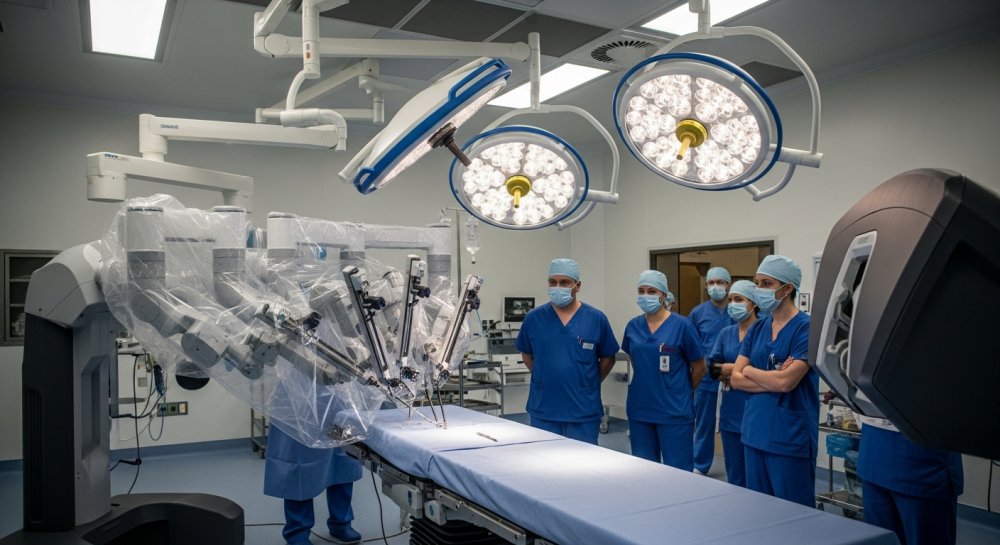
Wyatt’s Take
- Artificial intelligence is exploding into hospital operating rooms across America — a market ballooning from nearly $1 billion to over $1 billion in just one year, with explosive 30% annual growth projected through 2030.
- This isn’t about better healthcare for working families — it’s about corporate profits and Silicon Valley tech giants cashing in on your medical procedures while doctors become glorified machine operators.
- No one asked Main Street Americans if they wanted robots making life-or-death decisions in the operating room, but Big Tech and hospital executives are racing ahead anyway because there’s billions to be made.
The artificial intelligence invasion of America’s operating rooms is accelerating at breakneck speed. According to a new industry report, the market for AI surgical technology is exploding from $900 million in 2025 to $1.17 billion in 2026 alone.
That’s a staggering 30% compound annual growth rate — and it’s only the beginning. By 2030, these systems are expected to dominate surgical suites nationwide.
The report paints a picture of a healthcare system being fundamentally transformed by machines and algorithms. Robotic surgical assistants, AI-powered diagnostic tools, and automated monitoring systems are being rushed into hospitals at record pace.
But here’s what they’re not telling you: this gold rush has nothing to do with improving outcomes for everyday Americans. It’s about maximizing profits for tech companies and hospital corporations while replacing human judgment with computer code.
Silicon Valley giants are salivating over healthcare dollars. They see operating rooms as the next frontier for their AI products, and they’re selling hospital executives on promises of efficiency and cost savings.
What gets lost in this pitch is the human element — the experienced surgeon’s instinct, the nurse’s watchful eye, the decades of medical training that can’t be programmed into a machine.
Working families across the heartland are already struggling with astronomical medical bills and insurance premiums. Now they’re supposed to trust their lives to algorithms created by the same tech elites who can’t even keep their social media platforms running properly?
The 30% growth rate reveals just how fast this transformation is happening. Hospital administrators are racing to adopt these systems, often with minimal oversight or public input about the risks and trade-offs involved.
There’s no grassroots movement demanding robot surgeons. This is being driven from the top down by corporate boardrooms looking at profit margins, not by patients looking for better care.
And make no mistake — when something goes wrong with an AI system during surgery, who gets held accountable? The faceless tech company with an army of lawyers? Or the doctor who was following the machine’s recommendations?
The liability questions alone should give Americans pause. But in the rush to cash in on the AI boom, these concerns are being swept under the rug.
The projected market expansion through 2030 shows this isn’t a passing trend. This is a fundamental reshaping of American healthcare, happening whether we like it or not, driven by financial incentives rather than medical necessity.
Traditional American values used to mean trusting your local doctor, building relationships with healthcare providers who knew you and your family. Now we’re supposed to trust that a computer program designed in California knows what’s best for us on the operating table.
Why This Matters
When corporate executives and Silicon Valley billionaires start making billions off technology in our operating rooms, regular Americans need to ask hard questions. Are these machines really making us safer, or are they making shareholders richer? Our healthcare system should serve patients first, not tech company profit margins. The speed of this takeover — 30% growth in a single year — should alarm anyone who believes medical decisions belong in human hands, not corporate algorithms.


-
 Entertainment3 years ago
Whoopi Goldberg’s “Wildly Inappropriate” Commentary Forces “The View” into Unscheduled Commercial Break
-

 Entertainment3 years ago
‘He’s A Pr*ck And F*cking Hates Republicans’: Megyn Kelly Goes Off on Don Lemon
-

 Featured3 years ago
US Advises Citizens to Leave This Country ASAP
-
 Featured3 years ago
Benghazi Hero: Hillary Clinton is “One of the Most Disgusting Humans on Earth”
-

 Latest News3 years ago
Nude Woman Wields Spiked Club in Daylight Venice Beach Brawl
-
 Featured3 years ago
Fox News Calls Security on Donald Trump Jr. at GOP Debate [Video]
-

 Entertainment3 years ago
Comedy Mourns Legend Richard Lewis: A Heartfelt Farewell
-

 Latest News3 years ago
Supreme Court Gift: Trump’s Trial Delayed, Election Interference Allegations Linger
Bill B
July 7, 2026 at 6:16 am
Can’t wait to see the malpractice insurance go thru the roof for the doctor, the hospital, and the manufacturer. That will probably offset the possible savings.
Fauncine
July 7, 2026 at 7:30 am
What I want to see is the error ratio of AI verses standard surgeons and what is the death rate. I’m sure this won’t come to light right away.
Keith B
July 7, 2026 at 7:38 am
I detest and am afraid of the dependence upon non human services some have created for us to swallow. I am not a fan. AI doesn’t, care. console, empathize or listen to our story. Yes yes, I declare the old fashion way better. How many times on phone for hours(plural) jumping through comp hoops for you. Mine are many.
Brian Evans
July 7, 2026 at 8:10 am
Oh goody goody gumdrops, another way the greedy scum-sucking yuppies can make a buck. Anything those clowns touch, turns to shit, all over making money. Our farming and ranching systems are going to the dogs thanks to their midas touch. Big tech’s slogan in the health care industry should be”if it bleeds, we’ll make money “.
James M Wills
July 7, 2026 at 8:47 am
I practiced medicine forty years. When my much-older cousin began practice in 1940, doctors were “licensed in medicine and surgery,” and four years of medical school and one of internship were the norm. In the time since, information has exploded, and there are medical sub-sub specialties, some of which require a decade of post-MD training, simply because one man cannot contain even a fraction of what’s known in ONE area, let alone across the fields.
Another retired doctor-friend and I have this conversation frequently. Medical “mistakes” – misses and blunders because of human limitations – are a major cause of excess deaths across America and dwarf other causes (such as “gun violence” – the Left’s top priority as they try to gain control of the populace).
Latest AI/large-language model testing reveals information bases of such a degree that AI/LLMs can exceed the top test score of the top student in ANY graduate-level courses, including medicine and surgery. I have no dog in this hunt other than aging and the need soon for medical care. I’m very hopeful.
Grammy Leslie
July 7, 2026 at 10:33 am
AI is only as smart as the human who programmed it. What medical credentials does that said person have? What does his/her “report card” look like? Any malpractice? Would a medical professional (surgeon, etc.) be performing procedure or a technician with a tutorial manual? I can’t see how this would replace human medical experts as there’s different unexpected circumstances that pop up that would require real live human spur-of-the-moment decisions. I personally think this is still very much in the prototype stages and would be years before it could successfully be implemented into real life or death situations, if at all. Guinea pigs anyone?