Breaking News
January 1, Trauma Deepens for Israeli Children After Thousand Days Under Fire

Wyatt’s Take
- Israeli kids haven’t had a normal year of school since COVID hit — constant evacuations, online learning, war sirens interrupting childhood itself.
- Over 25,000 children officially recognized as victims of hostile acts, with 84% showing emotional distress — many can’t speak, develop nervous tics, or wet themselves from trauma.
- While American media obsesses over campus protests, these families are living through missile attacks, evacuations, and the constant fear that comes with being surrounded by enemies who want them dead.
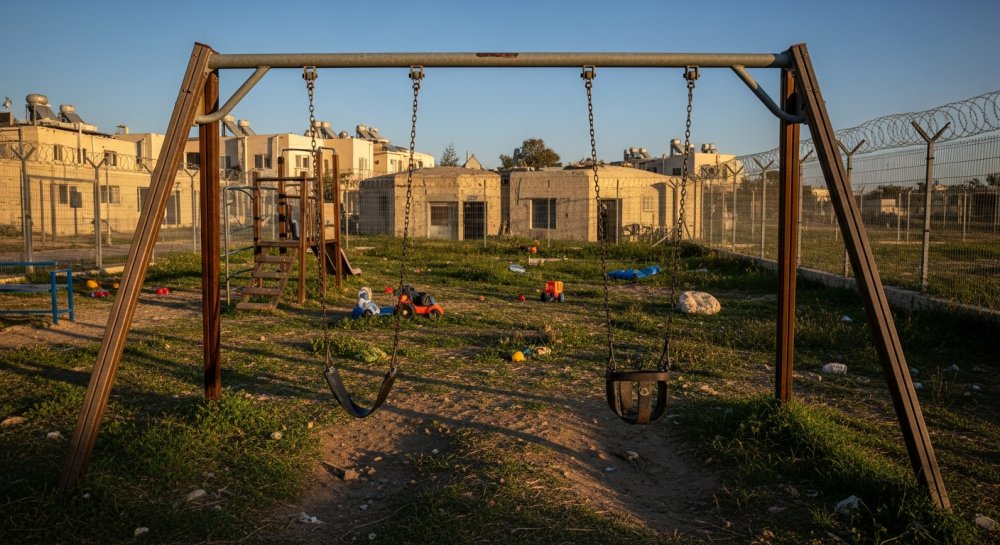
As Israel marks 1,000 days since Hamas terrorists launched their barbaric Oct. 7 massacre, the nation’s children are heading into summer vacation carrying scars most American kids can’t imagine. Many are still coping with psychological wounds from nearly three years of war on multiple fronts.
Lilach, 47, lives in Kibbutz Eilon, barely a mile and a half from Lebanon’s border in the Western Galilee. She told reporters she just wants her three children — Yuval, Amit, and Yoni — to have one normal summer.
“During the war, there was always concern about leaving home. The kids were barely in school and spent most of their time indoors in front of screens,” she said.
“I hope they can now spend time with their friends and enjoy activities together. Tomorrow, Yoni is going to an amusement park. I just want them to have fun, be with their friends and enjoy being kids again.”
Since COVID-19 hit in early 2020, Lilach said her children have had exactly one uninterrupted year of school. Think about that for a second.
“It was hard. They would start school, attend for a month or two, then classes would stop because of the war with Iran or fighting with Lebanon, and then resume. It was difficult to get back into a routine each time. It felt like starting a new school year over and over again,” she said.
Despite the chaos, Lilach’s daughter Amit graduated high school through sheer determination and private tutoring. But her son Yoni, who has attention deficit disorder, struggled badly with weeks stuck at home during the fighting. He’ll move to a smaller classroom next year for extra support.
Anat, 50, from Kibbutz Yiftah in the Upper Galilee — less than two miles from Lebanon — was evacuated with her family the day after the Oct. 7 attacks. Her children changed schools three times before the family returned home in February 2025.
During Israel’s recent war with Iran, they were out of school for another six weeks.
“Every day, having my 10-year-old log on to Zoom for online classes was a challenge. It was very difficult to maintain a routine and continuity in her learning,” Anat said.
Now the family hopes to travel abroad this summer. But Anat said she’s tried to shelter her children from the tidal wave of antisemitism that’s swept the globe over the past three years.
“We don’t talk at home about people around the world who hate us. We love everyone, and we don’t talk about hate, period. For them, traveling is something wonderful that they can’t wait for,” she said.
“Despite how difficult it has been, our children are strong. They have grown up quickly because of everything they’ve been through and know how to cope. We don’t feel sorry for ourselves—we’re fighters.”
Nufar Bar Lipshatz, a developmental psychologist with Clalit Health Services, Israel’s largest healthcare provider, said many children continue showing serious signs of trauma.
According to Israel’s National Insurance Institute, 25,274 children had been officially recognized as victims of hostile acts between Oct. 7, 2023 and the end of 2025. A joint study by the Goshen organization and the Israeli Pediatric Association found that 84% of Israeli children showed signs of emotional distress by late 2023.
“We see many symptoms that are connected but manifest differently in each child, whether it’s a child who can’t speak, wets their pants, or develops [nervous] tics,” Bar Lipshatz said.
“Trauma is real, and children can’t always express it with words, so they act it out. They reenact running to shelters, their father being deployed, war, aggression and kidnappings during play.”
She recalled treating one girl who couldn’t ride her bicycle anymore because she constantly looked over her shoulder, checking whether someone was behind her.
While summer vacation might offer temporary relief, Bar Lipshatz warned that long breaks from routine can actually reinforce anxiety.
“We know from research that children need stability and routine because it helps them feel safe. During school breaks, children may feel safer because they are avoiding situations that trigger stress, but over time they are also avoiding facing their fears,” she said.
“We need to give parents and children the tools to cope with stress because it will not disappear simply by staying at home.”
Bar Lipshatz, who also works with autistic children, said travel itself can trigger traumatic memories. Unfamiliar sounds and crowded environments can send these kids right back to the worst moments of their lives.
“When you go on vacation, you go to places with lots of people and noise. What we think could be fun can actually become a trigger,” she said.
She recalled a trip to Romania where bear-warning sirens in a national park sounded exactly like Israel’s missile alerts.
One of her young patients told her she feared traveling abroad because, despite the war, Israel felt more predictable than an unfamiliar country.
The Israeli Ministry of Education is trying to maintain some sense of routine. It will operate throughout the summer with programs serving approximately 1.12 million students, backed by an investment of about $270 million.
For the first time, middle school students will participate in summer programs focused on artificial intelligence, STEM subjects, mathematics, science, and English. The highest participation rates are in northern and southern communities most affected by the war.
The ministry said it will continue providing emotional support through its Psychological Counseling Service, expand psychological services for students in need, and keep its “Voice for All” support hotline running all summer.
“The education system will continue to support Israeli students during the summer vacation to ensure educational, emotional and social continuity for every student who needs it,” the ministry said.
Children affected by the war are also attending specialized summer camps run by OneFamily, an organization supporting victims of terrorism and war.
More than 400 children — each of whom has lost an immediate family member to terrorism or war, most since the Oct. 7, 2023 attacks — will attend OneFamily’s annual summer camp from July 8 to July 13 in the Golan Heights. They’ll spend time with other children who share similar experiences of grief and loss.
A central focus is helping children build resilience while learning to cope with their grief. This year, the organization’s founding director, Chantal Belzberg, received the Israel Prize for Lifetime Achievement.
Activities include swimming, competitions, sports, but also therapeutic group dialogue circles. On the last night, some campers share stories about their lost loved ones and their own journey to healing, followed by a concert.
“Children who have lost a parent, both parents or siblings to terrorism or acts of war don’t always want to go to therapy. But when you bring them together with other children who have experienced the same loss, it gives them strength and creates a therapeutic environment,” Belzberg said.
“They come to have fun, and through the activities they meet other children who have gone through the same thing. That’s when they begin to talk. Traditional support services are not always places where children want to go.”
“We bring them together so they meet children who truly understand them. They realize they are not alone and can build a community where they don’t feel isolated. One of the greatest challenges after trauma is isolation.”
Wyatt Matters
While American kids worry about TikTok bans and what college to attend, Israeli children are dealing with missile alerts, evacuations, and dead parents. These families didn’t ask for this war — Hamas terrorists launched it with the most brutal massacre of Jews since the Holocaust. Yet somehow, campus activists and media elites treat Israel like the villain. These kids deserve to ride bikes, go to school, and sleep through the night without nightmares. They deserve what every American child takes for granted: a normal childhood.


-
 Entertainment3 years ago
Whoopi Goldberg’s “Wildly Inappropriate” Commentary Forces “The View” into Unscheduled Commercial Break
-

 Entertainment3 years ago
‘He’s A Pr*ck And F*cking Hates Republicans’: Megyn Kelly Goes Off on Don Lemon
-
 Featured3 years ago
US Advises Citizens to Leave This Country ASAP
-
 Featured3 years ago
Benghazi Hero: Hillary Clinton is “One of the Most Disgusting Humans on Earth”
-

 Latest News3 years ago
Nude Woman Wields Spiked Club in Daylight Venice Beach Brawl
-
 Featured3 years ago
Fox News Calls Security on Donald Trump Jr. at GOP Debate [Video]
-

 Entertainment3 years ago
Comedy Mourns Legend Richard Lewis: A Heartfelt Farewell
-

 Latest News3 years ago
Supreme Court Gift: Trump’s Trial Delayed, Election Interference Allegations Linger