Breaking News
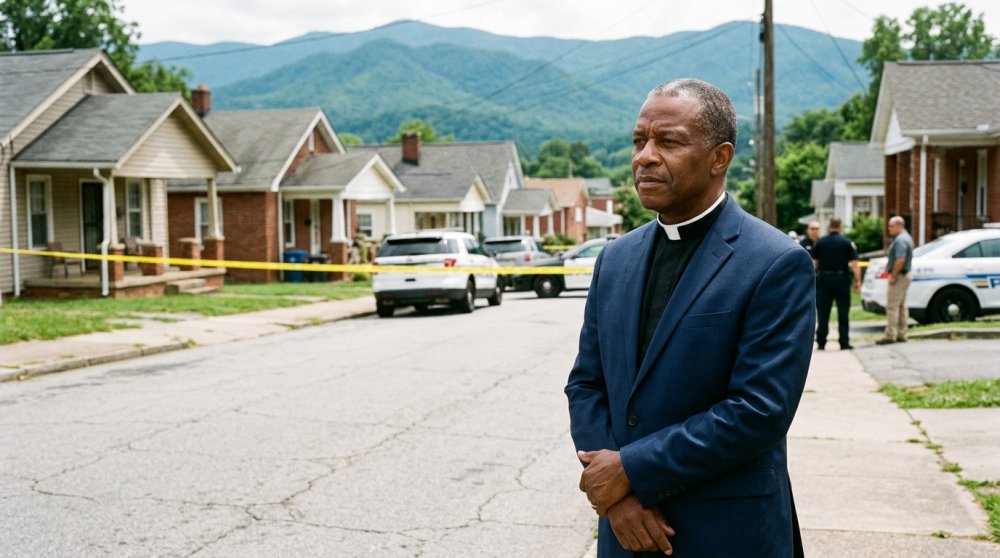
January 1, Pastor EXPOSES Tourist Town’s Dirty Secret After Deadly Chaos

Wyatt’s Take
- Asheville city leaders ignored this pastor’s gang-prevention program for nearly a decade — only to watch violent crime explode by 42% while they pretended everything was fine.
- Officials refuse to call it gang violence, hiding behind vague terms like ‘retaliation between friends’ to protect the tourist dollars and their own reputations.
- A former gang member turned pastor is offering real solutions to save kids before they’re lost to the streets — but bureaucrats would rather spin the story than prevent the next funeral.
An Asheville pastor with a past in gang life says city leaders have spent the last decade ignoring his warnings and rejecting his common-sense program to keep kids out of gangs. Now, after a string of retaliatory shootings left two dead and seven wounded, those same officials still won’t admit what’s really happening in their mountain tourist town.
Dr. Ronald Gates first brought his prevention proposal to Asheville officials back in 2016. He urged them to invest in early intervention for children who could be pulled into dangerous groups and cycles of violence. They brushed him off.
The violence has only gotten worse. Recent shootings have rattled the North Carolina city, but city officials still refuse to call it gang-related. Instead, they’re describing the bloodshed as retaliation between groups of friends.
Gates sees through the spin.
“They did not want to actually acknowledge that it was gang activity. They wanted to make sure that they tried to whitewash the narrative as they’re saying that these are just retaliations between individuals.”
Gates is the senior pastor of Greater Works Church of God in Christ. He also serves as a Buncombe County Sheriff’s Office chaplain and works closely with local law enforcement. His work in those roles has shown him firsthand how young people get drawn into violence by money, territory, or a desperate need for belonging.
His proposal centers on Gang Free, a Los Angeles-based program designed to help students in grades four through six understand how gangs recruit children and the brutal consequences of getting involved.
Gates discovered the program during a 2016 trip to California and came home determined to bring it to Asheville before youth violence became more entrenched.
“I said, ‘Man, I’ve got to bring this back to Asheville, North Carolina,'” he recalled.
Over the past decade, Gates says he’s presented the proposal to mayors, city and county managers, police chiefs, and sheriff’s officials. He’s urged them to give it a one-year trial. They’ve refused every time.
He questioned why the city won’t even try the program temporarily to see if it could save lives.
The program would teach children how gangs operate, including their signs and colors. It would explain how older members manipulate younger kids to move drugs, carry weapons, or commit other crimes.
But education alone isn’t enough, Gates argues. A real prevention model has to give young people an alternative to the money and status that make gangs attractive in the first place.
“These young men want to help provide for their single mom or their family. Any money that they can hustle up, they feel like they’re doing something or doing their part.”
Under his proposal, law enforcement officers, mentors, and local business owners would work directly with children in their neighborhoods. Along with gang-prevention lessons, the program would provide educational help, mentorship, and exposure to entrepreneurship.
Local businesses could show students how they operate and offer a path to earning money legally, Gates said. The city could help fund stipends or similar opportunities.
“Now they’re learning how to make honest money, business money, capital, instead of putting their life on the line.”
Gates also has personal reasons to believe early intervention can make all the difference.
Growing up in Grand Rapids, Michigan, Gates had gang ties and was loosely associated with the Vice Lords. He credits his father, older brother, and sports with keeping him from becoming more deeply involved.
“I thank God that someone intervened.”
That experience shaped his belief that prevention has to begin before children become immersed in street life. Young people without steady father figures or mentors often look to older gang members for guidance and protection, he said. That creates an opening for those figures to pressure them into dangerous acts while avoiding the harshest consequences themselves.
“If they would have had the opportunity, a different path, a different choice … could they still be here today?”
Gates recalls being told in 2016 that Asheville didn’t have the kind of gang activity that would warrant the program. He warned at the time that city leaders needed to get ahead of the problem rather than wait for violence to escalate.
“I said, ‘Give it two years.’ Two years to the year.”
State data shows Asheville reported 42% more violent crimes in 2024 than in 2016, even as its overall crime index fell 8%. The increase was driven largely by aggravated assaults, which rose from 335 to 558. Violent crime peaked in 2022 and fell for two consecutive years, though the 2024 total remained well above the city’s 2016 level.
Gates isn’t arguing that every violent dispute in Asheville is gang-related. But he says the city shouldn’t wait for a formal gang label before acting when young people are caught in cycles of retaliation and bloodshed.
“You have personal disputes. But then the thrust behind it, the motivation behind it is because, ‘Look here, you spilled some blood. I’m going to spill some blood also.’ And that’s what it has come to.”
For city leaders, the question isn’t just how a crime is labeled, Gates argues. It’s whether young people have enough real opportunities to avoid the path that can lead to prison or death.
That means practical support long before a shooting, arrest, or funeral.
“The prevention, it works if you put it out there.”
His message to anyone considering retaliation is simple: Speak with an older relative, a business owner, or another trusted adult before making a choice that could change or end a life.
“Is it even worth retaliating? Is it worth losing my life or going to prison for the rest of my life?”
“Let’s use common sense. Count up the real costs.”
Wyatt Matters
City officials care more about protecting tourism dollars and their own image than protecting the kids in their own community. This pastor offered them a proven solution nearly ten years ago, and they ignored him because admitting there’s a gang problem might hurt the brochure. Now young people are dead, families are shattered, and the bureaucrats are still playing word games. Real prevention means honest talk, real mentorship, and giving kids a shot at honest work before the streets swallow them up. That’s not radical — it’s basic decency.


-
 Entertainment3 years ago
Whoopi Goldberg’s “Wildly Inappropriate” Commentary Forces “The View” into Unscheduled Commercial Break
-

 Entertainment3 years ago
‘He’s A Pr*ck And F*cking Hates Republicans’: Megyn Kelly Goes Off on Don Lemon
-

 Featured3 years ago
US Advises Citizens to Leave This Country ASAP
-
 Featured3 years ago
Benghazi Hero: Hillary Clinton is “One of the Most Disgusting Humans on Earth”
-

 Latest News3 years ago
Nude Woman Wields Spiked Club in Daylight Venice Beach Brawl
-
 Featured3 years ago
Fox News Calls Security on Donald Trump Jr. at GOP Debate [Video]
-

 Entertainment3 years ago
Comedy Mourns Legend Richard Lewis: A Heartfelt Farewell
-

 Latest News3 years ago
Supreme Court Gift: Trump’s Trial Delayed, Election Interference Allegations Linger
LC
August 30, 2026 at 8:47 am
Just another smart man trying to teach stupid people some common sense. City officials who are stupid will always find out the hard way because groups of friends always shoot each other. That’s one of the most ignorant statements I’ve ever heard. Let them find out the hard way, and when their city gets overwhelmed with gangs maybe they’ll see how stupid they are, but probably not.
truth
August 30, 2026 at 12:56 pm
How do you fight ‘stupid’ with stupid.’
Erik Sorensen
August 30, 2026 at 11:44 pm
A sad story to read but not in the least surprising.
I lived in Asheville from 1985 to 1992 — a very long time ago, granted — and it was just a sleepy little town. Now it’s all brewpubs, neo-hippies and oh-so-pretentious Leftists/Socialists. The latter is what allows licentiousness and gang violence to take hold, all in the name of equity, multi-culturalism, and other nonsense that makes them so peacocky proud.
My first job in town was cooking at the former Steven’s Pub on Charlotte St. Drink too much? You could walk home at two in the morning. I also lived at 177 Flint St. and the cool old brick apartment building at 333 Cumberland Ave. Never any serious problems in either neighborhood. On kind-of-rough Flint, despite having a numbers game that was run next door and a prostitute neighbor — a nice woman who was very proud of the fact she once slept with Conway Twitty — we never lived in fear and experienced relatively little crime.
I’m so glad I now live in semi-rural Upstate New York. I love to visit Asheville again, though — drive up the Parkway.
DumbDems
August 31, 2026 at 8:46 pm
I spent time there in the 90s and new the influence of rich little hipsters was going to ruin Asheville and I turned out to be right. I lived in Asheville briefly in 2020 out of necessity saw how bad it had gotten.
Of course the Dems would try to hide their failures. Of course city Dem government officials would not isten to the man with experience with gangs that they don’t have. They would not listen to him because now that he is a pastor, he is conservative. Better to let the streets run wild than let a conservative help solve the problem. This also makes the dem officials racists as he is black man, but the white people in city government ignore him.
Hypocrites