Latest News
January 1, EXPOSED: How China Just Won the Middle East Energy War

Wyatt’s Take
- While America remains dependent on unstable Middle East oil routes, China has quietly built pipelines that bypass the chaos entirely — leaving us vulnerable while they thrive
- The Strait of Hormuz crisis reveals a strategic disaster decades in the making: we’re still at the mercy of foreign choke points while our rivals planned ahead
- This isn’t just about energy independence — it’s about national security, and we’re losing ground fast to Beijing’s long-term thinking
The ongoing crisis in the Strait of Hormuz has laid bare a uncomfortable truth for America: while we’ve been distracted by endless Middle East conflicts, China has quietly outmaneuvered us on the global energy chessboard.
For decades, the United States has maintained a massive military presence in the Persian Gulf to protect oil shipments through the narrow Strait of Hormuz. Nearly one-third of the world’s oil passes through this 21-mile-wide waterway between Iran and Oman.
Any disruption there sends global energy markets into a tailspin. And disruptions happen regularly — whether from Iranian threats, tanker seizures, or regional military tensions.
But here’s what the foreign policy establishment doesn’t want to admit: China doesn’t have this problem anymore.
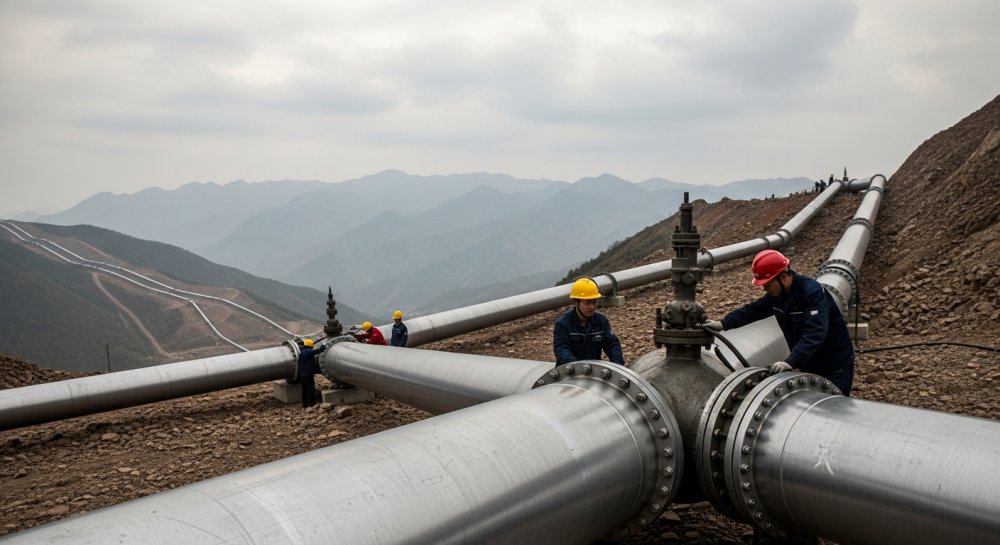
While American politicians have spent trillions on Middle East wars and nation-building projects that went nowhere, Beijing took a different approach. They built pipelines.
Lots of them.
China now imports massive quantities of oil and natural gas directly from Russia, Central Asia, and even the Middle East through overland pipelines that completely bypass maritime choke points like the Strait of Hormuz.
The Power of Siberia pipeline alone delivers 38 billion cubic meters of Russian natural gas to China annually. Additional pipelines from Kazakhstan and Turkmenistan provide even more energy security.
When tensions flare in the Persian Gulf, China’s energy supplies remain stable. Their economy doesn’t face the same vulnerability that ours does.
This isn’t an accident. It’s the result of strategic planning that puts American energy policy to shame.
For years, energy experts have warned that America’s dependence on Middle Eastern oil and vulnerable shipping lanes represented a critical national security weakness. Those warnings were largely ignored by politicians more interested in climate virtue-signaling than actual energy strategy.
Instead of building our own energy infrastructure and achieving true independence, we’ve watched domestic production get strangled by regulations while remaining dependent on regions where instability is the norm.
Meanwhile, China plays the long game. They sign multi-decade energy deals, finance massive infrastructure projects, and systematically reduce their exposure to the very risks that still haunt American strategic planners.
The current Strait of Hormuz tensions should serve as a wake-up call. When oil tankers can’t safely transit the Persian Gulf, American consumers feel it at the pump.
Chinese consumers? Not so much.
This disparity represents more than just an energy issue. It’s a fundamental question of national power and strategic positioning in the 21st century.
Energy security translates directly into economic security, which in turn becomes military and diplomatic leverage. China understands this.
They’ve invested hundreds of billions in energy infrastructure specifically designed to reduce dependency on shipping routes that could be interdicted in a conflict. They’ve cultivated relationships with resource-rich nations on their borders.
And they’ve done it while America spent two decades bogged down in Middle Eastern conflicts that delivered neither victory nor energy security.
The solution isn’t complicated, but it requires political will that’s been sorely lacking in Washington.
First, we need to maximize domestic energy production across all sectors — oil, natural gas, nuclear, and genuinely viable renewables. Energy independence isn’t just a slogan; it’s a national security imperative.
Second, we should be building energy infrastructure partnerships with allies in North America and the Western Hemisphere. Pipelines from Canada, LNG terminals for exports, strategic reserves that actually serve strategic purposes.
Third, we need to stop pretending that unilateral disarmament of our fossil fuel industry somehow helps the planet when it just shifts production to countries with worse environmental records and weaker oversight.
China isn’t going to save the climate by restricting their energy development. They’re going to power their economy, strengthen their strategic position, and laugh at countries foolish enough to handicap themselves.
The Strait of Hormuz crisis is a preview of conflicts to come. As global competition intensifies, control over energy resources and supply routes will only become more critical.
America can either learn from China’s strategic approach to energy security, or we can continue down the current path — dependent on unstable regions, vulnerable to supply disruptions, and weakened relative to rivals who planned better.
The choice should be obvious. Whether Washington will make it remains to be seen.
What Matters
This isn’t about fancy geopolitics — it’s about whether your family can afford to fill up the gas tank or heat your home when the next crisis hits. While China built pipelines and secured their energy future, our leaders chased climate fantasies and left working Americans vulnerable. Real energy independence means American jobs, stable prices, and not being held hostage by foreign threats. That’s the kind of strength that protects families in Kansas and Kentucky, not just corporate boardrooms.


-
 Entertainment3 years ago
Whoopi Goldberg’s “Wildly Inappropriate” Commentary Forces “The View” into Unscheduled Commercial Break
-

 Entertainment3 years ago
‘He’s A Pr*ck And F*cking Hates Republicans’: Megyn Kelly Goes Off on Don Lemon
-
 Featured3 years ago
US Advises Citizens to Leave This Country ASAP
-
 Featured3 years ago
Benghazi Hero: Hillary Clinton is “One of the Most Disgusting Humans on Earth”
-

 Latest News3 years ago
Nude Woman Wields Spiked Club in Daylight Venice Beach Brawl
-
 Featured3 years ago
Fox News Calls Security on Donald Trump Jr. at GOP Debate [Video]
-

 Entertainment3 years ago
Comedy Mourns Legend Richard Lewis: A Heartfelt Farewell
-
 Latest News3 years ago
Supreme Court Gift: Trump’s Trial Delayed, Election Interference Allegations Linger