This Day in History
January 1, What the British Did the Day Before Everything Changed

Wyatt’s Take
- The American Revolution didn’t start over tea taxes — it started when the British came to confiscate guns from everyday colonists
- King George’s troops marched to seize gunpowder and weapons from Massachusetts citizens who refused to be disarmed
- Our Founding Fathers understood that the first step to tyranny is always disarming the people
Every American should know this truth: the shots that started our Revolution weren’t fired over taxation. They were fired when British soldiers came to take away the colonists’ guns.
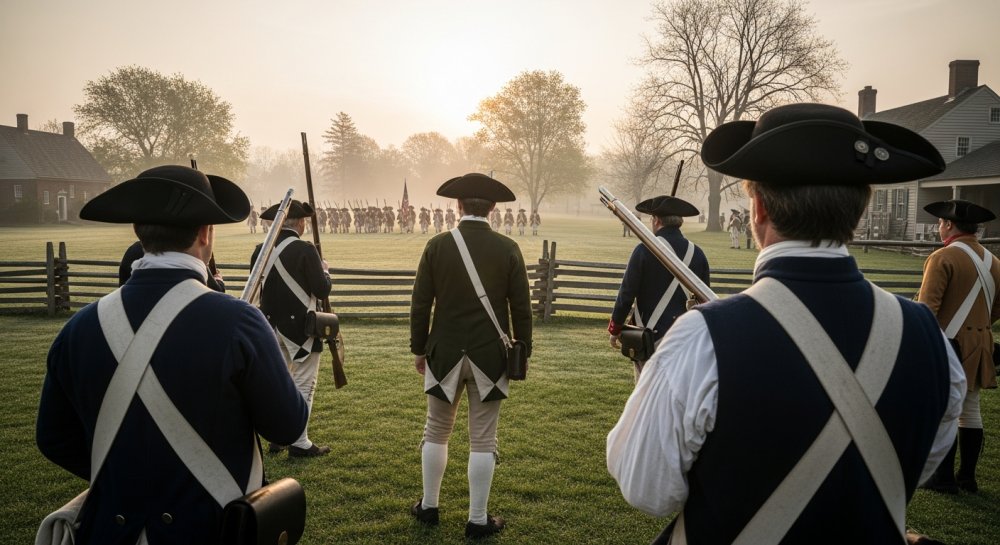
On April 19, 1775, British troops marched from Boston to the towns of Lexington and Concord with one mission: confiscate the arms and ammunition stockpiled by Massachusetts citizens. King George III understood what every tyrant throughout history has known — you can’t control an armed population.
The colonists had seen it coming. British General Thomas Gage had already attempted to seize gunpowder stores from local militias in the months before. When word spread that Redcoats were marching to disarm Concord, ordinary Americans — farmers, shopkeepers, blacksmiths — grabbed their muskets and stood their ground.
That’s when everything changed.
The standoff at Lexington Green and the battle at Concord’s North Bridge weren’t about abstract political philosophy. They were about regular people refusing to surrender the means to defend themselves, their families, and their freedom. The British wanted compliance through disarmament. The colonists answered with bullets.
This wasn’t a one-time event. After Lexington and Concord, the British imposed martial law in Boston and began systematic house-to-house searches for weapons. They knew what modern-day tyrants know: take the guns first, everything else follows.
Our Founders didn’t write the Second Amendment as an afterthought. They wrote it as the Second Amendment because they had just lived through what happens when government has all the guns and citizens have none. They’d watched their neighbors shot dead for refusing to be disarmed.
When politicians today talk about “common sense gun control” or “weapons of war,” remember what King George called “common sense” too. He thought it was perfectly reasonable that only his soldiers should have military-grade firearms. The colonists disagreed — and that disagreement created America.
The British Empire was the world’s dominant superpower. Its military was professionally trained and vastly superior to colonial militias. But none of that mattered when free men with rifles decided they’d rather die than be disarmed.
Lexington and Concord, then Boston, were just the first steps.
Every gun confiscation scheme in history has followed the same playbook: declare certain weapons too dangerous for citizens, promise it’s just about safety, then expand the restrictions until only government agents are armed. Our ancestors recognized that con in 1775.
Wyatt Matters
Your great-great-great-great-grandparents didn’t risk everything so that future generations could voluntarily surrender the rights they died to secure. The Second Amendment isn’t about hunting. It’s about what ordinary Americans did when the world’s most powerful army showed up to take their guns. They said no — and fired the shot heard ’round the world.


-
 Entertainment3 years ago
Whoopi Goldberg’s “Wildly Inappropriate” Commentary Forces “The View” into Unscheduled Commercial Break
-

 Entertainment3 years ago
‘He’s A Pr*ck And F*cking Hates Republicans’: Megyn Kelly Goes Off on Don Lemon
-
 Featured3 years ago
US Advises Citizens to Leave This Country ASAP
-
 Featured3 years ago
Benghazi Hero: Hillary Clinton is “One of the Most Disgusting Humans on Earth”
-
 Latest News3 years ago
Nude Woman Wields Spiked Club in Daylight Venice Beach Brawl
-
 Featured3 years ago
Fox News Calls Security on Donald Trump Jr. at GOP Debate [Video]
-

 Entertainment3 years ago
Comedy Mourns Legend Richard Lewis: A Heartfelt Farewell
-
 Latest News3 years ago
Supreme Court Gift: Trump’s Trial Delayed, Election Interference Allegations Linger
Ralph
July 4, 2026 at 6:13 pm
Don’t forget the same attempts by the Brits to confiscate weapons at Williamsburg, VA.
You are right on target, although there were multiple frustrations betweenKing George and the American colonies.