Self-Reliance
January 1, Roman Coin Hoard Unearthed at Swedish Military Base Sparks Trade Mystery

Wyatt’s Take
- Swedish military archaeologists digging for a base expansion hit an ancient silver jackpot.
- Two of the forty-five Roman coins turned out to be counterfeits, proving shady trade reached Scandinavia centuries ago.
- The find shows how hard work and honest money built civilizations long before modern globalist schemes.
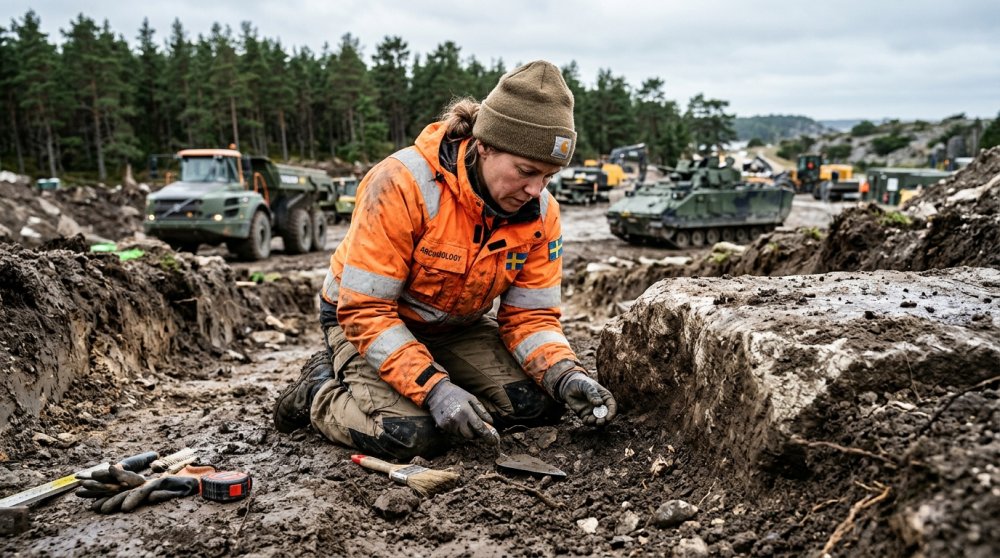
Archaeologists working ahead of a Swedish military base expansion struck real history this fall. They dug up forty-five ancient Roman silver coins plus a gold ring near an old farmhouse foundation on Gotland island.
The coins came from the second century and carried the faces of five Roman emperors and four empresses. Workers found them after a metal detector kept beeping near a foundation stone during the final sweep of the site.
“During one of the excavations, an unusual find was made — a silver treasure with Roman coins from the second century A.D.,” the Swedish Armed Forces said in a translated statement.
“Then an insistent beeping indicated that something was in the ground near one of the foundation stones,” the statement continued.
“They carefully dug a small silver coin out of the soil — and more finds would follow.”
Swedish coin expert Lennart Lind examined the pieces. Two turned out to be ancient counterfeits that likely came from what is now Ukraine, showing that fake money was already a problem back then.
“Before the workday was over, archaeologists had counted 45 coins and a gold finger ring. All the coins are Roman, minted during the second century for five emperors and four empresses.”
Experts believe the coins reached Gotland in the fourth century and stayed in use for generations before being buried around 450 A.D. The gold ring was the real surprise because such items rarely turn up at these sites.
“Perhaps it was abandoned around 540 when there was a low in human history in this part of the world because of natural disasters from 536 A.D. and on for 10 years,” archaeologist Per Widerström said.
“It looks like it was slowly abandoned, and some of the people might even have come back to this place to get more things back to a new settlement,” he added.
Elsewhere on the base, the team found nine graves roughly two thousand years old, including one with nearly ten pounds of burned human bones. Bronze sword and shield fittings were also recovered.
Wyatt Matters
Real treasure comes from steady work and strong borders, just like these coins that crossed oceans only because strong men protected trade routes. When families stick together and defend their land, history remembers them. That lesson still holds for every heartland community today.


-
 Entertainment3 years ago
Whoopi Goldberg’s “Wildly Inappropriate” Commentary Forces “The View” into Unscheduled Commercial Break
-

 Entertainment3 years ago
‘He’s A Pr*ck And F*cking Hates Republicans’: Megyn Kelly Goes Off on Don Lemon
-
 Featured3 years ago
US Advises Citizens to Leave This Country ASAP
-
 Featured3 years ago
Benghazi Hero: Hillary Clinton is “One of the Most Disgusting Humans on Earth”
-

 Latest News3 years ago
Nude Woman Wields Spiked Club in Daylight Venice Beach Brawl
-
 Featured3 years ago
Fox News Calls Security on Donald Trump Jr. at GOP Debate [Video]
-

 Entertainment3 years ago
Comedy Mourns Legend Richard Lewis: A Heartfelt Farewell
-

 Latest News3 years ago
Supreme Court Gift: Trump’s Trial Delayed, Election Interference Allegations Linger