Latest News
January 1, Workplace Speech Crackdown: Stunning Legal Warning Over High-Profile Murder Trial

Wyatt’s Take
- Employment lawyer warns Americans can be legally fired for expressing controversial opinions about the Massachusetts mom accused of killing her three children—even if the termination seems unfair
- The case has sparked national debate and protests, with TikTok becoming a battleground and custody lawyers now using social media posts to strip visitation rights from mothers who express support
- Free speech protections don’t apply in private workplaces, leaving employees vulnerable to termination for water cooler conversations that management finds offensive or disruptive
A troubling warning from an employment law expert: Americans could face job loss for discussing the high-profile Massachusetts murder case at work—and it would be perfectly legal.
Lindsay Clancy, 36, stands accused of strangling her three young children—Cora, 5, Dawson, 3, and Callan, 8 months—before attempting to end her own life by jumping from a second-floor window. Prosecutors say she sent her husband out for takeout and pharmacy items before committing the acts, according to the Plymouth County District Attorney’s Office.
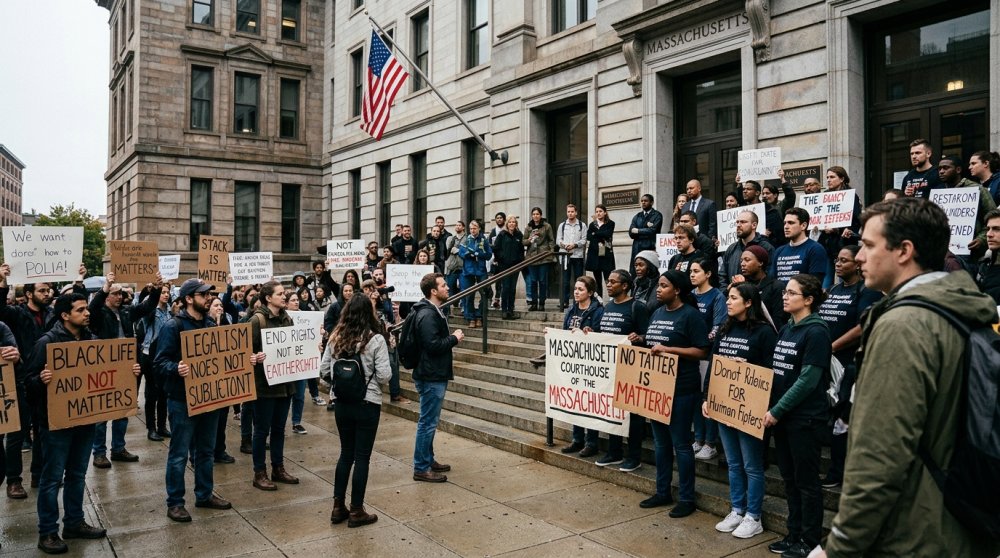
The case has become a cultural flashpoint, drawing protesters to the courthouse and igniting fierce debates online. Her defense team argues she’s not guilty by reason of insanity or mental defect.
Nicole Brenecki, a New York-based employment attorney, laid out the sobering reality for workers who might want to discuss the case.
“That disciplinary measure, it’s not on its face illegal if you get fired for starting, you know, fiery speech about Lindsay Clancy and how you support her,” Brenecki explained.
The attorney cautioned that while firing someone over Clancy-related statements isn’t automatically illegal, terminated employees could still pursue legal action if they suspect the stated reason was a pretext for discrimination.
“If a case like this came to the court system, it would not be viewed in the context of the free speech alone,” she said. “It would also be viewed in the contexts of employment laws.”
As a “general rule,” Brenecki noted, employers have broad authority to prohibit such discussions.
Key factors would include whether the speech occurred during working hours, whether it disrupted business operations, or whether discrimination against protected groups played a role in any termination.
“Every single case in our court system is very highly and intensely fact-based,” she said. “So we cannot give…any specific explanation as to whether something would be illegal or not. We have to look at the facts.”
Brenecki’s advice? Keep strong opinions out of the workplace.
“If you truly want to voice them in a workplace, then be prepared to have to find greener pastures,” she warned.
The consequences extend beyond employment. Earlier this month, attorney Alex Thomason revealed in a TikTok video that he’s already working with men in custody battles against women who posted the “solidarity hold a heart thing” for Clancy.
In one case, he’s attempting to strip a woman’s visitation rights entirely.
“I want to be able to have a forensic psychiatrist interview this woman just to see how wack-a-doodle she is, and we’re gonna use her TikTok posts,” he said.
Defense attorney Kevin Reddington has argued Clancy was suffering from postpartum psychosis, while prosecutors maintain she acted deliberately and knew her actions were wrong.
Dozens of supporters have gathered outside the courthouse carrying signs and wearing shirts with phrases like “Stand in Peace for Lindsay.”
Jurors began deliberations Thursday after hearing closing arguments from both sides.
They face a weighty decision: whether Clancy is guilty of first-degree murder, second-degree murder, manslaughter—or not criminally responsible by reason of insanity.
A conviction on any of the three first-degree murder counts would result in life in prison without the possibility of parole.
Wyatt Matters
This case reveals how far we’ve drifted from basic American freedoms. Working folks can’t even discuss current events without risking their livelihoods, while Big Tech platforms amplify division and lawyers weaponize social media posts in custody fights. Whatever the verdict, the erosion of free speech in everyday life should concern every American who values liberty over corporate control.


-
 Entertainment3 years ago
Whoopi Goldberg’s “Wildly Inappropriate” Commentary Forces “The View” into Unscheduled Commercial Break
-

 Entertainment3 years ago
‘He’s A Pr*ck And F*cking Hates Republicans’: Megyn Kelly Goes Off on Don Lemon
-

 Featured3 years ago
US Advises Citizens to Leave This Country ASAP
-
 Featured3 years ago
Benghazi Hero: Hillary Clinton is “One of the Most Disgusting Humans on Earth”
-

 Latest News3 years ago
Nude Woman Wields Spiked Club in Daylight Venice Beach Brawl
-
 Featured3 years ago
Fox News Calls Security on Donald Trump Jr. at GOP Debate [Video]
-

 Entertainment3 years ago
Comedy Mourns Legend Richard Lewis: A Heartfelt Farewell
-
 Latest News3 years ago
Supreme Court Gift: Trump’s Trial Delayed, Election Interference Allegations Linger