Latest News
January 1, DHS Shutdown Threatens Local Emergency Response

Wyatt’s Take
- The DHS shutdown limits FEMA support, leaving towns less prepared for disasters.
- Lawmakers remain in gridlock, holding back vital funding and help for local responders.
- This puts public safety and disaster recovery at risk in our communities.
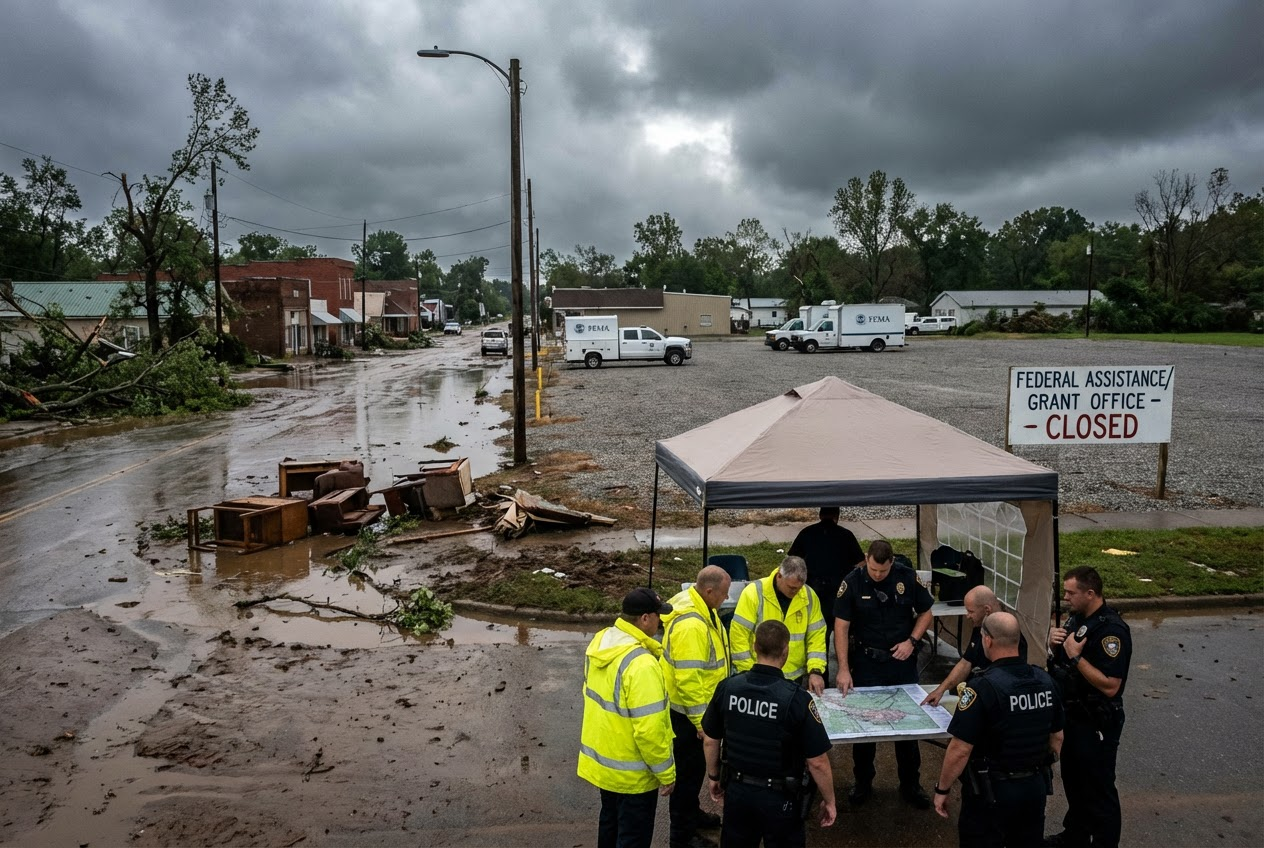
The partial shutdown at the Department of Homeland Security means FEMA can’t back up local teams like they should. Jeff Halstead, a public safety expert, warns this risks emergency response if storms or disaster hit.
“Every time that the government enters into one of these shutdowns, there’s a distinctive part of the federal government that is impacted, both reviewing the grant program or distributing funds from pre-awarded grant programs. This is exactly the area of DHS as well as FEMA that affects emergency managers, emergency response and recovering different cities, counties, and regions should they face a weather and/or disaster-related event,” Halstead said.
Halstead, a retired police chief, says delays in federal help put towns on the back foot. Grant reviews and disaster response funding slow to a crawl during shutdowns.
“The last government shutdown pretty much ended their grant application process, meaning the grants would not be approved, not even be assigned and/or funds not released.”
He continued.
“This drastically impacts their ability to plan and to coordinate a lot of their planned response events. In Arizona, the central UASI region or the Urban Area Security Initiative, they have none of their grants being reviewed, which replaces outdated equipment, vehicles and funds training so that every quarter they can meet the standards and then be ready should something happen.”
As ordered, FEMA has stopped sending hundreds of workers out to help disaster-hit areas, leaving staff already on the ground with no backup. Local responders can’t get the gear or training they rely on because congressional fighting has frozen the grant system.
“Should there be a traumatic weather event, critical incident or something that would require FEMA support, FEMA staff or FEMA resources, those may not be available,” he added. “This drastically impacts the city, county, state and federal collaboration efforts that literally are immediately engaged, aligned and resources deployed, sometimes within 12 hours. So this greatly inhibits their ability to plan effectively should a critical event, disaster event, or weather-related event come their way. They won’t have all these federal assets and resources that they have come to depend on, rely on, and work with in both their planning as well as training events or previous disasters where they responded and provided support.”
With the shutdown still in place, storm-battered towns like those in North Carolina are stuck waiting for the recovery help they’re owed. Halstead calls this the final piece needed just to get folks back on their feet.
“When that is dramatically impacted, you still see some areas of North Carolina a couple of years later still struggling in the recovery phase being completed,” he said. “That is directly related to all of these stalls and delays in FEMA, FEMA funding and the financial support needed to get the recovery phase completed.”
Extreme weather keeps hammering America, from snowstorms to wildfires, but delays in federal dollars make it almost impossible for local teams to get ready.
“It’s absolutely extremely critical for emergency managers, your fire departments as well as law enforcement, to utilize not just these partnerships and the resources, but the funding allocations so that they can plan effectively in responding, operational control of the disaster, and then getting into that recovery mode … Then sometimes that delay, it’s going to impact the safety and the welfare of Americans,” Halstead explained.
Congress still can’t strike a deal, and partisan fighting is what keeps the money and support from reaching home. President Trump calls it a “Democrat shutdown,” blaming the other side for lost time and missed help.
Halstead urges Washington to drop the political games and get emergency workers the tools they need. Folks are tired of gridlock while their safety hangs in the balance.
“I know a lot of people are really upset because they leverage a significant political issue over a common funding agreement that should have been approved very quickly,” he said. “This has happened a lot in the last two to three years. We’ve seen shutdown after shutdown after shutdown. What a lot of citizens don’t realize is that when the government is shut down, all of this work — grant reviews, proposals, funding, disbursements — those are all delayed. Then there is a significant lag time getting back to an open government.”
“They’re still negotiating all these extremely politically sensitive topics that are really divisive within not just Capitol Hill, but really our country,”
Halstead added.
“Then all of that backlog is now taking even longer to get approved, funded and funds being dispersed. So it’s a
Wyatt Matters
When Washington drags its feet and locks up funding, it’s regular folks who pay the price. Towns across the heartland need quick disaster help, not more political standoffs. Keeping our families and neighborhoods safe should come before any squabbling in DC.


-
 Entertainment3 years ago
Whoopi Goldberg’s “Wildly Inappropriate” Commentary Forces “The View” into Unscheduled Commercial Break
-

 Entertainment2 years ago
‘He’s A Pr*ck And F*cking Hates Republicans’: Megyn Kelly Goes Off on Don Lemon
-
 Featured3 years ago
US Advises Citizens to Leave This Country ASAP
-
 Featured3 years ago
Benghazi Hero: Hillary Clinton is “One of the Most Disgusting Humans on Earth”
-

 Entertainment2 years ago
Comedy Mourns Legend Richard Lewis: A Heartfelt Farewell
-

 Latest News2 years ago
Nude Woman Wields Spiked Club in Daylight Venice Beach Brawl
-
 Featured3 years ago
Fox News Calls Security on Donald Trump Jr. at GOP Debate [Video]
-
 Latest News2 years ago
Supreme Court Gift: Trump’s Trial Delayed, Election Interference Allegations Linger