Latest News
January 1, DESPERATION Plays Right Into World Cup Ticket Scammers’ Hands

Wyatt’s Take
- World Cup ticket scams are exploding as desperate fans hunt last-minute seats — criminals are using fake FIFA sites, AI-generated pages, and emotional manipulation to steal thousands from working families planning once-in-a-lifetime trips.
- Even legitimate resale platforms like StubHub are leaving fans stranded at stadium gates with refunds instead of seats after paying for flights and hotels — the system is broken and families are paying the price.
- The FBI warns scammers are collecting personal information that goes way beyond one bad purchase — they’re opening accounts in your name and setting you up for years of identity theft nightmares.
You finally find World Cup seats that fit your budget. The site looks polished. The ticket has a QR code. The seller says someone else wants them, so you need to move fast.
That is exactly the moment scammers are counting on.
The 2026 FIFA World Cup runs through July 19, 2026, across the United States, Canada and Mexico. With the tournament underway, fans are still hunting for last-minute seats.
Meanwhile, fraudsters are using fake ticket listings, spoofed FIFA websites, social media posts and artificial intelligence-made scams to steal money and personal information.
This scam hits differently because the purchase feels emotional. Maybe you are planning a once-in-a-lifetime trip.
Perhaps the tickets are a surprise for your child or grandchild. Or maybe you are trying to turn a match into a memory your family talks about for years.
That is why knowing where these scams show up, and how they pressure fans, can save you from a painful and expensive mistake.
The Perfect Storm for Criminals
The tournament’s timing, ticket demand and last-minute pressure are giving scammers exactly what they need. World Cup tickets are expensive.
Demand is intense. Many fans waited until the tournament started to look for seats.
That creates the perfect opening for criminals. Scammers love urgency.
A sold-out match makes people panic. A lower price can feel like luck.
A countdown timer can make you ignore the little things that feel off.
FBI Warns of Fake FIFA Websites
The FBI has already warned that cybercriminals are creating fake FIFA websites. These sites copy FIFA branding, official-looking pages and ticket language.
Some fake domains look close enough to fool a fan checking from a phone.
The FBI also said scammers may use these fake sites to collect names, home addresses, phone numbers, email addresses and banking information. That is important because this scam can go beyond one bad ticket purchase.
Once criminals have that personal information, they can try to open accounts in your name. They can also target you with more believable scams later.
A fake ticket site can look official while quietly collecting your payment details and personal information. The safest move is also the easiest one to overlook.
Type FIFA.com directly into your browser. Then go to the official ticketing page from there.
Don’t Trust Search Ads or Social Media Links
Do not rely on a search ad. Do not trust a link in a text.
Be careful with links in Facebook groups, WhatsApp chats or emails that claim to offer verified seats.
Scammers can buy ads. They can clone logos.
They can copy the feel of an official checkout page. A fake page may even have clean writing and a professional design.
That means the old scam clues may not show up. You may not see misspelled words or strange graphics.
The fake page may look good enough to pass a quick glance. Before you enter payment details, slow down and look at the address bar.
The official FIFA site should use FIFA.com. If the domain includes extra words, odd spellings or a different ending, back out.
Examples of Fake FIFA Domains
The FBI named examples of spoofed FIFA domains so fans can see how small changes can make a fake page look official. The FBI says more fake websites may appear leading up to and throughout the 2026 World Cup.
Notice the patterns. Some domains use strange endings.
Others add words like “ticket,” “career,” “hiring” or “World Cup.” A few rely on tiny spelling tricks, such as changing “www” to “wvvw.”
The FBI calls this typo squatting. That means scammers count on people making small typing mistakes or clicking links too quickly.
AI Makes Scams More Convincing
Artificial intelligence is helping scammers make fake ticket pages, emails and seller messages feel more believable. Fake pages can now have polished copy, realistic customer service language and smooth checkout prompts.
Scammers can also create fake confirmation emails that look like they came from a real ticketing company. They can generate ticket screenshots, QR codes and fake order pages in minutes.
That means a nice-looking QR code proves very little. So does a screenshot of a ticket.
A scammer can copy a real-looking image, edit it and send it to several buyers. By the time fans find out, the seller may be gone.
The real test is whether the ticket transfers through the official channel. For World Cup tickets, that means using FIFA’s official ticketing system or official resale marketplace.
If a seller refuses to transfer the ticket through the proper platform, walk away. A screenshot should make you more suspicious, not more comfortable.
Even Known Platforms Leave Fans Stranded
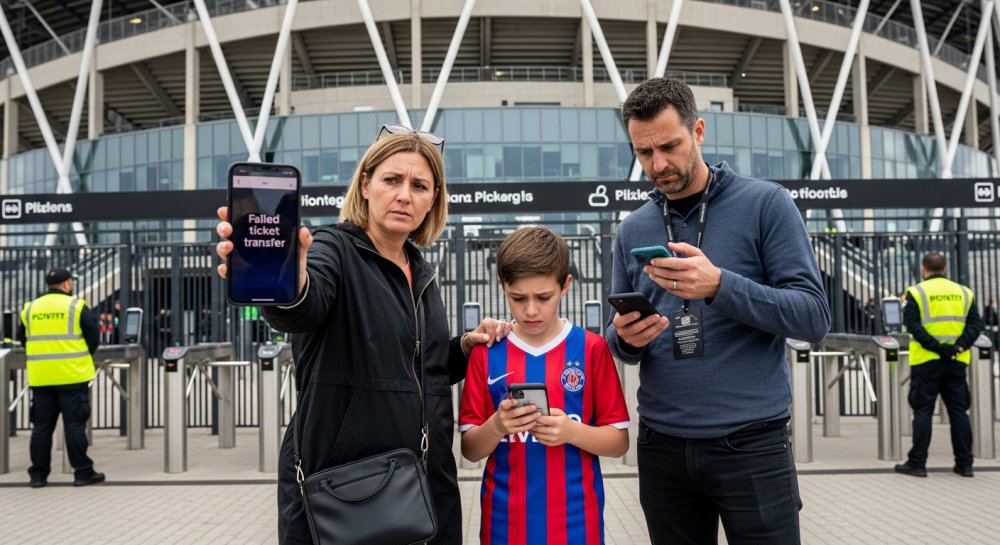
Even fans who use known resale platforms can end up with refunds instead of seats. Bina Ramroop reportedly bought World Cup tickets through StubHub for her grandson’s 13th birthday.
She paid $485 per ticket for Spain versus Cape Verde in Atlanta. When she arrived, the tickets would not transfer into the FIFA ticketing app.
StubHub offered a refund. However, she wanted the experience, not the money back.
Another fan, Pape Ndaw, reportedly bought tickets in December for about $550 each. Two days before a June 14 match near Dallas, he received a message saying the seller could not deliver.
He later found last-minute seats going for more than $1,500 each.
Then there was Patrick O’Neil’s family. They traveled to Atlanta after buying five tickets through StubHub.
Two tickets transferred. Three never arrived.
Some family members went in, while the others watched nearby.
These examples show the ugly part of the resale market. Even a known platform may leave you with a refund instead of a seat.
That may not help after you have paid for flights, hotels and time off.
Social Media Ticket Sellers Are High Risk
Ticket offers on Facebook Marketplace, X, Reddit, Telegram and WhatsApp can look more trustworthy than they really are. A scammer may use a real-looking profile photo, a friendly message and a believable excuse.
They might say a family member got sick. They could claim their group has extra seats.
Or they may tell you they “just want a real fan to go.” That story could be true.
However, it could also be bait. The biggest warning sign is when the seller pushes you away from a protected checkout system.
If they ask for Zelle, Venmo, Cash App, wire transfer, gift cards or crypto, your risk jumps fast. Those payments can be hard to reverse.
In some cases, you may have no easy way to get your money back.
Also, watch for pressure. A legitimate seller may want to move quickly, but a scammer wants you to stop thinking, so you send money before checking the ticket, the transfer method or the website.
Red Flags That Should Stop You Cold
These warning signs can help you pause before a fake seller turns your excitement into a costly mistake.
Strange Website Address: Look closely at the domain. The FBI says scammers use typo squatting, which means they rely on small spelling changes or fake web endings to trick people.
For example, a fake site may use an extra letter, a strange ending or words like “ticket,” “career,” or “World Cup” to look official. The real FIFA website should be entered directly as www.fifa.com.
If the link looks different, back out before entering your name, payment details or login information.
No Official Transfer: A real ticket should transfer through the official ticketing system. A screenshot, PDF or QR code image should not be enough.
If the seller refuses to use the official transfer process, end the conversation.
Payment Method Demands: Be careful if a seller asks for peer-to-peer payment apps, crypto, gift cards or a wire transfer. A credit card often gives you stronger fraud protections.
Also, keep the transaction inside a trusted platform whenever possible.
Price Too Good to Be True: A seat far below the going rate may be bait. Scammers know fans are searching for one lucky break.
Compare the price with official listings and trusted resale options. If the gap feels huge, treat it as a warning sign.
High Pressure Tactics: Scammers love phrases like “last chance,” “someone else wants them” or “pay now.” Take a breath before you pay.
A few extra minutes can save your money, your trip and your personal information.
How to Protect Yourself Before Buying
A few checks before checkout can help you avoid fake tickets, bad transfers and stolen account details.
Go to FIFA.com Directly: Go directly to FIFA’s official site and navigate from there. Avoid sponsored search results for tickets.
The FBI has warned that paid imitators can try to pull fans away from the legitimate site. After you reach the real FIFA website, save it as a bookmark or favorite.
That gives you a safer way back later. Also, be careful with FIFA subdomains.
The FBI says fans should navigate to subdomains, such as plus.fifa.com, directly from the official FIFA homepage instead of typing them from memory.
Check URLs Before Clicking Ads: Exercise caution when clicking ads for tickets, hospitality, merchandise or jobs. Before you click an ad, check the URL.
Some malicious ads may display one website but send you somewhere else.
Use Credit Cards: Use a credit card when possible. It may give you more options if something goes wrong.
Do not send money to a stranger through Zelle, Venmo, Cash App, wire transfer, gift cards or crypto.
Secure Your Accounts: Use a password manager so fake sites do not trick you into reusing passwords. Turn on two-factor authentication (2FA) for your email, FIFA account and payment accounts.
That adds another layer if scammers get your password.
Document Everything: Save emails, receipts, transfer confirmations and seller messages. Before you leave for the stadium, confirm that the ticket appears in the official ticketing app or platform.
Do not wait until you are standing at the gate.
What to Do If You Get Scammed
Fast action can limit the financial damage and reduce the risk of identity theft.
Contact Your Bank Immediately: Explain what happened and ask what options you have to dispute the charge or block further payments.
Change Your Passwords: Change the password for any account tied to the transaction. Start with your email because scammers often use it to reset other logins.
Use a password manager to create strong, unique passwords for your FIFA account, email, banking apps and any account where you reused the same password.
Turn On Two-Factor Authentication: Turn on two-factor authentication (2FA) if you have not already. Start with your email, banking apps and any account tied to the fake ticket purchase.
Save All Evidence: Keep screenshots, emails, seller profiles, payment receipts and website addresses.
Run Antivirus Software: Run strong antivirus software if you clicked a suspicious link or downloaded anything from a fake ticket site. A scam page may try to steal more than payment details.
Consider Data Removal Services: A data removal service can help reduce how much personal information scammers can find about you online. That can make future impersonation attempts harder.
Report to the FBI: Report the fake site or seller to the FBI’s Internet Crime Complaint Center at IC3.gov. Include the fake domain, a description of what happened, what information you entered and any payment details.
If money changed hands, include the payment date, amount, payment type, account numbers involved and any receiving bank or crypto wallet details you have.
Freeze Your Credit: If you entered sensitive personal details, freeze your credit. Then watch for new accounts or hard inquiries you do not recognize.
Wyatt Matters
Hardworking Americans are getting burned by criminals who prey on once-in-a-lifetime family moments. When you save up for months to take your grandson to see a World Cup match, only to get scammed at the gate while crooks vanish with your money, that’s not just fraud — that’s an attack on the values that built this country. Protect your family by staying skeptical, buying direct, and never letting urgency override common sense. The memory you’re trying to create is worth the extra five minutes of verification.


-
 Entertainment3 years ago
Whoopi Goldberg’s “Wildly Inappropriate” Commentary Forces “The View” into Unscheduled Commercial Break
-

 Entertainment3 years ago
‘He’s A Pr*ck And F*cking Hates Republicans’: Megyn Kelly Goes Off on Don Lemon
-

 Featured3 years ago
US Advises Citizens to Leave This Country ASAP
-
 Featured3 years ago
Benghazi Hero: Hillary Clinton is “One of the Most Disgusting Humans on Earth”
-

 Latest News3 years ago
Nude Woman Wields Spiked Club in Daylight Venice Beach Brawl
-
 Featured3 years ago
Fox News Calls Security on Donald Trump Jr. at GOP Debate [Video]
-

 Entertainment3 years ago
Comedy Mourns Legend Richard Lewis: A Heartfelt Farewell
-

 Latest News3 years ago
Supreme Court Gift: Trump’s Trial Delayed, Election Interference Allegations Linger