Self-Reliance
January 1, Welder Turned Lawmaker Pushes AI as Blue Collar Lifeline

Wyatt’s Take
- Rep. Riley Moore knows firsthand what it takes to earn a living with your hands and he wants AI to make those jobs safer and better paid instead of wiping them out.
- The West Virginia Republican is taking his message straight to the Teamsters and other working families to keep human dignity at the center of the coming technology wave.
- Moore believes local communities should decide whether data centers land in their backyards and that America must lead in AI to beat China.
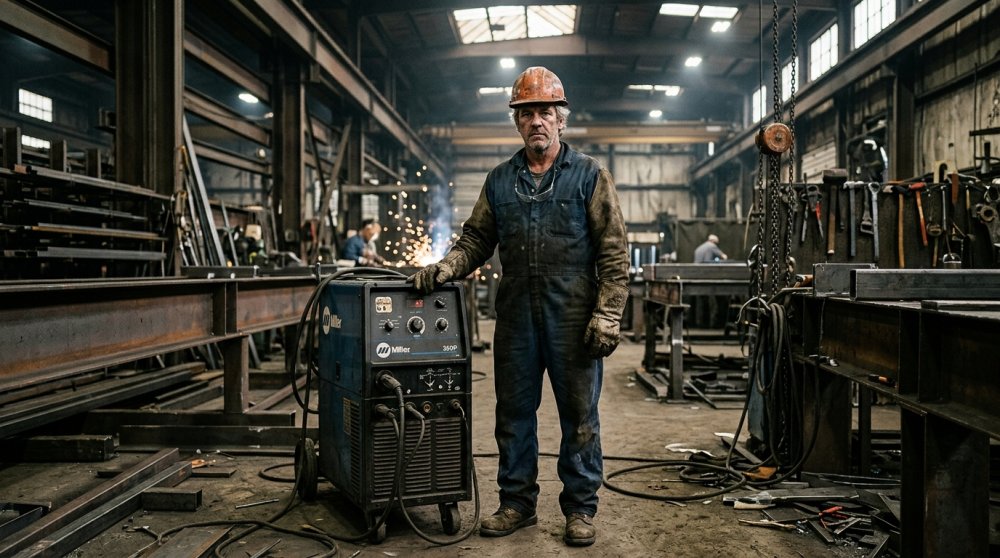
Before AI threatened to reshape the kind of blue-collar work he once did, Rep. Riley Moore was a welder on an Appalachian mining operation. Now, as the technology races into the workplace, Moore argues it could make workers like him safer and more productive rather than replace them.
The West Virginia Republican has taken that message to the Teamsters and other labor stakeholders as Congress and businesses grapple with how quickly AI should reshape the workplace and how much of a role government should play amid economic and national security concerns.
“I started my career off as a welder and I come from a blue-collar background, not just myself, my mother’s family [were] all welders actually. AI represents a massive potential for positive advancements in manufacturing. But it also represents potentially the nuclear bomb for work as we know it in the world,” Moore said in an exclusive interview Monday with Fox News Digital.
Representing a state still closely tied to mining and manufacturing, Moore has taken his message to the Teamsters and other labor stakeholders, arguing that AI should become a “force-multiplier” for workers rather than simply replace them.
Moore said he leans toward finding the “positives” in AI development and that, if the technology can complement blue-collar labor rather than replace it, it could be a game-changer for the U.S. economy and its workers.
“I think AI certainly has the ability to extend the longevity of a worker in a particular trade. It can also make those jobs safer. It can extend the timeperiod in which somebody can work without injury. And it can also create better efficiencies, which then can also better paying jobs here in this country.”
“Or, it’s the nuclear weapon [against] work, it could potentially eliminate jobs as we know it and get rid of what is really critical, I think, to being a human being: which is human purpose, which work is certainly part of that and the dignity of work and contributing to civil society.”
Moore’s district includes major commercial arteries like Interstates 79 and 81 and the new Trans-Allegheny U.S. 48, which the lawmaker helped open this year. The trucking industry, historically unionized, could benefit from AI, he said, while warning that self-driving rigs could endanger the trade.
“I’m against automated trucking, but I am in favor of having AI as part of trucking to make the road safer and keep that driver safer and make them more productive,” he said, considering AI could act as a “co-pilot” to protect against drowsy driving or other dangers that come from being inherently human. The trucker would remain employed, and crash-prone 81 could become less so.
“That creates the types of efficiencies that we’re looking for, certainly, but then also respects the dignity of the human being and the worker who is involved in it.”
Religious leaders have expressed similar concerns about AI’s effect on the dignity of work. Pope Leo XIV’s May encyclical considered two biblical models for the AI era: “constructing the Tower of Babel” or following Nehemiah in rebuilding the walls of Jerusalem.
“We certainly want to be Nehemiah,” he said.
Moore has also spoken with and met with the Teamsters as unions grapple with AI’s potential effect on their workers. A Teamsters spokesperson declined additional comment but praised Moore’s appearance at the event.
Using AI to improve workflow efficiencies could raise wages, while U.S. leadership in AI could help counter China’s growing dominance in the AI “arms race.”
Data centers powering the technology have also become a point of controversy in Moore’s district and around the country.
In the Eastern Panhandle, within 100 miles of Washington, D.C., and in the high-elevation forests of Tucker County farther west, residents and local leaders continue to debate the arrival of data centers that have already begun proliferating farther east.
Moore said the three important questions are whether data centers will produce their own energy or rely on the local grid, whether they will siphon off public water or use “closed-circuit” cooling, and whether the community wants them there.
Fierce debate continues over whether tax revenue from the centers can be balanced with community concerns.
“I think as a Republican, we certainly believe in federalism and allow those communities to be able to have input of whether they’re going to have a data center in their backyard or not,” he said.
Wyatt Matters
Heartland families built this country with their hands and they deserve technology that respects their dignity and puts more money in their pockets, not takes their purpose away.


-
 Entertainment3 years ago
Whoopi Goldberg’s “Wildly Inappropriate” Commentary Forces “The View” into Unscheduled Commercial Break
-

 Entertainment3 years ago
‘He’s A Pr*ck And F*cking Hates Republicans’: Megyn Kelly Goes Off on Don Lemon
-
 Featured3 years ago
US Advises Citizens to Leave This Country ASAP
-
 Featured3 years ago
Benghazi Hero: Hillary Clinton is “One of the Most Disgusting Humans on Earth”
-

 Latest News3 years ago
Nude Woman Wields Spiked Club in Daylight Venice Beach Brawl
-
 Featured3 years ago
Fox News Calls Security on Donald Trump Jr. at GOP Debate [Video]
-

 Entertainment3 years ago
Comedy Mourns Legend Richard Lewis: A Heartfelt Farewell
-
 Latest News3 years ago
Supreme Court Gift: Trump’s Trial Delayed, Election Interference Allegations Linger
LC
September 23, 2026 at 10:42 am
AI is the anti christ! You’ll all see soon enough.