Latest News
January 1, Why We Stopped Noticing America’s Biggest Expense

Wyatt’s Take
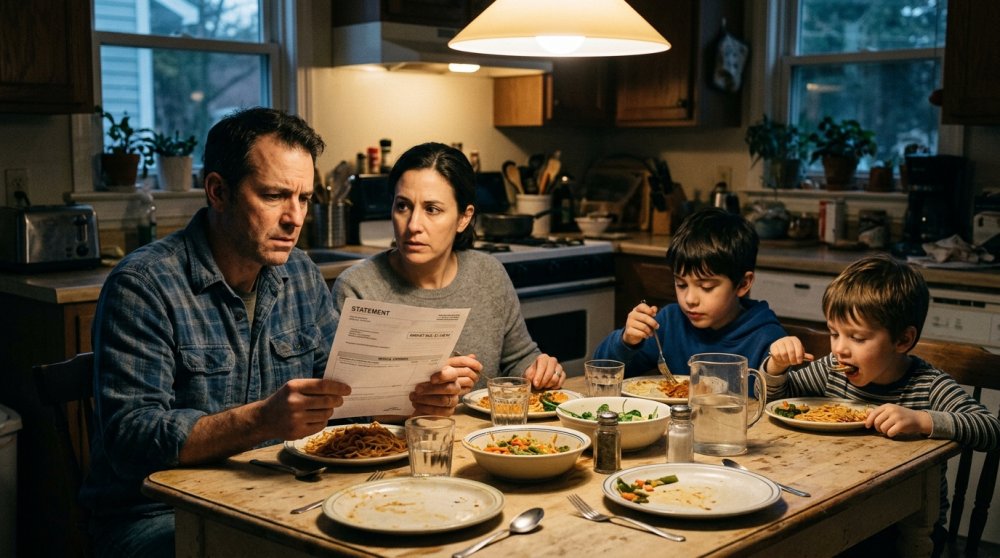
- Healthcare eats 40 percent of a typical family’s income and you barely notice because the price stays hidden behind layers of insurance and government red tape.
- Hospitals, insurers, and employers negotiate secret deals while the patient is left with surprise bills months later.
- Simple fixes like personal health habits, banning insurance middlemen, and stopping hospital mergers would put real prices back in front of families.
We pay too much for healthcare, but we don’t notice anymore. At least, not in the way we notice the cost of gas, coffee, groceries, or even the vaunted burrito.
James Carville famously reduced all of American electoral politics to four words: “It’s the economy, stupid.” In the post-COVID years, our elections have revolved around the price of groceries and housing — and that makes sense.
When mortgage rates increase, an entire generation recalculates whether they can ever afford to buy a home; we are extraordinarily sensitive to prices when we can see them.
And while you know your family’s medical bills don’t make a bit of sense, when you consider how expensive it is to be alive in America right now, healthcare probably isn’t top of mind. And that is remarkable, if only because healthcare is likely your biggest expense.
For a typical family of four, 40% of income goes to paying for healthcare. The average American now has to work four months just to pay for healthcare compared to two months in the year 2000. That is more than what you probably spent on your house, your car, or children’s education. So why aren’t we more aware?
Because unlike virtually everything else we buy, the relationship between the person receiving healthcare and the price of healthcare has been severed. To make this more concrete, suppose you come into my ER sick to your stomach. A nurse starts an IV, we give you something to help with the nausea, and I examine you.
A few hours later you’re feeling better, and it’s time to go home. What will that care ultimately cost you? While estimates are available, they aren’t binding, so the answer is opaque to everyone — including your doctor and hospital administrators — at least until your bill arrives.
Here is why: the hospital has a set of charges for every facet of your care that night, the saline, the IV, the facility fee to be in a hospital, and so on. The doctor’s fee is separate because he works for a private-equity-backed company that contracts with the hospital to run the ER, and that company has its own fees.
Now, your insurance company has negotiated a predetermined price with the hospital for that bag of saline and every other service it provided you. But the hospital may get $10 from one insurer and $100 from another for the exact same bag of saline, so your individual charge can vary wildly.
Try to imagine buying literally anything else this way. You walk into a grocery store, but nothing has a price. You fill your cart anyway, and you hand the cashier your insurance card. They consult a contract negotiated with your grocery insurers six months ago to determine what milk costs specifically for you — not your neighbor.
Your employer pays your monthly grocery premium, the government subsidizes part of the bill, and three weeks later you receive a statement explaining that your $8 gallon of milk was originally billed at $37. You would obviously think this system is insane. But in healthcare, that’s just another Monday morning.
Gas prices make us angry because we see them on a 20-foot sign lit up in bright lights before we buy. But healthcare separates the consumer from price through a labyrinth of intermediaries. Health insurance companies, large hospital systems, the federal government, your employer’s health insurance benefits, and something called a pharmacy benefit manager — each plays a role.
Interestingly, 2025 data show that hospital services continue to cost two to three times as much as every other medical service. Everyone negotiates and sets prices, except the patient.
A family of four might pay around $700 a month in premiums while your employer pays $1,575, for which it gets a tax break. The insurer brings millions of customers to the table when they negotiate with hospitals, creating leverage. The federal government subsidizes insurance premiums, so they are less afraid to accept higher prices in negotiations, virtually guaranteeing higher premiums.
But the hospital has leverage too. As hospitals (often nonprofits themselves) consolidate and bring more doctors into their system, it becomes more costly for the insurance company to go out of network with that hospital system. The result is a negotiation between two Goliaths, neither of which is spending their own money.
The insurance company knows employers and patients are paying premiums with the government subsidizing them further, and the hospital knows the insurer can’t easily walk away. Setting high prices is not so risky if you have a captive audience.
And somewhere, underneath all these layers, is a doctor who would simply like to take care of their patient and has no idea the price of the service they are providing, while the patient, who would simply like good empathetic care, has no idea the costs until after receiving their bill for said service.
Likely because they have taken an oath to care for human beings instead of returning value to shareholders, physician payments remain one of the easiest places to squeeze when policymakers and insurers do look for savings. Predictably, costs related to physician compensation have fallen relative to wages and inflation.
And that brings us back to where we started: Why haven’t you really noticed any of this? Because it’s hard to care about a price you can’t actually see that’s paid to people you cannot identify through a system that almost nobody can explain. Complexity diffuses blame, and everyone is pointing the finger at the other.
Hospitals blame insurers, insurers blame hospitals and drug companies, employers blame rising costs, and politicians blame just about everyone. But ultimately it’s you left holding the bag.
There are a number of simple steps we can take to fix this. First, with so much we can’t control as patients, there is one thing we can control: our individual health. That means taking care of yourself by eating less “added sugar,” eating natural, whole foods when possible, tracking your A1c to improve it gradually, getting exercise, and prioritizing sleep.
And while this is the least exciting solution, it is by far the most effective. These levers, more than anything, will keep you out of the medical system for longer. No one has more at stake in your health than you do.
Second, in a perfect world, Congress would disentangle the obvious conflicts of interest in the insurance industry. Insurance companies should stick to insurance — they are not doctors or drug pricing managers.
Third, hospital consolidation needs limits. More consolidation means higher prices. And inflated costs need to go back into actual patient care, like hiring more nurses (or paying them more) so the hospital is adequately staffed. Any seasoned ER physician will tell you that a good nurse is worth their weight in gold. Let’s pay them this way.
Healthcare is not a burrito or a gallon of gas. When you are having a heart attack, you are not going to comparison-shop for emergency departments to get the best deal, and thus there will always be parts of medicine where normal market forces cannot work. But that does not justify an entire healthcare economy in which price is laughably obfuscated, and everyone wins but the patient.
Americans have not decided that healthcare is worth whatever hospitals and insurers charge us. We have not collectively decided that spending an ever-larger share of our income on it is acceptable. We just stopped seeing the price. We’re not indifferent; we were just lulled to sleep.
Wyatt Matters
Hard-working families across Middle America are tired of paying the highest bills for the least transparent service. Restoring price visibility and accountability in healthcare is one of the most practical steps we can take to protect the next generation’s paychecks and peace of mind.


-
 Entertainment3 years ago
Whoopi Goldberg’s “Wildly Inappropriate” Commentary Forces “The View” into Unscheduled Commercial Break
-

 Entertainment3 years ago
‘He’s A Pr*ck And F*cking Hates Republicans’: Megyn Kelly Goes Off on Don Lemon
-

 Featured3 years ago
US Advises Citizens to Leave This Country ASAP
-
 Featured3 years ago
Benghazi Hero: Hillary Clinton is “One of the Most Disgusting Humans on Earth”
-

 Latest News3 years ago
Nude Woman Wields Spiked Club in Daylight Venice Beach Brawl
-
 Featured3 years ago
Fox News Calls Security on Donald Trump Jr. at GOP Debate [Video]
-

 Entertainment3 years ago
Comedy Mourns Legend Richard Lewis: A Heartfelt Farewell
-

 Latest News3 years ago
Supreme Court Gift: Trump’s Trial Delayed, Election Interference Allegations Linger