Health
January 1, Scientists Discover SHOCKING Reason You Can’t Sleep at Night

Wyatt’s Take
- New research confirms what common sense already told us — your neighborhood environment directly impacts how well you sleep, from noise pollution to visual safety cues your brain processes subconsciously.
- Japanese researchers used AI to analyze over 200,000 street view images and found that perceived safety, greenery, and enclosed spaces helped people sleep longer, while busy walkable areas with heavy foot traffic disrupted rest.
- You don’t need to move — simple adjustments like white noise machines, blackout curtains, and consistent sleep schedules can overcome most environmental sleep disruptors.
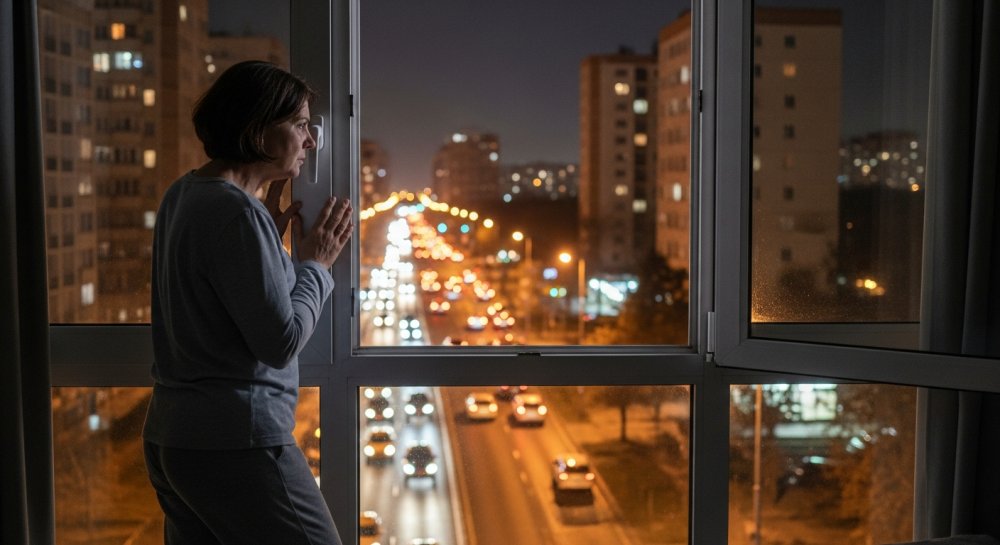
Where you live in your neighborhood could significantly affect your sleep, according to experts and recent research on urban landscapes. Erin Palinski-Wade, a New Jersey-based nutritionist and author of “The Sleepdemic Solution,” confirmed that household surroundings and ambient neighborhood conditions can directly interfere with restfulness.
Factors such as cohabitating with family members, pets or high-noise environments frequently disrupt sleep patterns, she said. For Americans living near busy streets or in densely packed cities, the constant hum of traffic and pedestrian activity takes a real toll on quality rest.
“If you live in noisy environments, the fact is that it is going to be noisy and you do have to make some adjustments,” Palinski-Wade said.
She suggested that individuals living near busy city streets consider using a white noise machine because it “can cancel out some of that environmental noise.”
Beyond the immediate bedroom environment, the visual characteristics of one’s neighborhood can subconsciously influence sleep patterns, research shows. A study led by Professor Daisuke Matsushita of the Graduate School of Human Life and Ecology at Osaka Metropolitan University in Japan analyzed more than 200,000 Google Street View images, using artificial intelligence to assess streetscape features.
“Based on the technique used in this study, cities could potentially measure perceived safety, beauty, liveliness and enclosure, as well as pollution and noise,” Matsushita stated in a press release.
The study examined 1,089 working adults residing on lower apartment floors in Tokyo. Individuals living in neighborhoods with a stronger perceived sense of safety tended to experience longer sleep durations, the researchers found.
Visual elements like trees and other greenery, and high “enclosure” rates — tall vertical buildings with few open spaces — aligned with longer sleep and fewer insomnia symptoms. This makes sense when you think about it: humans instinctively feel safer in enclosed, protected spaces with natural elements nearby.
Alternatively, highly walkable environments with abundant sidewalks and traffic signs were linked to a lower sense of safety and shorter periods of sleep, possibly due to increased foot traffic and crowdedness, the study found. The very features urban planners celebrate as “vibrant” and “pedestrian-friendly” may actually be undermining residents’ health.
“We hope that opening up this new perspective creates further possibilities for designing healthier neighborhoods,” Matsushita said.
Palinski-Wade recommends using blackout curtains to “shut out some of that light pollution and get more restful sleep.”
Environmental factors inside the home, including room temperature and whether bedroom doors are left open or closed, can also impact how much outside noise gets into the bedroom. Small adjustments in your immediate environment can make a big difference.
The findings do not necessarily suggest that people need to relocate, the researchers noted. The study relies on self-reported sleep data from working adults in Tokyo, which may be subject to imperfect memory, and only represents a specific group of people.
Because the research focused strictly on residents living on the lower floors of apartment buildings in a single city, the findings may not apply to people living on higher floors or in rural and suburban settings. Still, the core principles about noise, safety, and visual environment likely hold true across different living situations.
“The simplest thing you really can do is try to set yourself on a schedule where you go to sleep and you wake up at the same time each night,” Palinski-Wade advised, noting that maintaining this consistency on days off or weekends has the biggest impact on sleep quality and quantity.
Why It Matters
For hardworking Americans already stretched thin by rising costs and demanding schedules, poor sleep compounds every other challenge. This research confirms what many already suspected — our increasingly crowded, noisy urban environments are taking a physical toll. The good news is you don’t need an expensive move to fix it. Simple, affordable changes to your sleep routine and bedroom setup can help you reclaim the rest your body needs to stay productive and healthy.


-
 Entertainment3 years ago
Whoopi Goldberg’s “Wildly Inappropriate” Commentary Forces “The View” into Unscheduled Commercial Break
-

 Entertainment3 years ago
‘He’s A Pr*ck And F*cking Hates Republicans’: Megyn Kelly Goes Off on Don Lemon
-

 Featured3 years ago
US Advises Citizens to Leave This Country ASAP
-
 Featured3 years ago
Benghazi Hero: Hillary Clinton is “One of the Most Disgusting Humans on Earth”
-

 Latest News3 years ago
Nude Woman Wields Spiked Club in Daylight Venice Beach Brawl
-
 Featured3 years ago
Fox News Calls Security on Donald Trump Jr. at GOP Debate [Video]
-

 Entertainment3 years ago
Comedy Mourns Legend Richard Lewis: A Heartfelt Farewell
-

 Latest News3 years ago
Supreme Court Gift: Trump’s Trial Delayed, Election Interference Allegations Linger
Eileen
August 10, 2026 at 9:48 pm
This is true., Any type of noise, like cars, sirens of plice, ambulances, and fire trucks can wreck your sleep. We all know that crying children do not help younger people sleep well.