Latest News
January 1, Pollsters SCRAMBLE After Catastrophic Misses in Two Key States

Wyatt’s Take
- Pollsters completely whiffed on major primary races, getting double-digit leads totally backwards when votes were actually counted
- Open primaries and far-left activists skewing surveys created a distorted picture that left experts scrambling for excuses
- This polling disaster raises serious questions about whether we can trust any survey data heading into future elections
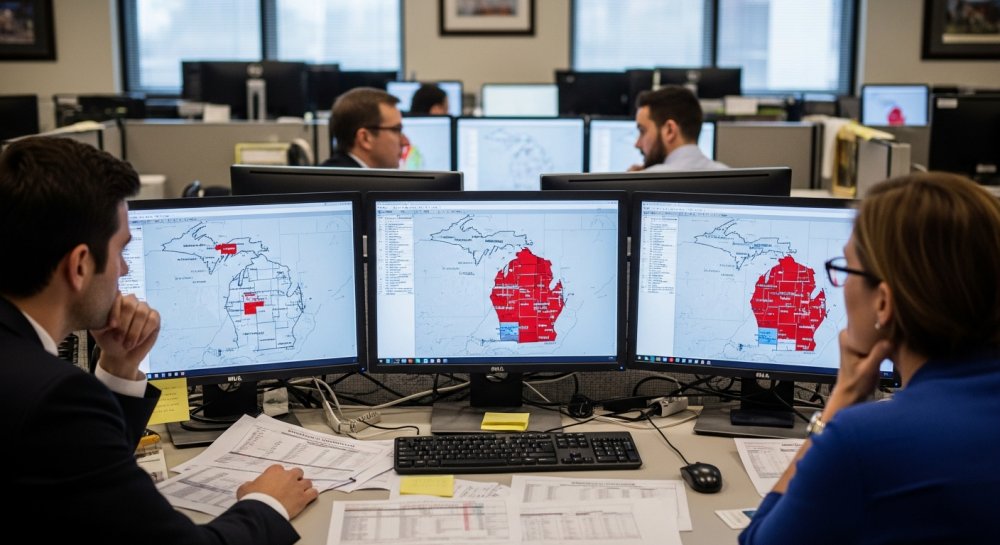
Pollsters are facing tough questions after getting two major primary races spectacularly wrong. Surveys showed far-left candidates cruising to easy victories, but when actual voters showed up, the results told a completely different story.
In Michigan’s Senate race, Democratic nominee Abdul El-Sayed appeared headed for a landslide based on pre-election polling. The same story played out in Wisconsin, where Democratic gubernatorial candidate Francesca Hong supposedly held a commanding double-digit advantage. Both predictions collapsed on election night.
According to pollsters now trying to explain their failures, two main factors threw off their numbers. Open primaries allowed crossover voting that surveys didn’t anticipate. More importantly, the further-left candidates had supporters who were much more willing to participate in polls than moderate voters.
This creates what experts call “response bias” — when one side of the political spectrum is overrepresented in survey samples. The activists and true believers answer their phones and fill out online questionnaires. Regular working people don’t have time for that nonsense.
The result? Pollsters built their models on responses from the most politically engaged fringe elements rather than the broader voting public. When normal Democrats actually cast ballots, the outcomes didn’t match the predictions at all.
Open primaries added another layer of unpredictability. In states where any registered voter can choose either party’s ballot, Republicans and independents can influence Democratic contests and vice versa. Pollsters struggled to account for these strategic crossover voters.
The Michigan and Wisconsin misfires join a growing list of polling embarrassments. From the 2016 presidential race to countless state and local contests, professional survey takers have repeatedly failed to capture what’s really happening with American voters.
Part of the problem is that fewer people answer surveys at all anymore. Response rates have plummeted as caller ID lets everyone screen unknown numbers. Online polls face similar challenges with low participation and self-selection bias.
That leaves pollsters making educated guesses about who will actually vote and trying to weight their limited responses to match the broader electorate. When those assumptions are wrong, the polls can be catastrophically off.
The far-left candidates who led in surveys also typically had more enthusiastic grassroots support and stronger social media presence. That online energy doesn’t always translate to actual votes, but it does translate to poll responses from committed activists.
Meanwhile, moderate candidates often have quieter support from voters who don’t tweet constantly or participate in political surveys. These voters show up on election day, but pollsters miss them entirely in their pre-election snapshots.
Wyatt Matters
Regular Americans have learned the hard way not to trust polls. The so-called experts keep telling us one thing, then voters deliver something completely different. Maybe it’s time we stopped letting pollsters shape the narrative and just let elections speak for themselves. The only poll that counts is the one on election day.


-
 Entertainment3 years ago
Whoopi Goldberg’s “Wildly Inappropriate” Commentary Forces “The View” into Unscheduled Commercial Break
-
 Entertainment3 years ago
‘He’s A Pr*ck And F*cking Hates Republicans’: Megyn Kelly Goes Off on Don Lemon
-
 Featured3 years ago
US Advises Citizens to Leave This Country ASAP
-
 Featured3 years ago
Benghazi Hero: Hillary Clinton is “One of the Most Disgusting Humans on Earth”
-

 Latest News3 years ago
Nude Woman Wields Spiked Club in Daylight Venice Beach Brawl
-
 Featured3 years ago
Fox News Calls Security on Donald Trump Jr. at GOP Debate [Video]
-

 Entertainment3 years ago
Comedy Mourns Legend Richard Lewis: A Heartfelt Farewell
-
 Latest News3 years ago
Supreme Court Gift: Trump’s Trial Delayed, Election Interference Allegations Linger
Papa Lee
August 14, 2026 at 11:09 am
The pollsters are all left-wing idiots. They are being paid to lie. They believe that gullible people will vote for a winner, rather than the person of their choice. Thank goodness most people are smarter than that.
Since this is not working for the pollsters, their next approach will be to load their garbage into published articles to “sway” AI results to get people to vote their way.