Latest News
January 1, Far-Left Michigan Candidate Faces Shocking Problem With His Own Party

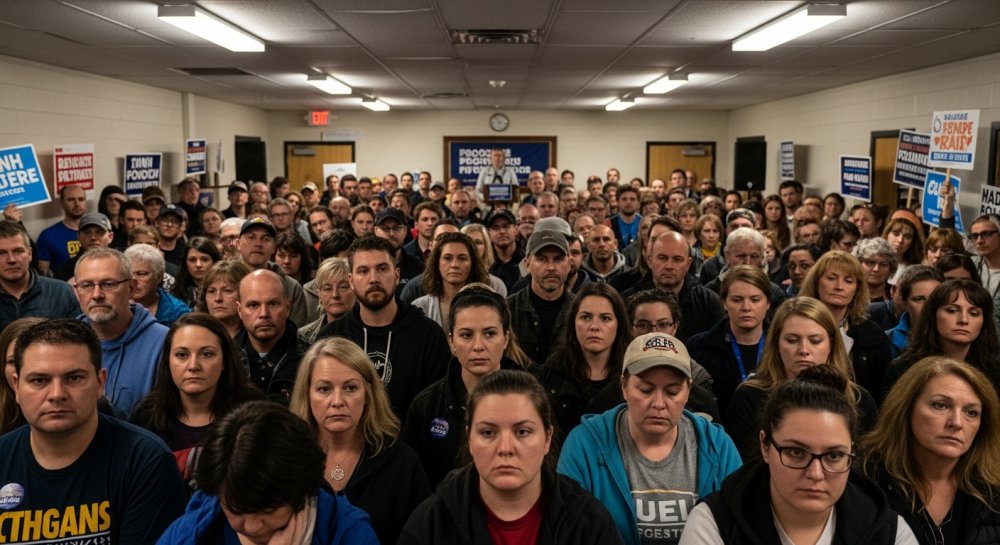
Wyatt’s Take
- Radical progressive Abdul El-Sayed barely squeaked through his primary with a razor-thin margin, exposing deep fractures in the Democrat coalition
- Working-class voters, minorities, and non-college Americans are rejecting his far-left agenda—even within his own party
- This struggle signals broader Democrat weakness heading into a critical Senate race that could flip Michigan red
Democratic Michigan Senate nominee Abdul El-Sayed is facing a major credibility crisis after Tuesday’s primary exposed his inability to connect with the very voters Democrats claim to champion. Despite narrowly winning the primary with just 48.5% to opponent Haley Stevens’ 47.5%, El-Sayed’s performance revealed a stunning weakness with non-college-educated, lower-income, and non-white voters.
The razor-thin margin—barely one percentage point—raises serious questions about whether El-Sayed can unite his fractured party for the general election. His struggle to win over working-class Americans and minority communities exposes the growing disconnect between progressive elites and everyday voters who feel left behind by the radical left’s agenda.
El-Sayed defeated Democratic Michigan Rep. Haley Stevens in what should have been a comfortable victory for the further-left candidate. Instead, the close race highlights deep divisions within Michigan’s Democrat base and suggests trouble ahead for the party’s Senate hopes in a state that’s increasingly competitive.
The demographics that rejected El-Sayed—working families, non-college graduates, and minority voters—represent the backbone of what Democrats have long considered their base. Their resistance to his candidacy signals a broader realignment that could benefit Republicans in November.
Michigan has become a critical battleground state, and El-Sayed’s weakness with key voting blocs could provide Republicans with an opening to flip the seat. His progressive platform may energize the activist base, but it appears to alienate the moderate and working-class voters necessary to win statewide.
The close primary result also raises questions about Democrat enthusiasm heading into the general election. When a party’s nominee can’t decisively win his own primary, it often signals deeper problems with messaging, turnout, and voter confidence.
El-Sayed now faces the difficult task of rebuilding trust with voters who rejected him in the primary while simultaneously defending against Republican attacks in the general election. It’s a political tightrope that few candidates successfully navigate.
Why It Matters
When the left’s own voters reject their radical candidates, it’s a wake-up call that most Americans still value common sense over ideology. Working families in Michigan—and across the heartland—are tired of being lectured by coastal elites who’ve never worked a blue-collar job. They want leaders who understand their kitchen-table struggles, not activists pushing divisive agendas that hurt the very people they claim to help.


-
 Entertainment3 years ago
Whoopi Goldberg’s “Wildly Inappropriate” Commentary Forces “The View” into Unscheduled Commercial Break
-

 Entertainment3 years ago
‘He’s A Pr*ck And F*cking Hates Republicans’: Megyn Kelly Goes Off on Don Lemon
-

 Featured3 years ago
US Advises Citizens to Leave This Country ASAP
-
 Featured3 years ago
Benghazi Hero: Hillary Clinton is “One of the Most Disgusting Humans on Earth”
-

 Latest News3 years ago
Nude Woman Wields Spiked Club in Daylight Venice Beach Brawl
-
 Featured3 years ago
Fox News Calls Security on Donald Trump Jr. at GOP Debate [Video]
-

 Entertainment3 years ago
Comedy Mourns Legend Richard Lewis: A Heartfelt Farewell
-

 Latest News3 years ago
Supreme Court Gift: Trump’s Trial Delayed, Election Interference Allegations Linger