Latest News
January 1, DNA Clears Utah Man After Decades on Death Row

Wyatt’s Take
- DNA testing proved a man spent decades on death row for a crime he did not commit.
- Police misconduct and witness bribery destroyed years of this man’s life.
- Working families pay the price when the justice system gets it wrong.
A Utah man walked free after spending decades on death row when new DNA tests showed he had nothing to do with a 1985 murder.
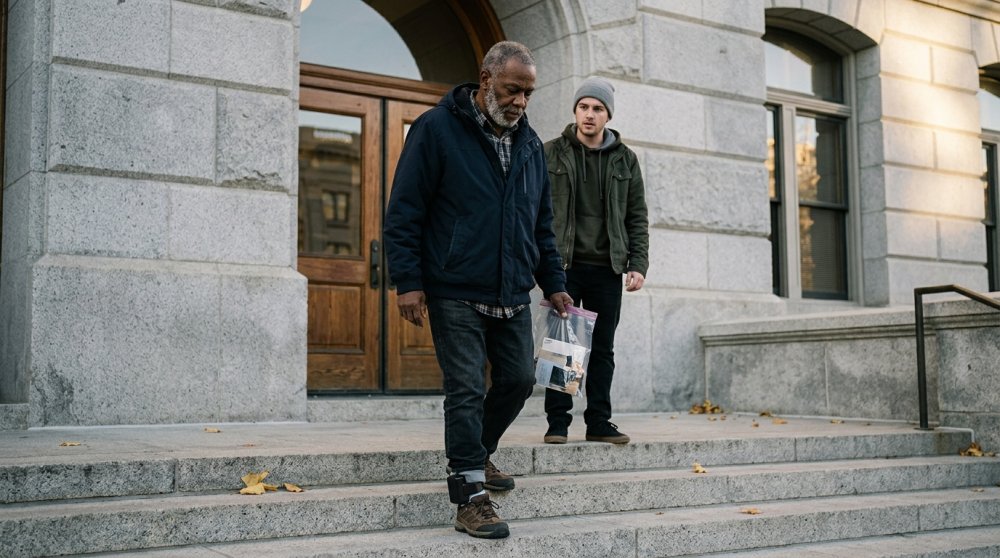
Douglas Stewart Carter, 71, was released on bail Monday night over the protests of the victim’s family. He must wear a GPS monitor while he waits for a new trial in the killing of Eva Olesen, who was found tied up, stabbed, and shot inside her Provo home on Feb. 27, 1985.
A judge ordered Carter to have no contact with the Olesen family.
The Utah Supreme Court ordered a new trial last year after pointing to misconduct by investigators.
Carter has always said he was innocent and that police forced him to sign a confession.
No physical evidence ever tied Carter to the crime scene. The jury convicted him on the confession and the word of two witnesses who later admitted they lied for cash and gifts from police.
DNA results received on Sept. 22 ruled out Carter as the source of blood on a doorknob and genetic material on the knife used in the attack.
Judge Derek Pullan said the new evidence hurt the case against Carter but left open the possibility that a jury could still convict him.
“This is going to be a lot for him,” Carter’s son, Tyler Anger, said Monday as he waited for his father.
Carter will stay in an extended-stay hotel near Anger, who was adopted as an infant and only learned about his father’s conviction years later, according to Carter’s attorney, Neal Hamilton.
Carter will need therapy after so many years behind bars, Hamilton said.
“If the state of Utah had their way, he would have been executed 15, 20 years ago before we discovered the misconduct,” Hamilton said.
Hamilton also called on prosecutors to drop the aggravated murder charge still pending against Carter.
A retrial had been set for next year, but prosecutors dropped plans to seek the death penalty last week.
Utah County prosecutor Erwin Petilos told the judge Monday that reviewing Carter’s bail was “necessary and fair” while the state looks at the remaining evidence.
Carter was living with his mother in Utah when Olesen was killed. By April 1985 he had left the state, thinking he was a suspect in a different case. He was picked up two months later in Nashville and signed a confession after hours of questioning by a Provo detective.
Carter later said police threatened him until he falsely admitted to the crime.
He was convicted and sentenced to death after a trial where his defense called no witnesses. He received the death sentence again after a 1992 retrial.
In 2011 the two witnesses from the first trial were found in Mexico. They admitted police paid them cash and gifts to lie and threatened them with deportation if they refused to implicate Carter.
More than a decade of legal fights followed before the Utah Supreme Court ordered a new trial last year, citing “multiple instances of intentional misconduct” by police and a prosecutor. The DNA testing came after that ruling.
Prosecutors would not say if they will use the DNA to look for other suspects.
Carter’s attorneys, who note that he is Black, said witnesses saw a White man running from the scene and that an investigator hid evidence that could point to other people, including the victim’s husband, Orla Olesen.
Prosecutors were close to charging the husband, but a Provo police lieutenant asked them to hold off so he could keep investigating, the defense said. Carter then became the focus.
Orla Olesen, who died in 2009, told police he found his wife dead, partially undressed, with her hands tied behind her back.
Theresa Olesen, a daughter-in-law of Eva Olesen, told the judge Monday her family had “serious concerns” about Carter’s release.
“By golly we were hoping for a concrete match,” Olesen said of the DNA test. “It doesn’t mean he wasn’t there.”
“We just want justice for Eva. And if he had any part of it we want that to be known,” she added.
Wyatt Matters
Families across Middle America count on the justice system to protect the innocent and punish the guilty. When police and prosecutors cut corners or play games with evidence, honest people lose decades of their lives and the real criminals stay free.


-
 Entertainment3 years ago
Whoopi Goldberg’s “Wildly Inappropriate” Commentary Forces “The View” into Unscheduled Commercial Break
-

 Entertainment3 years ago
‘He’s A Pr*ck And F*cking Hates Republicans’: Megyn Kelly Goes Off on Don Lemon
-

 Featured3 years ago
US Advises Citizens to Leave This Country ASAP
-
 Featured3 years ago
Benghazi Hero: Hillary Clinton is “One of the Most Disgusting Humans on Earth”
-

 Latest News3 years ago
Nude Woman Wields Spiked Club in Daylight Venice Beach Brawl
-
 Featured3 years ago
Fox News Calls Security on Donald Trump Jr. at GOP Debate [Video]
-

 Entertainment3 years ago
Comedy Mourns Legend Richard Lewis: A Heartfelt Farewell
-

 Latest News3 years ago
Supreme Court Gift: Trump’s Trial Delayed, Election Interference Allegations Linger
LC
September 30, 2026 at 10:00 am
Arrogance caused this. People who’ve made mistakes and don’t want to admit it are sick in the head. Just like Clancey’s attorney. These people are so full of themselves and don’t want to admit when they are wrong. Sin makes you stupid!
Stephen Russell
September 30, 2026 at 1:43 pm
DNA test all in prison & end this abuse alone since day 1 Nationwide
Rather jail Real felons vs fakes for some damn DA Game
any race or creed
NO exceptions
Test all unless recently placed in prison
10+ years test DNA
Wasting more funds when not needed
Bob
September 30, 2026 at 3:59 pm
How does Utah compensate this man for 40 years of his life? a good start would be to convict the cops and prosecutor and haul their worthless asses off to prison for the rest of their lives. I don’t know how they could ever look this man in the eye. Just despicable people.