Latest News
January 1, China’s Chilling Move to Replace Hotel Staff With AI — Are You Ready?

Wyatt’s Take
- China is building the world’s first fully robot-run hotel — no human check-in, no room service staff, just machines controlling your entire stay
- Opening in 2027 on a man-made island, the hotel will use AI-powered robots for everything from luggage delivery to cleaning, raising serious questions about job losses and surveillance
- This is part of China’s massive push to dominate robotics and AI technology while American workers get left behind in the dust
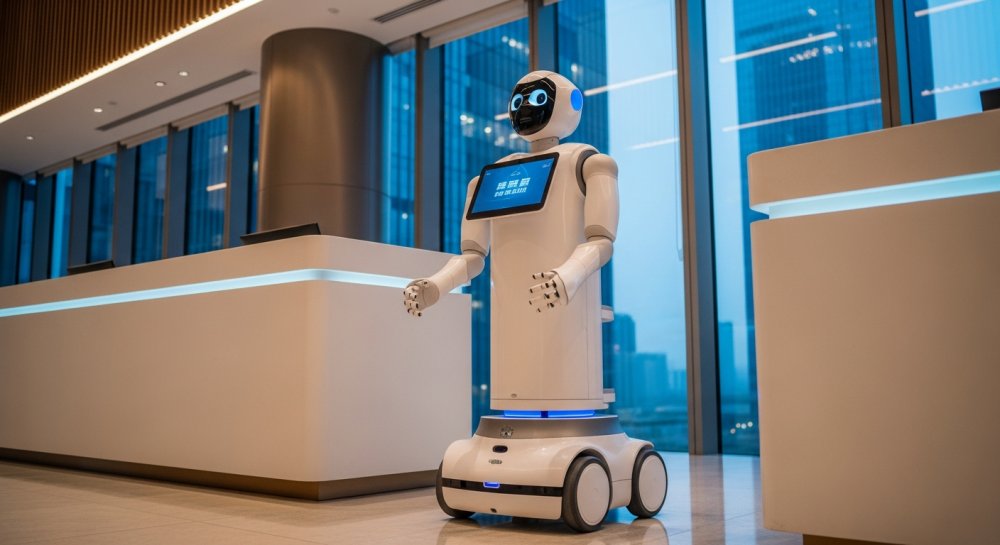
Pudu Robotics just announced what they’re calling the first “full-scenario robot-serviced hotel.” The project will use robots across the entire guest experience — from reception and room service to cleaning, food preparation and guest support. No humans needed.
The hotel is set to open in 2027, with trial rooms and robot-powered services expected to begin in late 2026. Early guests will be able to try robot check-in and autonomous in-room delivery before the full launch.
The hotel will sit on West Artificial Island, a man-made island connected to the Shenzhen-Zhongshan Link in Guangdong Province. That cross-sea bridge and tunnel project is one of the Pearl River Delta’s biggest transportation projects. The location makes sense — Shenzhen already has a reputation as one of China’s major technology hubs.
Room-service delivery robots are already common in hotels across many large Chinese cities. But this project goes much further. Instead of adding a few robots to assist hotel staff, Pudu wants to create a connected robot service system that can handle the entire guest experience — completely replacing human workers.
The planned hotel will include 44 high-end rooms, a restaurant, a gym and other guest spaces. Robots will take on roles across the property, including reception, room service, cleaning, food preparation and guest support.
That means you could check in with a robot, have luggage delivered by a robot and order drinks from your phone without calling the front desk. Then, cleaning robots would handle waste detection and room upkeep using AI. Every aspect of your stay monitored and controlled by machines.
Pudu says its robots will work from one shared intelligence framework. In other words, different machines will handle different jobs while staying connected through the same software system. One AI brain controlling everything.
Pudu’s FlashBot will run an intelligent vending system, allowing guests to order drink deliveries by smartphone. The PUDU T300 will move luggage from the lobby to rooms. Meanwhile, the PUDU CC1 Pro and PUDU MT1 cleaning robots will handle cleaning tasks using AI waste-detection technology.
At the Shenzhen launch event, BellaBot Pro served coffee while KettyBot Pro delivered refreshments and snacks. That kind of robotic service may still surprise many American travelers. In Shenzhen, though, it already fits into a broader tech culture where robot baristas and drone food delivery are becoming more visible.
The hotel will rely on PuduFM 1.0, the company’s embodied intelligence foundation model. It will also use PuduAgent to manage intelligent operations across the hotel.
“This partnership represents an important step toward large-scale deployment of embodied intelligence in premium hospitality environments,” said Cong Guo, co-founder and CTO of Pudu Robotics.
He also said the project gives the company a chance to explore new service models where AI and robotics work together to deliver connected service experiences.
That may sound ambitious, yet the rollout will be gradual. The first public trial is expected in late 2026. A broader hotel opening is planned for 2027.
China has already embraced service robots in hotels, restaurants, airports and public spaces. The robot-run hotel takes that trend into a more advanced phase — and shows just how far ahead China is racing in the technology arms race while America debates pronouns.
Shenzhen Culture & Tourism Industry Development will work with Pudu Robotics to turn West Artificial Island into a robotics and technology destination. The hotel is only one part of that larger plan.
Over the next four years, the island is expected to add more robotics across tourism and hospitality. That could turn the area into a testing ground for how travelers react when robots handle nearly every service touchpoint — and what happens when human workers become obsolete.
If this hotel works well, it could change what you expect from travel in the future. Faster check-in, automated deliveries and round-the-clock service may sound convenient, especially when you arrive late or need something quickly.
But there’s another side to this. A robot-run hotel also raises serious questions about jobs, privacy, safety and what kind of hospitality guests actually want. How many cameras are watching you? Where does your data go? And what happens to the thousands of hotel workers whose jobs just vanished?
Some travelers may love the speed and efficiency. Others may miss the warmth of a person who can read the room, handle a strange request or help when something goes wrong. A robot can’t look you in the eye, can’t use common sense when the system glitches, and sure can’t give you the kind of personal service that makes hospitality feel human.
That’s where this project becomes important. It may show whether people are ready for hotels where AI handles the stay from start to finish — or whether the Chinese Communist Party is building a surveillance state disguised as customer convenience.
China’s first robot-run hotel feels like a major test of how far hospitality automation can go. We’ve already seen delivery robots roll through hotel hallways. Yet this project puts robots at the center of the entire stay.
The convenience could be impressive. You could check in, order drinks, receive luggage and get room support without waiting on a busy front desk. For travelers who value speed, that may feel like a win.
Still, hospitality has always been about more than efficiency. A great hotel stay often comes from small human moments. A kind greeting, a helpful suggestion or a quick fix when something goes sideways can make a trip feel easier — things no robot can replicate.
Wyatt Matters
While China races ahead building robot hotels and dominating AI technology, American workers face an uncertain future where their jobs could be automated away overnight. This isn’t just about convenience — it’s about whether we’re willing to sacrifice human connection, American jobs and personal privacy on the altar of technological progress controlled by our biggest economic rival. The real question is whether our leaders will wake up and fight to keep America competitive before it’s too late.


-
 Entertainment3 years ago
Whoopi Goldberg’s “Wildly Inappropriate” Commentary Forces “The View” into Unscheduled Commercial Break
-

 Entertainment3 years ago
‘He’s A Pr*ck And F*cking Hates Republicans’: Megyn Kelly Goes Off on Don Lemon
-

 Featured3 years ago
US Advises Citizens to Leave This Country ASAP
-
 Featured3 years ago
Benghazi Hero: Hillary Clinton is “One of the Most Disgusting Humans on Earth”
-

 Latest News3 years ago
Nude Woman Wields Spiked Club in Daylight Venice Beach Brawl
-
 Featured3 years ago
Fox News Calls Security on Donald Trump Jr. at GOP Debate [Video]
-

 Entertainment3 years ago
Comedy Mourns Legend Richard Lewis: A Heartfelt Farewell
-

 Latest News3 years ago
Supreme Court Gift: Trump’s Trial Delayed, Election Interference Allegations Linger
Paul E.
July 5, 2026 at 9:16 pm
Just means more people out of jobs.AI seems like a great way for the government to make once working people dependent on them.
Keith Bierman
July 6, 2026 at 6:58 pm
Sounds fun. Should have named it “The Raven” and modeled it after the Hotel in “Altered Carbon”. Although I doubt the CCP would enable the hotel to be as careful about defending guests as in the story (or Netflix TV series).