Breaking News
January 1, Vance Just Landed in Europe—What He’s Doing There Will SHOCK You

Wyatt’s Take
- Vice President JD Vance flew to Switzerland to help lead high-stakes Iran negotiations alongside Trump’s key envoys—showing this administration means business on the world stage
- Trump’s framework deal with Iran includes a 60-day ceasefire, but he’s made clear America won’t be pushed around—threatening major economic consequences if Iran doesn’t hold up its end
- This is real peace-through-strength diplomacy, not the weak apology tours and cash pallets of previous administrations
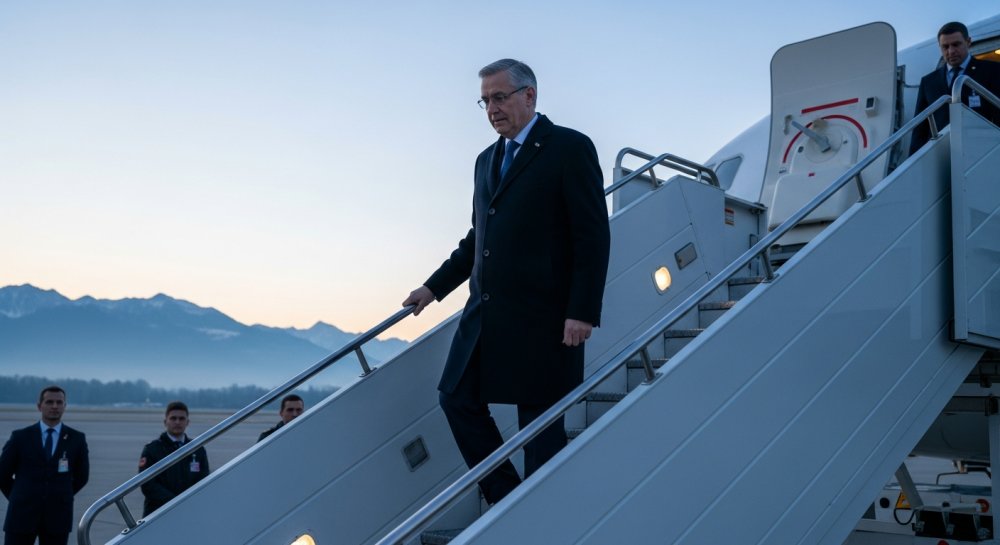
Vice President JD Vance touched down in Switzerland early Sunday morning to launch a critical new round of negotiations with Iran. This comes as the Trump administration pushes hard for a lasting deal following a recently signed ceasefire that could reshape the Middle East.
Vance arrived shortly before 6 a.m. local time and is joining White House envoys Steve Witkoff and Jared Kushner, President Donald Trump’s son-in-law, for the talks. These aren’t your typical Washington photo-op sessions—this is serious dealmaking with America’s interests front and center.
Swiss officials confirmed Saturday that the Iranian delegation had arrived and was heading to Bürgenstock, where the discussions are taking place. The talks were originally scheduled for Friday but got postponed—showing just how complex and delicate these negotiations are.
Iranian Foreign Minister Abbas Araghchi is expected to participate in the talks, according to reports. This is the highest-level direct engagement between Washington and Tehran in years, and it’s happening because Trump has leverage the mullahs can’t ignore.
The negotiations come just days after Trump signed a memorandum of understanding with Iran following the G7 summit at the Palace of Versailles. The agreement established a 60-day ceasefire and outlined a framework for broader negotiations aimed at ending the conflict—but Trump’s made clear there are strings attached.
In a Truth Social post Saturday, Trump warned that the United States could impose tolls in the Strait of Hormuz if negotiations fail to produce a lasting agreement before the ceasefire expires. That’s the kind of hardball negotiating tactic that works—not empty threats or weak red lines that get crossed without consequence.
Before departing from Joint Base Andrews in Maryland, Vance laid out what success looks like for this trip.
“I think number one, just getting things set up in the right way and getting the actual structure of the negotiations in place,” he said.
“The way that we’re going to do this, we’re going to have a principal level of political leadership at the top. And then obviously the technical team is going to stay on the ground.”
Vance said he expected to remain in Switzerland for a day or two—just long enough to set the framework and get the ball rolling. This administration doesn’t waste time on endless diplomatic junkets.
The vice president also previewed some of the key issues on the table during the negotiations.
“I think we’re hopefully making progress on the nuclear issue, make progress on the Lebanon ceasefire issue,” he said.
“Those are the two big things that I think we’re going to be focused on. I’m sure the Iranians are going to have issues they’d like to discuss as well.”
Vance said conditions in Lebanon had improved despite renewed clashes between Israel and Hezbollah. He’s not sugarcoating the challenges, but he’s optimistic that American strength is producing real results on the ground.
“Despite the headlines, things are actually getting better there,” he said, while acknowledging that sporadic violence remains a challenge in the region.
The vice president said the goal is to prevent further escalation and preserve the ceasefire—keeping American allies safe while forcing Iran to the negotiating table.
“The big problem is that somebody will shoot and then somebody will respond. You’ve just got to stop the shooting for long enough to get the ceasefire to hold.”
Pakistan also announced that Prime Minister Shehbaz Sharif and Army Chief Field Marshal Syed Asim Munir would participate in technical-level discussions in Switzerland. Regional powers are taking notice—Trump’s diplomacy is bringing players to the table who sat out the last administration’s failed efforts.
Wyatt Matters
This is what peace through strength looks like. Not pallets of cash flown to Tehran in the dead of night. Not begging dictators for crumbs while they chant ‘Death to America.’ Trump and Vance are negotiating from a position of overwhelming power, making it clear that Iran either comes to the table ready to deal—or faces consequences that will cripple their economy and isolate them completely. American families are safer when our enemies fear us and our allies trust us. That’s the world Trump is building, one tough negotiation at a time.


-
 Entertainment3 years ago
Whoopi Goldberg’s “Wildly Inappropriate” Commentary Forces “The View” into Unscheduled Commercial Break
-

 Entertainment3 years ago
‘He’s A Pr*ck And F*cking Hates Republicans’: Megyn Kelly Goes Off on Don Lemon
-
 Featured3 years ago
US Advises Citizens to Leave This Country ASAP
-
 Featured3 years ago
Benghazi Hero: Hillary Clinton is “One of the Most Disgusting Humans on Earth”
-

 Latest News3 years ago
Nude Woman Wields Spiked Club in Daylight Venice Beach Brawl
-
 Featured3 years ago
Fox News Calls Security on Donald Trump Jr. at GOP Debate [Video]
-

 Entertainment3 years ago
Comedy Mourns Legend Richard Lewis: A Heartfelt Farewell
-

 Latest News3 years ago
Supreme Court Gift: Trump’s Trial Delayed, Election Interference Allegations Linger
Thomas Fair
June 21, 2026 at 11:24 am
Good Job leadership.