Breaking News
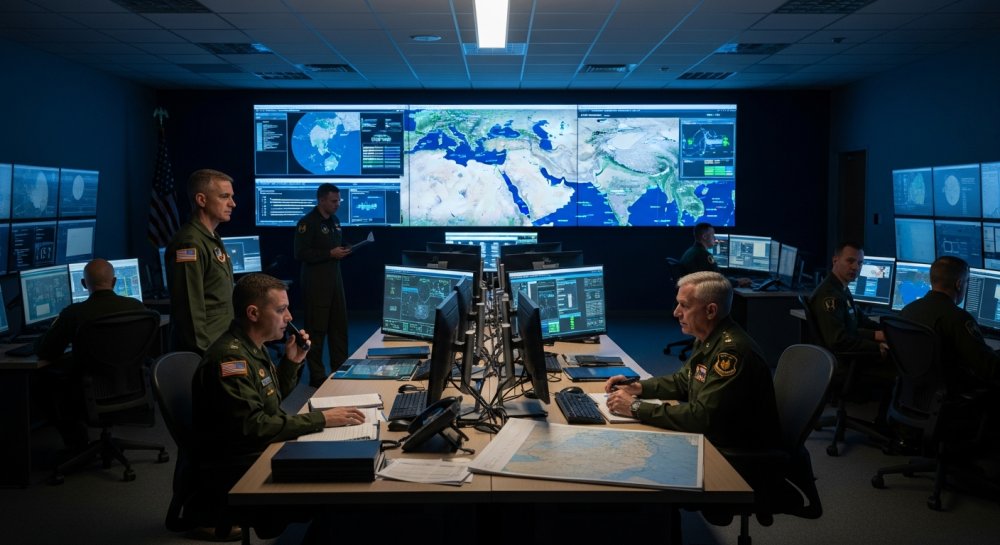
January 1, Trump Cancels Massive Military Strike at the Last Second — What He Did Instead

Wyatt’s Take
- President Trump called off a major military strike against Iran at the last minute, showing the kind of restraint career politicians never have
- He chose measured retaliation over an all-out war that would’ve cost American lives and billions in taxpayer dollars
- This is exactly the kind of calculated strength that put America first and kept us out of endless Middle East conflicts
President Donald Trump made headlines when he halted a planned military strike against Iran just minutes before launch. The decision came after Iran shot down an American surveillance drone over the Strait of Hormuz, an act that many in Washington saw as an unforgivable provocation.
But Trump did something different. He stopped, calculated the cost, and chose a different path.
The proposed strike would have hit multiple Iranian military targets in retaliation for the downed drone. Planes were in the air. Ships were in position. The operation was ten minutes from execution when Trump pulled the plug.
Why? He asked a simple question that should’ve been asked before every war America entered in the last thirty years: How many people will die?
When military advisors told him approximately 150 Iranians would be killed, Trump decided the response was disproportionate to shooting down an unmanned aircraft. No Americans had died. The drone, while expensive, was replaceable.
“We were cocked & loaded to retaliate last night on 3 different sights when I asked, how many will die,” Trump wrote on Twitter. “150 people, sir, was the answer from a General. 10 minutes before the strike I stopped it.”
The president faced immediate criticism from both sides. Hawks called him weak. Doves said he shouldn’t have considered the strike at all.
But Trump’s decision reflected something Washington had forgotten: strength isn’t just about firepower. It’s about knowing when to use it and when to hold back.
Instead of bombs, Trump chose sanctions. He targeted Iran’s Supreme Leader Ayatollah Ali Khamenei and other top officials with economic penalties designed to cripple the regime’s ability to fund terrorism and destabilize the region.
This approach hit Iran where it hurt without spilling blood or dragging America into another endless conflict. It protected American interests without sacrificing American lives or burning through billions in military spending.
The contrast with previous administrations couldn’t be clearer. For decades, Washington’s solution to every international problem was bombs first, questions later. Iraq, Afghanistan, Libya, Syria — trillions spent, thousands of American lives lost, entire regions destabilized, and nothing to show for it but chaos.
Trump ran on ending those wars, not starting new ones. His Iran decision proved he meant it.
The establishment foreign policy blob hated it. They always do when someone questions the wisdom of automatic military escalation. These are the same people who promised democracy would bloom in Baghdad and stability would follow regime change in Libya.
They were wrong then. They’re wrong now.
Trump’s approach to Iran combined maximum economic pressure with military restraint. Sanctions squeezed the regime. Shows of force — like moving carrier groups into the region — reminded them of American capability. But actual war remained a last resort, not a first option.
This drove the war hawks crazy. They wanted missiles flying and ships launching. They wanted shock and awe. They wanted another operation to plan, another enemy to bomb, another reason to keep the defense contracts flowing.
Trump gave them something else: results without body bags.
Iran’s economy crumbled under the sanctions. Its currency collapsed. Its people suffered under a regime that spent their money on proxy wars instead of prosperity. The pressure worked without firing a shot.
None of this meant Trump was soft on Iran. He proved the opposite when he ordered the strike that killed Iranian General Qasem Soleimani, the architect of terrorism across the Middle East. That was a surgical, justified use of force against a legitimate military target who had American blood on his hands.
The difference? Soleimani was actively planning attacks on Americans. The drone strike would have killed Iranians in retaliation for damage to property.
Trump understood the distinction. The blob never has and never will.
Why It Matters
This is what America First foreign policy looks like in action. It’s not isolationism and it’s not weakness. It’s using American strength wisely, protecting American interests strategically, and refusing to sacrifice American lives and treasure for Washington’s forever wars. Trump showed that real leadership sometimes means having the guts to say no to the generals and yes to common sense — something Middle America understands better than the Beltway ever will.


-
 Entertainment3 years ago
Whoopi Goldberg’s “Wildly Inappropriate” Commentary Forces “The View” into Unscheduled Commercial Break
-

 Entertainment3 years ago
‘He’s A Pr*ck And F*cking Hates Republicans’: Megyn Kelly Goes Off on Don Lemon
-
 Featured3 years ago
US Advises Citizens to Leave This Country ASAP
-
 Featured3 years ago
Benghazi Hero: Hillary Clinton is “One of the Most Disgusting Humans on Earth”
-

 Latest News3 years ago
Nude Woman Wields Spiked Club in Daylight Venice Beach Brawl
-
 Featured3 years ago
Fox News Calls Security on Donald Trump Jr. at GOP Debate [Video]
-

 Entertainment3 years ago
Comedy Mourns Legend Richard Lewis: A Heartfelt Farewell
-
 Latest News3 years ago
Supreme Court Gift: Trump’s Trial Delayed, Election Interference Allegations Linger
Farmer
August 2, 2026 at 7:11 am
I’ll bet Ali Khamenei is rolling over in his grave now that he’s been sanctioned.
Jerry Todd
August 2, 2026 at 6:37 pm
Try to get that through to the ever-present weenies who bitch and moan constantly without a flick of understanding what spiritual warfare in the political arena is all about.