Breaking News
January 1, FBI Takedown Crushes Global Cybercrime Empire Targeting Americans

Wyatt’s Take
- FBI’s Operation Riptide dismantled massive global cybercrime networks that stole over $20 billion from Americans last year — arrests made, millions seized, scammers on the run
- Director Kash Patel led the charge using aggressive AI-powered tactics and international coordination to hunt down criminals preying on hardworking citizens and elderly victims
- Chinese phishing platforms, Russian hackers, romance scammers, and ATM thieves all got hit hard — proof that law enforcement can win when leadership puts America first
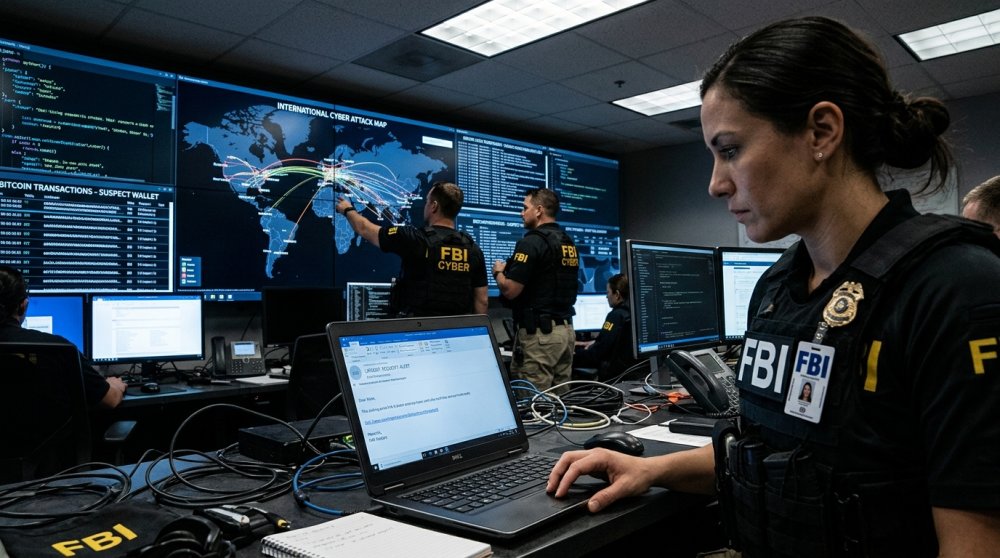
The FBI just wrapped up a massive 60-day operation that took down cybercrime syndicates targeting everyday Americans. Operation Riptide resulted in arrests, asset seizures, and the destruction of criminal networks spanning the globe.
Cybercriminals stole more than $20 billion from Americans last year alone. The FBI, working with international law enforcement partners, seized millions in illegal cryptocurrency and shut down cyber operations from Russia to China to West Africa.
“Operation Riptide was the FBI’s historic 60-day campaign targeting cybercriminals preying on Americans here at home and around the world,” FBI Director Kash Patel told Fox News Digital.
“We went after this criminal enterprise more aggressively than we ever have.”
Patel credited the bureau’s artificial intelligence technology, increased intelligence sharing, and aggressive coordination with foreign authorities for the operation’s success. No more playing defense — the FBI went on offense and crushed these networks where they live.
“FBI Cyber is now built to crush these criminal networks no matter where they operate,” Patel said.
Among the major wins: the arrest of a member of the pro-Russia hacktivist group Cyber Army of Russia Reborn. Agents also seized cloud computing accounts used by subsidiaries of the Huione Group, a Cambodia-based conglomerate allegedly helping criminals launder money from cryptocurrency scams and move it into legitimate banks.
In another takedown, the FBI worked with Google and Black Lotus Labs to destroy Outsider, a Chinese phishing platform. This operation provided cybercriminals with hosting and “phishing kits” to target Americans and victims in at least 54 other countries.
But Operation Riptide wasn’t just about busting new cases. Several ongoing investigations reached major milestones during the 60 days.
Eight people were convicted for an international cargo theft conspiracy threatening U.S. supply chains. Five Ghanaians were indicted for running romance fraud schemes that targeted lonely Americans online, stealing their savings.
Two criminals were sentenced to 6.5 years in prison for an ATM jackpotting scheme that used malware to drain cash machines across the country. Another scammer, Barry Augustinsky, was convicted for running a multi-year fraud targeting mostly elderly Americans, stealing their money and destroying their credit.
“We executed coordinated law enforcement actions across the country and leveraged our reach around the world to disrupt these criminal networks, impose consequences, and protect the American people from predatory cyber actors,” said Heith Janke, assistant director of the FBI’s Criminal Investigative Division.
Retired FBI agent Scott Augenbaum, who specialized in cybercrime, warned that artificial intelligence is making scams harder to detect.
“Artificial intelligence is enhancing the cybercriminals’ ability to trick people. Today, you’re going to see an email that does not contain grammatical errors. We used to tell people if the email has really bad grammar, it’s a scam. That red flag doesn’t work anymore. Cybercriminals can build fake websites, use voice cloning, and leverage so many new tools.”
The scammers are getting smarter, but so is law enforcement. Brett Leatherman, assistant director of the FBI’s Cyber Division, made it clear the bureau isn’t letting up.
“Cybercriminals depend on borders, anonymity, and rented infrastructure to stay beyond reach, and over 60 days, the FBI and our partners took those advantages away,” Leatherman said.
“Arrests, extraditions, infrastructure takedowns, and seizures each imposed cost at a different point in the criminal ecosystem. Our partners made that possible, and the pressure we built does not stop here.”
Why It Matters
When criminals overseas steal billions from hardworking Americans and prey on our elderly, it’s not just crime — it’s an attack on our way of life. This operation shows what happens when law enforcement gets serious, uses every tool available, and puts protecting Americans first. No borders, no excuses — just results.


-
 Entertainment3 years ago
Whoopi Goldberg’s “Wildly Inappropriate” Commentary Forces “The View” into Unscheduled Commercial Break
-

 Entertainment3 years ago
‘He’s A Pr*ck And F*cking Hates Republicans’: Megyn Kelly Goes Off on Don Lemon
-

 Featured3 years ago
US Advises Citizens to Leave This Country ASAP
-
 Featured3 years ago
Benghazi Hero: Hillary Clinton is “One of the Most Disgusting Humans on Earth”
-

 Latest News3 years ago
Nude Woman Wields Spiked Club in Daylight Venice Beach Brawl
-
 Featured3 years ago
Fox News Calls Security on Donald Trump Jr. at GOP Debate [Video]
-

 Entertainment3 years ago
Comedy Mourns Legend Richard Lewis: A Heartfelt Farewell
-

 Latest News3 years ago
Supreme Court Gift: Trump’s Trial Delayed, Election Interference Allegations Linger
Dell Rubin Smithern
August 26, 2026 at 10:48 am
Great Job!
Nana
August 26, 2026 at 11:38 am
This is great news, especially for someone who is a recent victim of online banking fraud and identity theft. It’s good to know that even though the local police don’t do anything to help the federal government is working on it.
Susan
August 26, 2026 at 12:01 pm
Speaking as a target myself, I send utmost thanks to the FBI for this outstanding strategy and success!
Papa Lee
August 30, 2026 at 6:30 pm
I applaud the results. However, 2 questions needs to be answered. Have any of the victims been repaid any of the money they lost? What happens to the money recovered, if not redistributed to the victims?