Breaking News
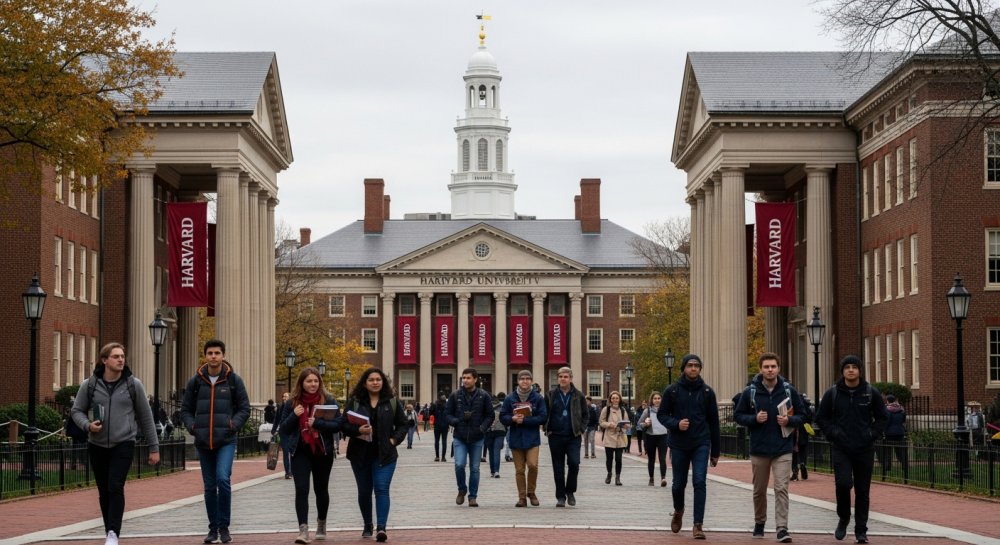
January 1, EXPOSED: Elite University’s Staggering Military Research Ties With Communist China

Wyatt’s Take
- Harvard researchers partnered on over 140 papers with Chinese military universities while taking in a record $600+ million from Beijing — more foreign cash than any American school.
- These aren’t just academic exchanges — we’re talking soft robotics for deep-sea warfare, magnetic materials for defense tech, and training programs that may have included officials tied to genocide against Uyghur Muslims.
- While Harvard rakes in taxpayer research dollars, they’re playing fast and loose with national security, treating Communist military collaboration like just another faculty publishing credit.
Harvard University failed to protect American research from exploitation by Chinese Communist Party military institutions, according to a bombshell House Select Committee investigation reviewed exclusively ahead of its public release.
The Ivy League giant allowed its researchers to co-author more than 140 academic papers with scientists from Chinese universities directly tied to Beijing’s military and defense programs. These aren’t regular colleges — they’re part of what Pentagon officials call the “Seven Sons of National Defense,” institutions central to China’s military modernization and weapons development.
The financial picture is even more disturbing. Harvard reported receiving over $600 million from China under federal foreign-gift disclosure rules — more than any other American university, according to Education Department records cited in the congressional report.
That massive cash influx from a hostile foreign power, combined with loose oversight of research partnerships, creates what investigators describe as a dangerous gateway for Communist China to advance its military capabilities using American taxpayer-funded innovation.
The report details a 2023 paper on bio-inspired soft robots designed for deep-sea exploration. A Harvard researcher co-wrote it with a scientist from Beihang University, one of those Seven Sons military schools.
Beihang — also called Beijing University of Aeronautics and Astronautics — has been on the Commerce Department’s restricted Entity List since 2001 for good reason. The congressional committee argues this robotics research has clear potential military applications, including underwater detection and surveillance. Harvard’s own compliance office, meanwhile, called it “nonmilitary research.”
That’s not where it ends. Harvard researchers also partnered on a 2023 study with China’s National University of Defense Technology, another restricted institution. That paper involved magnetic materials research and even acknowledged partial funding from the U.S. Army Research Office — meaning American military dollars may have indirectly supported work shared with Chinese defense scientists.
The committee reviewed publications across dozens of academic disciplines. Engineering topped the list for Harvard collaborations with these Chinese military universities.
“From allowing violence against anti-China protestors to collaborating with entities linked to the PLA, Harvard has made serious mistakes and must act now to prevent more,” committee chairman Rep. John Moolenaar, R-Mich., said in a statement.
“It should use this investigation as a catalyst for significant reforms that end CCP influence on campus and prioritize secure American research.”
The investigation also exposed Harvard’s executive education program with China’s National Healthcare Security Administration, which trained Chinese health officials on international insurance systems.
Here’s where it gets darker: attendance records show officials connected to the Xinjiang Production and Construction Corps were listed for some sessions. The Treasury Department sanctioned that organization in 2020 over human-rights abuses against Uyghurs and other ethnic minorities — abuses many international observers have labeled genocide.
While the report notes uncertainty about whether these officials attended every session, it reveals Harvard had advance participant information for a 2020 online program that included these sanctioned-entity affiliates. The university took no further action.
Harvard professor Winnie Yip, who helped run the executive education program, told investigators she didn’t know the Xinjiang corps was sanctioned and had received no training on sanctions compliance.
The broader problem, according to the House investigation, is that Harvard’s research-security practices focus too narrowly on bare-minimum legal compliance. They fail to account for national-security risks that come with collaborating with institutions embedded in China’s military-civil fusion system.
Harvard research official John H. Shaw testified the university evaluates collaborations case by case and doesn’t prohibit all work involving robotics or Chinese institutions. The committee blasted that approach, arguing research with entities woven into China’s military apparatus can have defense applications even when the work is unclassified and publicly published.
Investigators also raised red flags about Harvard Global Research and Support Services, a nonprofit linked to the university that can accept research awards when Harvard itself can’t agree to a sponsor’s terms. The committee suggested this entity could be used to dodge federal foreign-gift reporting requirements.
Harvard did not respond to requests for comment on the congressional findings.
The report recommends Harvard ban research relationships with any entities on U.S. government restricted or sanctioned lists and centralize its scattered research-security oversight. It also calls on Congress to toughen foreign-funding disclosure requirements for universities.
Why It Matters
Our tax dollars fund research at these elite universities, and those institutions have a duty to protect American innovation from theft by foreign adversaries. When Harvard takes hundreds of millions from Beijing while collaborating with Chinese military scientists, they’re not just failing that duty — they’re helping arm a Communist regime that sees us as their primary enemy. Middle-class families send their kids to fight in our military. They deserve universities that put America first, not their next big donation check.


-
 Entertainment3 years ago
Whoopi Goldberg’s “Wildly Inappropriate” Commentary Forces “The View” into Unscheduled Commercial Break
-

 Entertainment3 years ago
‘He’s A Pr*ck And F*cking Hates Republicans’: Megyn Kelly Goes Off on Don Lemon
-
 Featured3 years ago
US Advises Citizens to Leave This Country ASAP
-
 Featured3 years ago
Benghazi Hero: Hillary Clinton is “One of the Most Disgusting Humans on Earth”
-

 Latest News2 years ago
Nude Woman Wields Spiked Club in Daylight Venice Beach Brawl
-

 Entertainment2 years ago
Comedy Mourns Legend Richard Lewis: A Heartfelt Farewell
-
 Featured3 years ago
Fox News Calls Security on Donald Trump Jr. at GOP Debate [Video]
-

 Latest News2 years ago
Supreme Court Gift: Trump’s Trial Delayed, Election Interference Allegations Linger
Anne M.
August 13, 2026 at 8:08 am
The Harvard University staff that allowed this invasion/access of sensitive information at our country’s prestigious educational institution need to be held accountable, including firing from their positions and trying them on espionage grounds. Harvard thumbed their noses at national security concerns to line their pockets with Chinese and/or American government funds while providing sensitive information to a country that considers USA their strategic rival is tantamount to treason. Harvard professors are not naive. They would absolutely know when sensitive information should and should not be shared with a rival nation who has the possibility in the future of going to war against us armed with the advantage of the knowledge they gleaned at Harvard.
Jon
August 13, 2026 at 8:14 am
Exactly this is treason,start the executions.
JC
August 13, 2026 at 8:24 am
Stop giving money to Harvard, put them in jail for working with the enemy/. Believe that is treason. Or it use to be.
Steve Joseph
August 13, 2026 at 8:52 am
CANCEL ALL CHINA DEALS WITH OUR UNIVERSITIES !!!!!!!!!
SANCTION HARVARD !!!!!!!