Breaking News
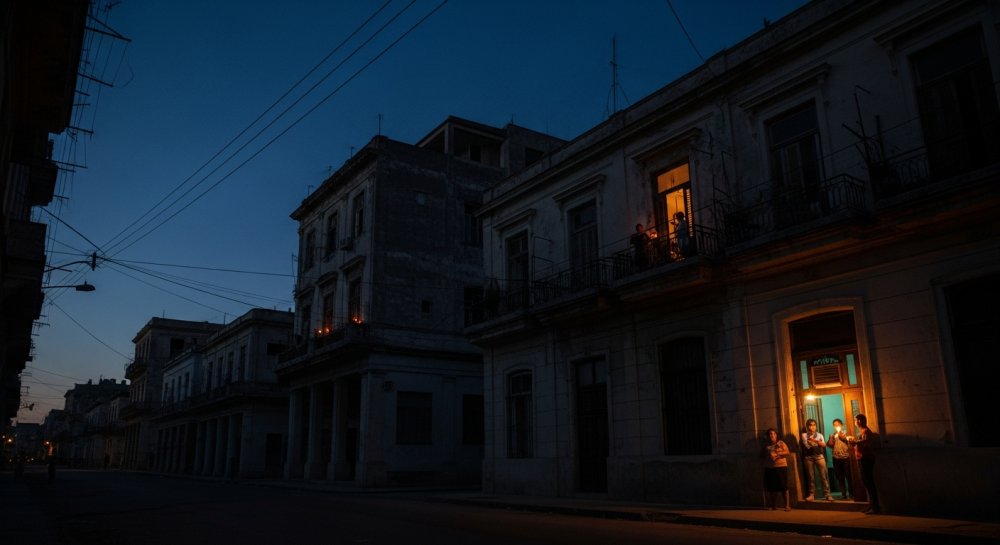
January 1, Communist Cuba in TOTAL DARKNESS After Third Catastrophic Grid Collapse

Wyatt’s Take
- Cuba’s failing communist infrastructure just collapsed for the third time in six months, leaving nearly 10 million people in complete darkness — this is what socialism delivers.
- While leftist academics in America praise Castro’s ‘revolution,’ ordinary Cubans are suffering through repeated total blackouts because centralized government control destroys everything it touches.
- As American progressives push us toward more government control of energy and infrastructure, Cuba stands as a stark warning of where that road leads.
Cuba’s national electricity grid suffered a catastrophic total collapse Monday, plunging the entire Caribbean nation of nearly 10 million people into complete darkness. This marks the third time in just six months that the island’s centralized power system has failed entirely, leaving families without electricity, hospitals on backup generators, and businesses shuttered.
The island-wide blackout exposed once again the crumbling state of Cuba’s Soviet-era infrastructure, decades of mismanagement under communist rule, and the inevitable results of centralized government control over critical systems. While the Cuban regime has blamed U.S. sanctions and external factors, the reality is simpler: socialism doesn’t work, and government-run monopolies fail.
Cuba has experienced another nationwide blackout after its electrical grid collapsed, the latest in a series of major outages that have hit the island this year.
Watch OAN on Spectrum and YouTube TV today for more updates. pic.twitter.com/EOo0JVUFeo
— One America News (@OANN) July 6, 2026
Cubans have endured rolling blackouts for years, but complete grid failures have become alarmingly frequent. Each collapse takes hours or days to restore, leaving ordinary citizens sweltering in the Caribbean heat without fans, refrigeration, or even basic lighting. The vulnerable — elderly residents, those dependent on medical equipment, young children — suffer most.
Yet in American universities and progressive circles, Cuba’s communist system is often romanticized as a noble experiment in equality. The reality on the ground tells a different story: a population trapped by failed ideology, unable to leave, forced to live with the consequences of a system that prioritizes control over competence.
The pattern is familiar to anyone paying attention to socialist experiments worldwide. Venezuela’s oil-rich economy collapsed under government control. North Korea keeps its citizens in the dark — literally and figuratively. Every time central planners replace market forces and private enterprise, the result is scarcity, dysfunction, and human suffering.
As American progressives push aggressive climate policies that would place more energy infrastructure under federal control, expand government regulation of utilities, and move toward centralized planning of our electrical grid, Cuba’s repeated failures should serve as a flashing red warning light.
Free markets, private competition, and decentralized systems create resilience and innovation. Government monopolies create fragility and failure. The lights stay on in America not because of government brilliance, but because of private enterprise, competitive markets, and the profit motive driving constant improvement.
Cuba’s third total blackout in half a year isn’t just a technical failure — it’s a moral indictment of the communist system that created it. And it’s a reminder that when government grows too large and takes control of too much, everyone eventually sits in the dark.
Why It Matters
Every time Cuba’s grid collapses, it proves what common sense already tells us: big government control leads to big failures. While Washington bureaucrats talk about federalizing more of America’s energy sector, Cuban families are living the nightmare of what that actually produces. Freedom works. Central planning fails. It’s that simple, and we better remember it before we end up sitting in the dark ourselves.


-
 Entertainment3 years ago
Whoopi Goldberg’s “Wildly Inappropriate” Commentary Forces “The View” into Unscheduled Commercial Break
-

 Entertainment3 years ago
‘He’s A Pr*ck And F*cking Hates Republicans’: Megyn Kelly Goes Off on Don Lemon
-
 Featured3 years ago
US Advises Citizens to Leave This Country ASAP
-
 Featured3 years ago
Benghazi Hero: Hillary Clinton is “One of the Most Disgusting Humans on Earth”
-

 Latest News3 years ago
Nude Woman Wields Spiked Club in Daylight Venice Beach Brawl
-
 Featured3 years ago
Fox News Calls Security on Donald Trump Jr. at GOP Debate [Video]
-

 Entertainment3 years ago
Comedy Mourns Legend Richard Lewis: A Heartfelt Farewell
-
 Latest News3 years ago
Supreme Court Gift: Trump’s Trial Delayed, Election Interference Allegations Linger