Latest News
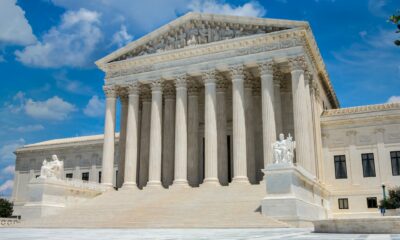
January 1, Supreme Court Set to Shape Future Elections

Wyatt’s Take
- The Supreme Court holds the power to shift election rules and impact who wins or loses in 2026.
- Three major cases on ballots, district lines, and party spending could tip the scales.
- Each ruling could either open the door for challenges or close it tight, affecting all Americans.
This fall, the Supreme Court will hear cases that could shake up how our elections are run and who holds power come 2026. Three upcoming decisions might change the rules for ballots, drawing district lines, and how much parties can spend trying to win votes.
In Bost v. Illinois, the focus is on whether federal candidates can challenge state election rules. Rep. Mike Bost took Illinois to court over a law letting mail-in ballots arrive up to two weeks past Election Day. If the justices say candidates can sue, it could make it easier to fight election procedures across the country.
“No one has more of a concrete and particularized interest in the rules governing an election than the candidates running in it.”
The other side argues Bost wasn’t directly harmed, so his lawsuit should end. If the Court blocks candidates from suing, it gets much tougher to challenge questionable rules. A decision either way could affect how future elections are fought and won.
Next up is Louisiana v. Callais. This case looks at Louisiana’s new second minority-majority district, questioning if it breaks the Constitution or the Voting Rights Act. Should the justices rule against Section 2, states may face fewer limits on how they draw districts, which could lead to stronger Republican control across the South.
The third case is NRSC v. FEC, asking if government limits on campaign spending by parties violate free speech rights. If those limits go, political parties could have a bigger say in elections—favoring whoever can build the strongest alliances and bankrolls.
Decisions are expected by mid-2026, just in time to sway the next round of midterms. Every ruling could mean big changes for election rules, campaign money, and who runs Congress.
Stay alert, because what happens in the courtroom will soon be felt at your local polling place.
Wyatt Matters
When unelected judges decide how elections are run, it hits at the heart of fair play and representation for regular folks. These Supreme Court rulings won’t just be legal talk—they’ll shape how much your vote counts, how districts are drawn, and who truly speaks for middle America.


-
 Entertainment2 years ago
Whoopi Goldberg’s “Wildly Inappropriate” Commentary Forces “The View” into Unscheduled Commercial Break
-
 Entertainment2 years ago
‘He’s A Pr*ck And F*cking Hates Republicans’: Megyn Kelly Goes Off on Don Lemon
-

 Featured2 years ago
US Advises Citizens to Leave This Country ASAP
-
 Featured2 years ago
Benghazi Hero: Hillary Clinton is “One of the Most Disgusting Humans on Earth”
-

 Entertainment2 years ago
Comedy Mourns Legend Richard Lewis: A Heartfelt Farewell
-
 Featured2 years ago
Fox News Calls Security on Donald Trump Jr. at GOP Debate [Video]
-

 Latest News2 years ago
Nude Woman Wields Spiked Club in Daylight Venice Beach Brawl
-
 Latest News2 years ago
Supreme Court Gift: Trump’s Trial Delayed, Election Interference Allegations Linger
Larry Craig
September 23, 2025 at 7:31 am
We have to ask why there are polling place in the first place. They ensure that we know who is voting and that they voted in private.
We don’t know that with mail-in ballots. We don’t know who filled it out or whether they were alone when they did it. That alone should make them invalid but for the rare exceptions. The miliary overseas. But then they should have polling booths there too.
JW Schrecker
September 23, 2025 at 8:02 am
Just an observation; If the SCOTUS performs its duties as set forth in the U.S. Constitution, then they do nothing more than merely make a determination if the issue before them is;
1. In accordance with the U.S. Constitution, ‘constitutional’ or ‘not constitutional’
2. in accordance with legislatively enacted laws, ‘legal’ or ‘not legal’
The SCOTUS does not have the power to “shift election rules and impact who wins or loses”. Only the power to determine if the current process is first constitutional and second legal, or not.
The Supreme Court of the United States (SCOTUS) derives its mandate from Article III of the U.S. Constitution. Article III, Section 1 establishes “one supreme Court” and grants Congress the authority to create inferior courts. The mandate is thus constitutional, not statutory, and cannot be abolished by ordinary legislation without amending the Constitution.
The duties of SCOTUS are:
1. Interpretation of the Constitution and Federal Law: SCOTUS decides whether laws and government actions comply with the Constitution.
2. Judicial Review: Established in Marbury v. Madison (1803), SCOTUS has the duty to declare laws or executive actions unconstitutional.
3. Resolving Federal Questions: SCOTUS hears cases involving federal statutes, treaties, and constitutional issues.
4. Ensuring Uniformity of Law: SCOTUS resolves conflicts between different federal appellate courts or between federal and state courts.
5. Original Jurisdiction in Limited Cases: Under Article III, Section 2, SCOTUS directly hears disputes between states or cases involving ambassadors and foreign officials.
It is a mistake to think that the SCOTUS can change or enact laws, even election laws. They can only decide if they are constitutional and legal. Any ‘changes’ to the election laws would have to be taken up by the nation’s or states’ legislatures.
I submit to you that it is incorrect to cast the nations’ courts as having ‘powers’ and authorities that don’t exist.
You might consider the article title of: Supreme Court Set to Determine Constitutionality, Legality of Current Election Processes
T. Seigo
September 23, 2025 at 8:16 am
As I see it, our government has bowed to the whims of which party can throw the most $$$$ into pre-election activities. Why should we, who cast our votes b subjected to which party raises the most $$$$? The candidates should realize ahead of the actual elections how much is allowed to be spent on campaign funds prior to tossing their hat into a race! This is why there should be more strict monitoring with respect to actual funds spent. We need to assure that no outside entity (singular or group) can buy the public’s votes. IE: George Soros’ whichever society!! I completely agree with having paper ballots, voter ID, citizenship only voting, and a strict oversight commission to oversee ALL FEDERAL ELECTIONS! The states should be mandated to clean their voter rolls every 2-5 years, period!! Any violation with this mandate could be met with severe consequences to the state!