Christianity
January 1, US Must Prepare for Life After the Mullahs Fall

Wyatt’s Take
- The six-month war has exposed the Islamic Republic as a crumbling military dictatorship hiding behind mullahs, not a true theocracy.
- America must stop pretending the regime can be reformed and start planning for the day Iranians choose their own government.
- Trump was right to squeeze Tehran economically and force the regime into survival mode instead of endless talks.
Six months into the war, the big question about Iran is no longer missiles or the Strait of Hormuz. The real question is simple: who is actually running the country?
Is it Mojtaba Khamenei, the shadowy son of the late supreme leader? Or President Masoud Pezeshkian, whose office was never meant to hold real power? Or the Islamic Revolutionary Guard Corps, the gun-toting outfit that now controls the money, the guns, and the politics?
Iran looks less like a religious state and more like a military dictatorship where the mullahs just give cover for the men with rifles.
The regime that rose from the 1979 revolution promised freedom and delivered fear. It turned political Islam into state terror, built proxy armies abroad, and crushed every voice at home. Now it is fighting only to survive.
War gives the regime an excuse to call every critic a traitor and every protest an act of treason. Washington must stop falling for the old lie that the Islamic Republic is the same thing as the Iranian people.
Economic pressure is hitting hard, but Iran’s troubles started long before the current sanctions. Corruption, crazy spending on foreign wars, and a ruling class that cares only about power have wrecked the country from the inside.
Another uprising is always possible. Grievances have piled up for years, and the regime has only quieted the streets, not fixed a single problem. Silence is not the same as agreement.
Still, the fall of the regime and the birth of real democracy are two different things. Between them is a dangerous stretch where anything can happen. The next government must be chosen by Iranians, not handed down by Washington or any other capital.
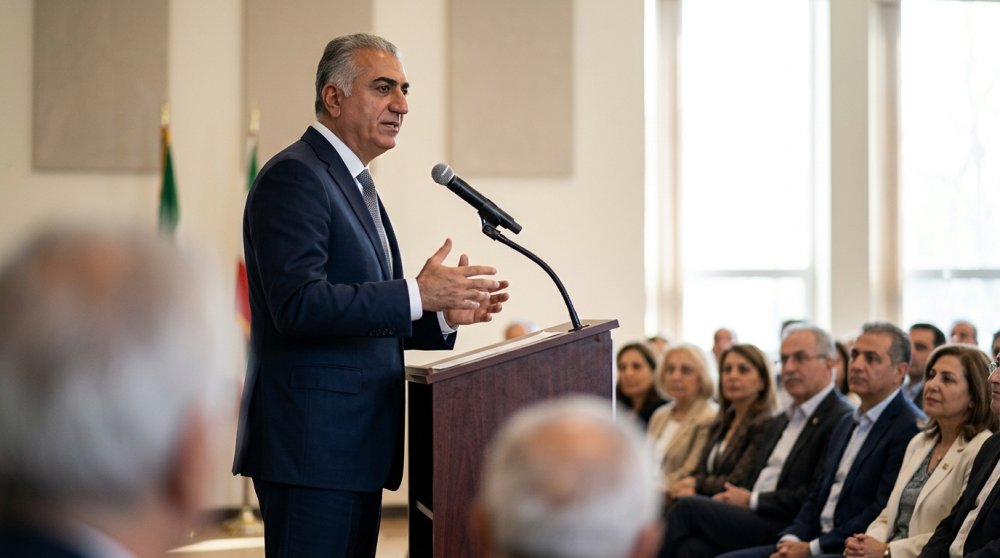
Crown Prince Reza Pahlavi stands out because he speaks for a secular, united Iran and a peaceful transition. But the final shape of Iran’s government, whether a republic or a constitutional monarchy, belongs to the Iranian people alone.
Washington has tried talking and has tried looking the other way. Neither worked. The regime negotiates in one room and keeps its terrorist networks running in another. A survival tactic is not the same as a change of heart.
Tehran may hope America’s election calendar will force Washington to back off. That would be a mistake. Iran’s terror networks and missile programs are a threat to every American, no matter the party in power.
The right policy now is to plan for the day the regime collapses, not to dream it can be reformed. That means knowing which Iranian voices stand for the whole nation and which ones just want to replace one set of dictators with another.
China talks about keeping the Strait of Hormuz open while it stays close to Tehran. Beijing wants safe shipping lanes without facing the regime that threatens them. That is not a solution; it is pretending the problem will fix itself.
Hormuz, the Houthis, and the proxy armies are all symptoms of the same sickness born in 1979. For decades the West has treated the symptoms and ignored the disease.
The question after six months of war is not only how it ends, but what comes next. Iran’s future belongs to Iranians, but America should be ready when history knocks on that door again.
Wyatt Matters
Middle America knows that strong borders and clear-eyed foreign policy protect our families and our paychecks. Standing with people who want freedom instead of endless talks with tyrants keeps our troops out of harm’s way and our dollars at home.


-
 Entertainment3 years ago
Whoopi Goldberg’s “Wildly Inappropriate” Commentary Forces “The View” into Unscheduled Commercial Break
-

 Entertainment3 years ago
‘He’s A Pr*ck And F*cking Hates Republicans’: Megyn Kelly Goes Off on Don Lemon
-

 Featured3 years ago
US Advises Citizens to Leave This Country ASAP
-
 Featured3 years ago
Benghazi Hero: Hillary Clinton is “One of the Most Disgusting Humans on Earth”
-

 Latest News3 years ago
Nude Woman Wields Spiked Club in Daylight Venice Beach Brawl
-
 Featured3 years ago
Fox News Calls Security on Donald Trump Jr. at GOP Debate [Video]
-

 Entertainment3 years ago
Comedy Mourns Legend Richard Lewis: A Heartfelt Farewell
-

 Latest News3 years ago
Supreme Court Gift: Trump’s Trial Delayed, Election Interference Allegations Linger