Breaking News
January 1, Grand Canyon Death Toll Rising as Catastrophic Flooding Leaves Americans Stranded

Wyatt’s Take
- Flash flooding killed at least one American and left 15 missing in the Grand Canyon, exposing how fragile our national park infrastructure really is
- Federal officials scrambled to evacuate 62 people while implementing emergency water restrictions after critical supply lines were wiped out
- This disaster raises serious questions about whether our government is properly maintaining the infrastructure that protects American visitors to our most treasured landmarks
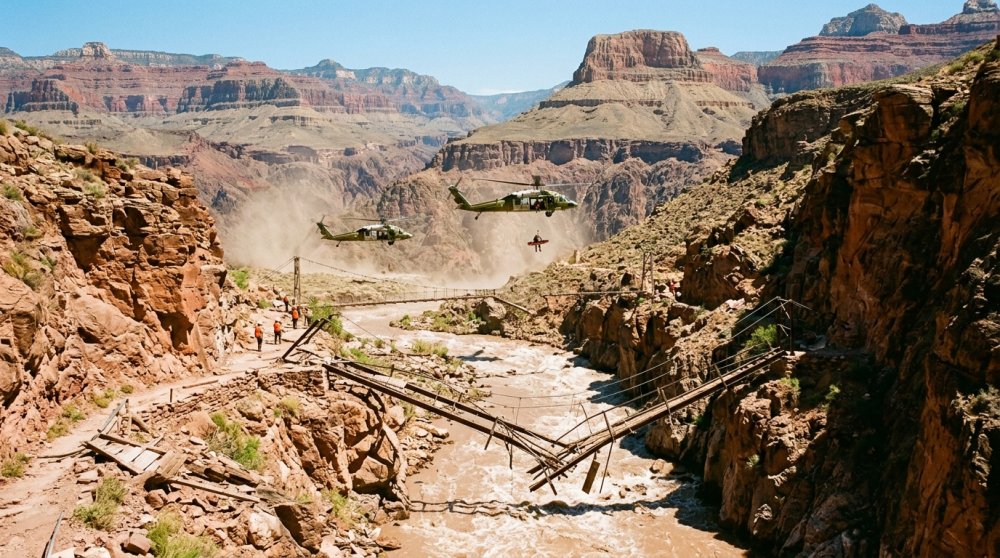
Severe flash flooding tore through the Grand Canyon this weekend, killing at least one American and leaving up to 15 people missing in a desperate search-and-rescue operation. The National Park Service says the flooding knocked out a critical water supply line, forcing emergency restrictions across the entire park.
Park officials confirmed they pulled the body of a 46-year-old man from the Colorado River on Sunday night. His identity hasn’t been released yet.
The Saturday flooding caused what officials are calling “extensive damage to infrastructure,” including the Transcanyon Waterline that supplies water to the park. Stage four water restrictions went into effect Monday at noon — the most severe level possible.
“The National Park Service is asking anyone who knows of hikers or backpackers who were in the inner canyon along the Bright Angel Creek corridor on August 29, as well as anyone who had a campground reservation in the affected corridor, to provide information to the National Park Service Investigative Services Branch.”
Federal officials say they’ve evacuated at least 62 people since the flooding hit. But 15 Americans remain unaccounted for in what park rangers are describing as treacherous conditions.
The emergency water restrictions hit visitors hard. Overnight lodging has been temporarily shut down, water spigots are off-limits, and campers are forced into dry camping with no water access. Fire bans are in effect across the South Rim and inner canyon areas.
The flooding slammed into Bright Angel Canyon and the Phantom Ranch area on August 29. Nearly every footbridge spanning Bright Angel Creek was destroyed, according to park officials.
Arizona Governor Katie Hobbs said state emergency teams are working with federal and local authorities on the search operation.
“My heart is with the families and loved ones of every person unaccounted for after the flash flooding at the Grand Canyon,” Hobbs wrote on social media. “DEMA is coordinating with NPS and Coconino County Emergency Management to support search and recovery efforts.”
Arizona Secretary of State Adrian Fontes called the flash flooding “devastating” and thanked first responders searching for the missing.
“The physical damage includes a historic lodge near the bottom of the site and untold environmental upheaval. I send my prayers to the community as the search for those unaccounted for continues.”
Why It Matters
When Americans visit our national parks, they trust the federal government has maintained the infrastructure to keep them safe. This disaster shows that trust may be misplaced. The Transcanyon Waterline that failed has been a known problem for years, yet bureaucrats in Washington kept kicking the can down the road. Now families are paying the price. Our national treasures deserve better than crumbling pipes and washed-out bridges — and so do the hardworking Americans who visit them.


-
 Entertainment3 years ago
Whoopi Goldberg’s “Wildly Inappropriate” Commentary Forces “The View” into Unscheduled Commercial Break
-

 Entertainment3 years ago
‘He’s A Pr*ck And F*cking Hates Republicans’: Megyn Kelly Goes Off on Don Lemon
-
 Featured3 years ago
US Advises Citizens to Leave This Country ASAP
-
 Featured3 years ago
Benghazi Hero: Hillary Clinton is “One of the Most Disgusting Humans on Earth”
-

 Latest News3 years ago
Nude Woman Wields Spiked Club in Daylight Venice Beach Brawl
-
 Featured3 years ago
Fox News Calls Security on Donald Trump Jr. at GOP Debate [Video]
-

 Entertainment3 years ago
Comedy Mourns Legend Richard Lewis: A Heartfelt Farewell
-

 Latest News3 years ago
Supreme Court Gift: Trump’s Trial Delayed, Election Interference Allegations Linger
John
August 31, 2026 at 9:18 pm
Probably the worst article that I’ve read from Wyatt. He has shown his ignorance of the subject of building infrastructure storm resistance to flash flooding. He needs to either stay in his expertise or consult with subject matter experts before opining about engineering solutions and storm proof infrastructure.